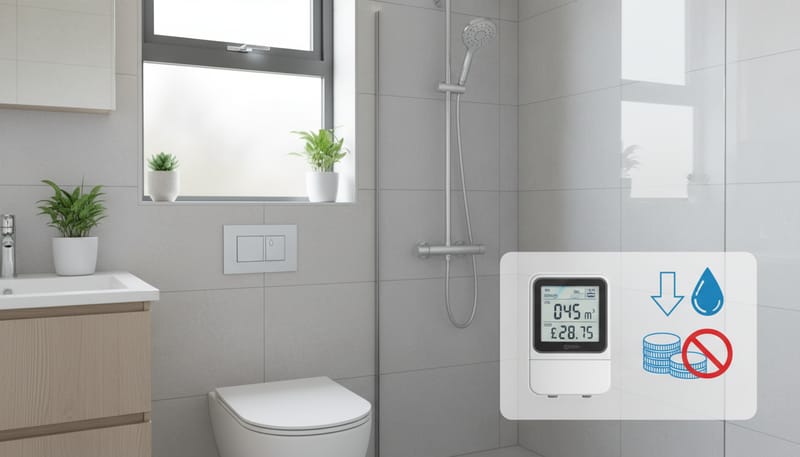
Why Water Efficiency Matters in New Build Homes
Water is an increasingly precious resource in the UK. Despite our reputation for rainy weather, England is actually classified as seriously water-stressed by the Environment Agency, particularly in the south east. With a growing population, increasing urbanisation, and the effects of climate change bringing more frequent droughts, the demand on UK water supplies has never been greater.
New build homes are at the forefront of water conservation. Under Building Regulations Part G, all new dwellings in England must be designed to limit water consumption to 110 litres per person per day — a significant reduction compared to the national average of around 145 litres per person per day in existing homes. In some local authority areas, particularly those designated as water-stressed, this target is further reduced to just 105 litres per person per day.
For homebuyers, water efficiency translates directly into lower bills. The average UK household spends between £400 and £500 per year on water and sewerage charges, and new build homes with efficient fittings and water meters can reduce this by 20–30%. When you are already benefiting from lower energy bills thanks to your new build’s excellent EPC rating, adding water savings into the equation makes the financial case for a new build even stronger.
Water Usage in Context
| Metric | National Average | New Build (Part G) | Water-Stressed Area |
|---|---|---|---|
| Daily usage per person | 145 litres | 110 litres | 105 litres |
| Daily usage (4-person household) | 580 litres | 440 litres | 420 litres |
| Annual usage per person | 52,925 litres | 40,150 litres | 38,325 litres |
| Estimated annual bill (metered) | £448 | £340–£380 | £320–£360 |
| Water saved per person per year | – | 12,775 litres | 14,600 litres |
These figures demonstrate the scale of the savings. A family of four in a Part G-compliant new build can save over 50,000 litres of water per year compared to the national average — that is roughly 28 bathtubs of water every single month.
Building Regulations Part G: What the Rules Require
Approved Document G of the Building Regulations sets out the requirements for water efficiency, hot water supply, and sanitation in new buildings. For new homes, the key provisions relate to the Water Efficiency Calculator — a tool that developers must use to demonstrate that total water consumption per person per day will not exceed the specified limit.
How the Water Efficiency Calculator Works
The calculator assigns a water usage figure to every fitting in the home — WC, bath, basin taps, shower, kitchen sink, washing machine, and dishwasher. Developers select fittings that achieve sufficiently low flow rates and flush volumes to bring the total within the 110-litre (or 105-litre) target. The calculation is submitted to Building Control as part of the compliance process.
Water Usage by Fitting
| Fitting | Typical Old Home | Part G Standard (110L) | Enhanced Standard (105L) | Best Practice |
|---|---|---|---|---|
| WC (full flush) | 9–13 litres | 6 litres | 4.5 litres | 4 litres |
| WC (reduced flush) | N/A (single flush) | 4 litres | 3 litres | 2.6 litres |
| Basin taps | 12+ litres/min | 6 litres/min | 5 litres/min | 4 litres/min |
| Kitchen taps | 12+ litres/min | 8 litres/min | 6 litres/min | 5 litres/min |
| Shower | 12–15 litres/min | 8 litres/min | 7 litres/min | 6 litres/min |
| Bath | 170–200 litres | 170 litres (capacity) | 170 litres | 150 litres |
| Washing machine | 65+ litres/cycle | 49 litres/cycle | 46 litres/cycle | 40 litres/cycle |
| Dishwasher | 18+ litres/cycle | 14 litres/cycle | 12 litres/cycle | 10 litres/cycle |
As you can see, every fitting in a new build home is specified to use significantly less water than its equivalent in an older property. The cumulative effect of all these reduced flow rates and flush volumes is what achieves the overall Part G target. Developers work with bathroom and kitchen suppliers to ensure all fittings meet the required specifications.
Local Authority Enhanced Standards
Several local authorities across England have adopted the optional requirement of 105 litres per person per day through their Local Plan policies. This includes most London boroughs, large parts of the south east and east of England, and increasingly, water-stressed areas across the Midlands. If you are buying a new build in these areas, your home will have even more efficient water fittings as standard. Check with your developer or local authority planning portal to confirm which standard applies to your chosen development.
Water-Efficient Fittings in New Build Homes
New build homes come equipped with a range of water-efficient fixtures and fittings that reduce consumption without noticeably affecting your daily experience. Understanding these features helps you appreciate the technology built into your home and make informed choices if you decide to change fittings in the future.
Dual-Flush WCs
Perhaps the most impactful water-saving feature in a new build home is the dual-flush toilet. Traditional single-flush cisterns use 9–13 litres per flush, while a modern dual-flush system offers a choice between a full flush (typically 4–6 litres) and a reduced flush (2.6–4 litres). Given that the average person flushes the toilet five times per day, this single change can save over 40 litres per person per day.
All new build homes are fitted with dual-flush WCs as standard. The mechanism is simple to use — typically a split flush button or two separate buttons on the cistern. Most manufacturers design these so the reduced flush button is the more prominent or default option, encouraging water-saving behaviour.
Aerated Taps and Showers
Aerated taps and shower heads mix air into the water stream, maintaining the sensation of strong water pressure while significantly reducing the actual volume of water flowing. A standard tap without aeration delivers 12+ litres per minute, while an aerated tap achieves the same perceived flow with just 4–6 litres per minute.
In new build homes, aerated fittings are installed across all basins and kitchen sinks. Shower heads are similarly specified to deliver a satisfying shower experience at 6–8 litres per minute rather than the 12–15 litres per minute common in older installations. The technology is well-established and most homeowners do not notice any difference in daily use.
Flow Restrictors and Regulators
In addition to aeration, many new build fittings include flow restrictors — small inserts in the tap or shower head that physically limit the maximum flow rate. These are particularly useful because they maintain consistent flow regardless of water pressure variations, ensuring the home meets its Part G targets even if mains pressure is higher than average.
- Basin flow restrictors: Typically limit flow to 5–6 litres per minute. Some premium fittings use variable flow restrictors that adjust based on tap position.
- Shower flow restrictors: Limit flow to 7–8 litres per minute. These are often built into the shower valve rather than the head, so they remain effective even if the shower head is replaced.
- Kitchen tap aerators: Maintain 6–8 litres per minute while keeping sufficient flow for filling pans and washing dishes efficiently.
Baths in New Builds
Baths are the one area where water efficiency improvements are more limited. The Part G calculation uses the bath’s capacity to the overflow rather than a flow rate, so developers specify standard-sized baths with a maximum capacity of around 170 litres. Some developments offer smaller bath options as standard, and the trend towards shower-focused bathrooms means many new build homes feature en-suites with walk-in showers rather than additional baths — a more water-efficient choice overall.
Water Meters and Bills: Metered vs Unmetered Costs
All new build homes in England and Wales are fitted with a water meter as standard. This is a regulatory requirement and means you will always pay for the water you actually use rather than a flat-rate charge based on the rateable value of your property. For water-efficient new builds, this is a significant advantage.
Metered vs Unmetered Water Bills
| Factor | Metered (New Build) | Unmetered (Older Homes) |
|---|---|---|
| How you pay | Based on actual water consumption | Fixed annual charge based on rateable value |
| Average annual bill (UK) | £380–£420 | £430–£480 |
| New build household bill | £320–£380 | N/A – all new builds are metered |
| Control over costs | Direct – use less, pay less | None – fixed regardless of usage |
| Incentive to save water | Strong financial incentive | No financial incentive |
| Bill predictability | Varies with usage and household size | Fixed and predictable |
| Best for | Smaller households, water-efficient homes | Large families in older homes with high rateable values |
For a typical family of four in a new build home, metered water bills average between £320 and £380 per year, compared to £430–£480 for an unmetered older property. That is a potential saving of £100–£150 annually — not as dramatic as the energy bill savings from a high EPC rating, but still a meaningful contribution to your household budget.
Understanding Your Water Bill
Water bills in England and Wales consist of two main charges:
- Water supply charge: Covers the cost of treating and delivering clean water to your home. For metered customers, this is typically £1.50–£2.50 per cubic metre (1,000 litres) depending on your water company.
- Sewerage and wastewater charge: Covers the cost of removing and treating wastewater. This is usually a percentage of your water supply volume, as it is assumed that most water entering the home leaves via drains. Typically adds 80–100% to the supply charge.
Some water companies also apply a standing charge — a fixed daily amount regardless of usage, typically 15–30p per day. This covers the infrastructure maintenance and meter reading costs.
Regional Water Bill Comparison
| Water Company | Average Metered Bill 2024/25 | Water Supply per m³ | Standing Charge (daily) |
|---|---|---|---|
| Thames Water | £487 | £1.87 | 20p |
| Southern Water | £475 | £1.95 | 22p |
| Anglian Water | £458 | £1.72 | 18p |
| Yorkshire Water | £410 | £1.58 | 16p |
| United Utilities | £425 | £1.65 | 19p |
| Severn Trent | £396 | £1.52 | 17p |
| South West Water | £520 | £2.10 | 25p |
| Wessex Water | £442 | £1.78 | 21p |
These figures represent average bills for existing homes. A new build home with Part G-compliant fittings will typically achieve bills 15–25% below these averages, depending on household size and usage patterns.
Developer Water Specifications: What to Expect and Ask
Different developers take varying approaches to water efficiency. While all must meet the Part G minimum, some go above and beyond with premium fittings, rainwater harvesting systems, and enhanced specifications. Understanding what your developer provides helps you make an informed comparison between developments.
Typical Developer Specifications
Most major UK developers include the following water-efficient features as standard in their new homes:
- Dual-flush WCs with 4/2.6 or 6/4 litre flush volumes throughout the home
- Aerated basin taps with flow rates of 5–6 litres per minute
- Flow-regulated shower heads at 7–8 litres per minute
- Water meter pre-installed with connections to the local water network
- Insulated hot water pipes to reduce the time waiting for hot water (and the water wasted while waiting)
Some premium developers and eco-focused housebuilders go further with enhanced water efficiency measures:
- Greywater recycling systems that filter and reuse water from showers and basins for WC flushing
- Rainwater harvesting with underground tanks and pumps for garden irrigation and WC flushing
- Water butts connected to downpipes for garden watering
- Smart water meters with real-time consumption monitoring via smartphone apps
- Leak detection systems that alert homeowners to unusual water usage patterns
Questions to Ask Your Developer
- What is the Water Efficiency Calculator result? Ask for the specific litres per person per day figure. Anything below 105 litres indicates an above-average specification.
- Are water butts included? Many developments include a water butt as standard, but some do not. A 200-litre water butt for garden use is an inexpensive but valuable addition.
- What brand and specification of bathroom fittings are installed? Higher-quality fittings from brands like Roca, Grohe, or Ideal Standard tend to maintain their flow-limiting performance better over time.
- Is there provision for future rainwater harvesting? Even if not installed immediately, pre-installed pipework for a future system saves significant cost later.
Reducing Your Water Usage Further
While your new build home comes equipped with water-efficient fittings, there are several additional steps you can take to reduce consumption further and minimise your water bills.
Indoor Water-Saving Tips
- Use the reduced flush: Get into the habit of using the smaller flush button for liquid waste. This single habit can save 5,000+ litres per person per year.
- Shorter showers: Reducing your shower time by just one minute saves approximately 7–8 litres per shower. Over a year, that adds up to nearly 3,000 litres per person.
- Turn off taps while brushing teeth: A running tap wastes 6 litres per minute. Turning it off while brushing saves around 12 litres per brush — over 8,000 litres per person per year.
- Full loads only: Running your washing machine and dishwasher only when full maximises the water efficiency of each cycle. A half-load wash uses almost as much water as a full load.
- Fix dripping taps promptly: A dripping tap can waste over 5,000 litres per year. In a new build, this should not be an issue initially, but report any drips to your developer under the warranty.
- Choose efficient appliances: When purchasing a washing machine or dishwasher for your new build kitchen, check the water consumption per cycle. The best A-rated machines use 40–45 litres per wash compared to 65+ for older models.
Outdoor Water Conservation
Gardens and outdoor areas can account for a significant proportion of household water use, particularly during summer months. For new build homeowners, establishing a water-efficient garden from the start is far easier than converting an established one.
- Water butts: Connecting a 200–300 litre water butt to your downpipe provides free rainwater for garden use. The average UK roof collects around 85,000 litres of rainwater per year — far more than most gardens need.
- Drought-resistant planting: Choose plants that thrive in dry conditions. Lavender, sedum, ornamental grasses, rosemary, and many native wildflowers require minimal watering once established.
- Mulching: A 5–7cm layer of bark mulch or compost around plants reduces water evaporation from the soil by up to 70%, significantly reducing the need for watering.
- Efficient watering: Water in the early morning or evening when evaporation is lowest. Use a watering can or drip irrigation rather than a sprinkler — sprinklers can use 1,000 litres per hour.
- Permeable paving: Many new build driveways and patios use permeable paving that allows rainwater to soak into the ground rather than running off into drains, supporting natural groundwater recharge.
The Environmental Impact of Water Efficiency
Water efficiency is not just about saving money — it has significant environmental benefits too. The process of treating and delivering clean water to homes, and then treating the wastewater that leaves them, is highly energy-intensive. The UK water industry is one of the largest energy consumers in the country, accounting for approximately 1% of total UK electricity use.
By reducing your water consumption, you are indirectly reducing energy use and carbon emissions. It is estimated that every cubic metre of water saved prevents approximately 0.34 kg of CO2 emissions from the treatment and distribution process. For a family of four in a water-efficient new build, this equates to roughly 18 kg of CO2 saved per year from water alone.
Water efficiency also helps protect river ecosystems and groundwater levels. When less water is abstracted from rivers and aquifers to supply homes, more remains to support wildlife, maintain river flows during dry periods, and replenish natural water stores. In water-stressed areas of the south east, this is increasingly critical for biodiversity. Our guide to biodiversity and landscaping in new build developments explores how developments can support local ecosystems.
The Future Homes Standard and wider environmental policy direction suggest that water efficiency requirements will only tighten in the years ahead. Buying a new build home now puts you ahead of these future requirements and ensures your property remains compliant and desirable for years to come. For a broader perspective on the environmental credentials of new construction, see our guide to the carbon footprint of new build homes.
Frequently Asked Questions
How much water does a new build home use compared to an older property?
New build homes are designed to use no more than 110 litres per person per day (or 105 litres in water-stressed areas), compared to the national average of approximately 145 litres per person per day. This means a new build uses around 24% less water than the average UK home, saving a family of four over 50,000 litres per year.
Will my new build have a water meter?
Yes. All new build homes in England and Wales are fitted with a water meter as standard. This means you pay for the water you actually use, which is advantageous for water-efficient homes. Most new build households find that metered bills are £50–£150 per year lower than unmetered charges for equivalent older properties.
Can I replace the water-efficient fittings with standard ones?
Technically yes, but it is not recommended. Replacing aerated taps or dual-flush WCs with higher-flow alternatives will increase your water consumption and bills. It may also affect your home’s compliance with building regulations if the changes are made during the defects period. The water-efficient fittings installed in new builds are high-quality and should perform well for many years.
Do water-efficient showers feel weak?
Modern aerated shower heads are designed to deliver a satisfying shower experience at lower flow rates. The air mixed into the water stream creates a fuller, softer spray pattern that most people find comfortable. If you are used to a very high-pressure power shower, there may be a slight adjustment period, but the vast majority of new build buyers report being perfectly happy with the shower performance.
Is rainwater harvesting worth installing in a new build?
For most homeowners, a simple water butt (costing £30–£60) is the most cost-effective rainwater solution, providing free water for garden use. Full rainwater harvesting systems with underground tanks and pumps cost £2,000–£5,000 and are more suited to larger properties with extensive gardens or those aiming for near-zero water use. The payback period for a full system is typically 10–15 years.
Making the Most of Your New Build’s Water Efficiency
Water efficiency is one of the quieter but genuinely valuable benefits of buying a new build home. With Part G-compliant fittings, a water meter, and modern plumbing throughout, your home is designed to use significantly less water than older properties — saving you money on bills and reducing your environmental footprint.
The key features — dual-flush WCs, aerated taps and shower heads, flow restrictors, and efficient appliance connections — work together to achieve the 110-litre daily target without any noticeable impact on your daily comfort or convenience. Combined with good habits like shorter showers, full-load washing, and outdoor water conservation, you can reduce your water bills to well below the national average.
For buyers comparing developments, it is worth asking about the specific water efficiency rating and whether enhanced features like rainwater harvesting or greywater recycling are included. These features, alongside excellent insulation, efficient heating systems, and solar panels, contribute to the overall sustainability of your new home.
Explore our comprehensive guide to utility bills and running costs for a full picture of what it costs to run a new build home, or browse available new build homes across the UK to find your perfect water-efficient property.