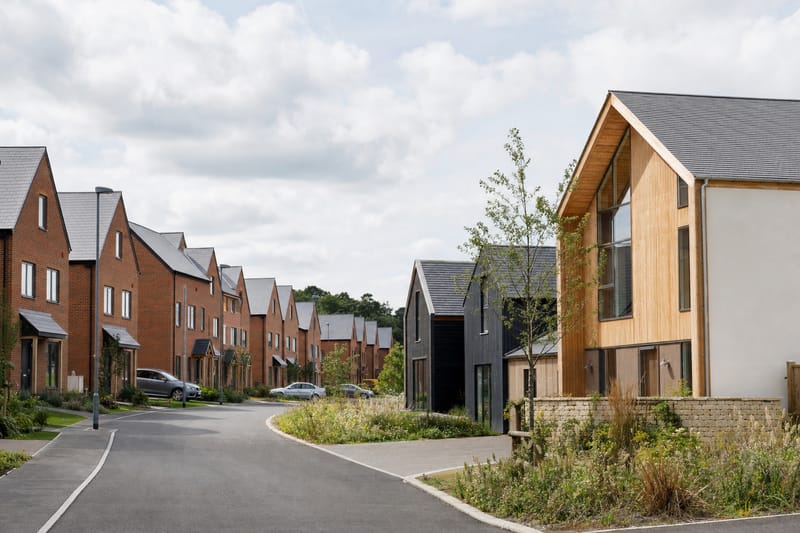
When you start comparing new build homes, you quickly notice that not all developers operate the same way. A household name with dozens of sites across the country builds very differently to a regional outfit putting up twelve houses on a single infill plot. Understanding the volume housebuilder vs small developer trade-off is one of the most useful things you can do before you reserve a plot, because it shapes almost everything that follows: the finish you get, how quickly problems get fixed, the price you pay, and even how exposed you are if the company hits financial trouble mid-build.
This guide sets out the practical differences between large volume housebuilders and boutique or independent developers across build quality, customisation, price, aftercare and risk, so you can judge which trade-offs matter most for your own situation. Neither model is inherently "better" — they simply optimise for different things, and the right choice depends on what you value most in a home and how much uncertainty you're willing to accept.
Key fact: As of 2026, a handful of volume housebuilders (including the likes of Barratt Redrow, Taylor Wimpey, Persimmon, Vistry and Bellway) account for a large share of all new homes registered annually in the UK, while thousands of smaller developers — from regional family firms to one-site boutique outfits — build the remainder. Always check a developer's current build volume and financial standing before relying on any figure you've seen quoted elsewhere.
Before going further, it helps to define terms. A volume housebuilder typically delivers hundreds or thousands of homes a year across many sites, usually from a limited range of repeated house types with a standardised specification. A boutique or independent developer might build anywhere from a handful of homes to a few hundred a year, often on fewer, smaller sites, with more bespoke architecture and a higher degree of individual attention to each plot. There's a wide middle ground too — regional housebuilders that sit between these extremes — and we'll touch on where they fit as we go.
Build Quality and Standard Specification
This is usually the first question buyers ask: is a large housebuilder standard specification as good as what a smaller developer offers? The honest answer is "it depends on the specific site and the specific builder" — but there are some general patterns worth knowing.
Volume housebuilders
Large housebuilders standardise almost everything: brick types, kitchen ranges, bathroom suites, door furniture, staircases and even paint colours are usually chosen from a fixed palette across a whole region or the whole company. This brings genuine advantages:
- Trades repeat the same build sequence hundreds of times, which can reduce certain types of error through familiarity.
- Materials are bought in bulk from approved suppliers, so quality is at least consistent, even if it sits at the more cost-effective end of the market.
- Specifications are published and comparable across show homes, so you broadly know what you're getting before you reserve.
The downside is that "standard" specification is usually built to a price point that maximises margin across thousands of units, so kitchen units, worktops, flooring and sanitaryware are often functional rather than premium — and upgrades to a better specification can carry a significant optional-extras cost.
Boutique and independent developers
Smaller developers are more likely to specify higher-grade materials as standard — solid worktops instead of laminate, engineered timber flooring instead of vinyl, better-quality ironmongery — partly because they're building fewer units and can afford to differentiate on quality rather than compete purely on price. Many also pay closer attention to architectural detailing: proportions, brick bonding, window reveals and roofline design that volume housebuilders often simplify to standard templates.
However, quality control can be more variable. With a smaller, sometimes more informal site team and fewer layers of internal inspection, the gap between the best and worst plots on a boutique scheme can be wider than on a large site with a dedicated quality manager.
Standard specification tells you the baseline, not the ceiling or the floor — always view a finished show home or a recently completed plot, not just a brochure, before judging quality from either type of developer.
For a wider look at how build quality has shifted industry-wide, see New Build Quality Improvements: Industry Progress in 2026.
Customisation, House Types and Personalisation
If you want a say in how your home looks and feels, this is where the two models diverge most sharply.
What volume housebuilders typically allow
Large housebuilders work from a catalogue of repeated house types — the same three- or four-bedroom design might appear on dozens of their sites nationwide, just with the brick colour or render tweaked to suit local planning requirements. Personalisation is usually limited to an "options list" available up to a certain build stage, covering things like:
- Kitchen unit colour and worktop upgrade
- Flooring choice in hallway, kitchen and bathrooms
- Tiling package upgrades
- Wardrobe fitting in the main bedroom
- Electrical extras such as additional sockets or USB points
Structural changes — moving a wall, changing a window position, reconfiguring a layout — are rarely possible once a house type has been approved for the site, because it would disrupt the repeatable build process that makes volume housebuilding efficient.
What boutique developers often offer
Smaller developers are more likely to entertain layout tweaks, especially if you reserve early in the build programme. Some boutique schemes are explicitly marketed on individuality — no two houses quite the same, bespoke joinery, architect-led detailing, or a choice of elevation styles within the same development. This flexibility comes with trade-offs: the further you deviate from the base design, the more it may cost and the longer it may delay your build and legal completion date.
| Customisation factor | Volume housebuilder | Boutique developer |
|---|---|---|
| House type choice | Fixed catalogue, repeated nationally | Often unique to the site |
| Structural changes | Rarely possible | Sometimes possible pre-build |
| Finishes options list | Extensive but fixed menu | Variable, sometimes negotiable |
| Timeline impact of changes | Minimal (changes are rare) | Can extend build programme |
| Cost of upgrades | Clearly priced optional extras | Can be bespoke-quoted, less predictable |
If personalisation matters to you, ask early and in writing exactly what can still be changed at your build stage — verbal assurances from a sales negotiator are not the same as a confirmed, costed variation.
Price and Value for Money
Price comparisons between volume and boutique developers are rarely straightforward because you're not always comparing like for like — location, plot size, specification and build quality all move together. Still, some general tendencies hold across most of the UK market.
Volume housebuilders
Large housebuilders benefit from economies of scale in land buying, materials procurement and labour contracts, which can translate into more competitive headline prices for a given size of home. They also commonly offer incentives to move stock quickly: part-exchange schemes, deposit contributions, stamp duty contributions, or carpets and flooring thrown in. These incentives are genuine value, but they're also a signal that the headline price has room built into it for negotiation — so always ask what discount is available if you don't need the incentive being offered.
Boutique developers
Smaller developers often price at a premium relative to local volume-built stock, reflecting lower-volume buying power, a higher specification as standard, and sometimes a more desirable or unusual site (a converted mill, a small infill plot in a sought-after village, a scheme on a prime urban corner). Because they sell fewer homes, there's often less room — and less inclination — to negotiate heavily, though it's always worth asking, particularly on a final unsold plot near the end of a development.
| Price factor | Volume housebuilder | Boutique developer |
|---|---|---|
| Headline price per sq ft | Often lower locally | Often higher locally |
| Incentives on offer | Common and structured | Less common, more ad hoc |
| Negotiation room | Moderate, especially near year-end | Limited unless plot is unsold late |
| Resale premium potential | Variable, depends on estate | Can be stronger if genuinely distinctive |
Key fact: Builders in both categories often push harder to sell plots close to their financial year-end (commonly March, June or December, depending on the company), when incentives and negotiating flexibility tend to improve. Ask a sales adviser directly when the current sales period or Help to Sell target date ends.
For more on how new build pricing compares with the resale market over time, see New Build Resale Premium: What the Market Data Really Shows.
Site Choice, Scale and Location
Where you want to live can push you toward one type of developer before you've even weighed up specification or price.
Volume housebuilders and large estates
Large housebuilders tend to operate on bigger sites — often several hundred homes delivered in phases over several years — frequently on the edge of towns or as part of major strategic allocations identified in a local plan. If you want:
- A wide choice of plots and orientations within one scheme
- Established or planned on-site amenities (play areas, open space, sometimes a school or shop as part of developer contributions)
- The reassurance of buying into a recognisable national brand with a long trading history
…then a volume housebuilder's large estate is often the natural fit. The trade-off is that you may be living alongside an active building site for several years as later phases complete, and estate-wide amenities promised in the marketing can take a long time to materialise. If this is a live concern, read Buying a New Build Next to an Active Building Site: What to Expect before you reserve.
Boutique developers and infill or niche sites
Smaller developers more often work on infill plots, conversions, or small schemes of fewer than 20–30 homes, frequently in established neighbourhoods, conservation areas or villages where a large estate simply wouldn't get planning permission. This suits buyers who want:
- A home that sits within an existing community rather than a brand new estate
- Walking distance to established schools, shops and transport that a greenfield estate may lack for years
- A smaller number of neighbours and a quieter build process overall
The trade-off is less choice of plot — sometimes only a handful of houses are available at any one time — and schemes can sell out quickly if well located, leaving you with less room to negotiate or wait for your preferred orientation.
Decide what matters more: a wide choice within one big estate, or a smaller number of highly specific locations. This single preference often narrows your developer shortlist more than any spec sheet will.
Warranties, NHBC and Build Standards
Whichever type of developer you choose, your new home should come with a structural warranty — typically a 10-year policy from NHBC, LABC Warranty, Premier Guarantee, Checkmate or a similar provider recognised by mortgage lenders. The warranty itself doesn't change based on the size of the developer, but how reliably that warranty gets used in practice often does.
How the warranty process tends to work
- Weeks 1–2: Developer's own defects/aftercare period begins at legal completion.
- Months 1–24: The developer is contractually responsible for fixing defects under the "builder's warranty" element of the policy — this is the period where speed of response matters most.
- Years 2–10: Structural issues fall under the insurance-backed element, claimed through the warranty provider directly if the developer has ceased trading or refuses to act.
Why developer size affects the experience
Volume housebuilders generally run dedicated customer care teams with defined response-time targets, call centres and structured ticketing systems. This can feel impersonal, but it's resilient — if one local manager leaves, the system keeps functioning. Several large housebuilders are also founding signatories to the New Homes Quality Code, overseen by the New Homes Quality Board; see The New Homes Quality Board: Raising Industry Standards for what that means in practice.
Boutique developers often provide a much more personal aftercare experience in the first few months — you may be dealing directly with the site manager or even the company director — which some buyers find reassuring and quicker for simple issues. But this personal approach is also a single point of failure: if that person is on another site, on leave, or the company has limited back-office capacity, response times can slip, and there may be no formal escalation process beyond contacting the warranty provider directly.
| Aftercare factor | Volume housebuilder | Boutique developer |
|---|---|---|
| Response structure | Formal ticketing, call centre | Often direct, personal contact |
| Consistency | High, process-driven | Variable, person-dependent |
| Escalation routes | Defined internal tiers plus NHQB/Ombudsman | Fewer internal tiers; warranty provider sooner |
| Speed on simple fixes | Can be slow due to volume of tickets | Can be fast if company is responsive |
Whichever developer you buy from, a professional snagging inspection before and shortly after move-in is worth the cost in almost every case — see Professional New Build Snagging Surveys: Cost and Is It Worth It?.
Financial Resilience and the Risk of Developer Failure
This is the trade-off that gets the least attention in glossy brochures, but it matters more than almost anything else if things go wrong mid-build. No developer, large or small, is immune to insolvency or a takeover — but the consequences for you as a buyer differ significantly depending on scale.
Volume housebuilders
Listed national housebuilders generally have stronger balance sheets, diversified cash flow across many sites, and access to capital markets that smaller firms don't. This doesn't make them immune to trouble — housebuilding is a cyclical industry and even large companies have scaled back, mothballed sites, or been acquired during downturns — but a problem on one site is far less likely to halt your specific build, because the company's overall viability doesn't depend on that one scheme completing.
Boutique and independent developers
Smaller developers are typically far more exposed to a single scheme's cash flow, a single lender's terms, or a single key supplier's performance. If build costs rise sharply, if a main contractor fails, or if sales are slower than forecast, a small developer has much less room to absorb the shock. In the worst case, this can mean a stalled site, a liquidation, or the development being sold to another builder to complete — which can mean delays, specification changes, or your reservation agreement needing to be renegotiated.
Key fact: Your structural warranty (NHBC, LABC, Premier etc.) protects defects, not deposit loss or delay compensation if a developer fails before legal completion. Reservation deposits are generally far better protected than exchange deposits, which is why many conveyancers recommend exchanging and completing as close together as possible on a smaller developer's scheme.
Practical steps to reduce this risk regardless of developer size:
- Check Companies House for the developer's filing history, accounts and any charges registered against the company.
- Ask your conveyancer to check how your deposit is protected before exchange (stakeholder account, deposit protection scheme, or insurance-backed guarantee).
- Favour staged payments linked to build milestones over large upfront payments wherever the contract structure allows it.
- Ask directly how many other live sites the developer has, and how long they've been trading under their current structure.
If you want to understand what actually happens if ownership changes hands during your build, read What Happens If Your New Build Developer Is Taken Over Mid-Build? — it applies to both volume and boutique schemes, but the practical impact tends to be larger on small, single-site developments.
Build Programme, Timelines and Completion Dates
How quickly your home gets built — and how reliable the completion date proves to be — varies with developer type too, though not always in the direction buyers expect.
Volume housebuilders
A repeated house type, built by the same trades dozens of times, generally follows a predictable build programme, often 20–32 weeks from foundations to completion depending on house size and type. Large housebuilders can usually absorb a single trade's delay by shifting labour from another plot on the same site. However, sales targets tied to financial reporting periods sometimes create pressure to hit a completion date that then slips by weeks as snagging catches up, particularly near a financial year-end push.
Boutique developers
Smaller sites can sometimes move faster for an individual buyer, since there's less queuing behind other plots and more flexibility to prioritise your home if you need a specific moving date. But bespoke detailing, unusual materials, or a conservation-area planning condition can equally slow things down, and a small team has less slack to absorb delays — one contractor falling behind can affect the whole scheme's timeline, since there's no large pool of alternative labour to draw on.
| Timeline factor | Volume housebuilder | Boutique developer |
|---|---|---|
| Typical build duration | Predictable, repeated process | More variable, bespoke elements |
| Resilience to trade delays | High (can reallocate labour) | Lower (smaller labour pool) |
| Completion date pressure | Linked to reporting periods | Linked to scheme cash flow |
| Flexibility for your specific date | Limited, process-driven | Sometimes more negotiable |
Whichever developer you're buying from, avoid signing a mortgage offer with a tight expiry date until you have a realistic, developer-confirmed estimated completion date, and build in a buffer for removals and rental notice periods.
Customer Service, Reviews and the HBF Star Rating
Reputation data is one of the few genuinely objective tools you have when choosing a new build developer, and it works differently depending on developer size.
The HBF / In-house Research star rating
Most large, NHBC-registered housebuilders participate in the annual customer satisfaction survey run via the Home Builders Federation (HBF) and In-house Research, which produces a star rating from one to five based on the proportion of buyers who would recommend the builder to a friend. This gives you a nationally comparable, independently verified score across companies — genuinely useful shorthand, provided you understand what it does and doesn't measure. See How to Use the HBF Star Rating to Compare New Build Developers for a full breakdown of how it's calculated and its limitations.
Smaller developers are less likely to participate in this scheme at all, simply because the survey is designed around a minimum volume of completions. That doesn't mean their customer service is worse — it just means you won't find them on the published list, and you'll need to rely on other evidence instead.
Where to find evidence on a boutique developer
- Google and Trustpilot reviews, read carefully for recent entries rather than old ones
- Local estate agents, who often know a small developer's reputation from resale listings and local word of mouth
- Planning portal comments on the site's planning application, which sometimes reveal construction issues raised by neighbours
- Direct requests to speak to two or three recent buyers on a previous scheme — a confident developer should be willing to facilitate this
Key fact: A five-star HBF rating reflects the average experience across thousands of buyers nationally; it tells you little about the specific site team building your actual plot. Always combine the headline rating with site-specific research for both volume and boutique developers.
Reputation evidence is never perfect for either developer type — treat it as one input alongside specification, financial checks and your own site visits, not a single deciding factor.
Architecture, Design and Sustainability
Design quality is often where boutique developers try hardest to differentiate themselves, and where volume housebuilders have made the most visible progress in recent years in response to design-code requirements from local planning authorities.
Architectural distinctiveness
Repeated house types are efficient but inherently generic — the same Georgian-influenced four-bed appears, with minor material changes, on estates across the country. Boutique developers, often working with a named architect rather than an in-house design template, are more likely to respond specifically to a site's context: matching a local vernacular, using locally sourced materials, or designing a genuinely one-off layout. For a broader look at how design standards are evolving across the industry, see Innovative New Build Designs and Architectural Trends.
Sustainability and energy performance
Both volume and boutique developers now have to meet the same building regulations, including Part L energy efficiency requirements and the Future Homes Standard requirements as they phase in. In practice, volume housebuilders often meet the regulatory minimum efficiently and consistently across thousands of homes, using standardised heat pump or fabric-first specifications rolled out company-wide. Some boutique developers exceed the minimum on a flagship scheme to support premium pricing — triple glazing, enhanced airtightness, or solar PV as standard — but this isn't universal, and a small developer focused on cost control can just as easily build to the regulatory minimum.
Overheating has become a known issue across new build stock generally, regardless of developer size, as homes are built more airtight. It's worth asking any developer specifically how they've addressed solar gain and ventilation in their current house types — see Overheating Risk in New Build Homes: Why It Happens and Fixes for what to check.
| Design factor | Volume housebuilder | Boutique developer |
|---|---|---|
| Architectural uniqueness | Lower, repeated templates | Often higher, site-specific |
| Minimum regulatory compliance | Consistent, efficient | Also required, variable above minimum |
| Premium sustainability features | Rolled out company-wide when adopted | Sometimes flagship-only |
| Resale distinctiveness | Blends with estate | Can stand out, for better or worse |
A Decision Framework: Which Trade-Offs Matter to You?
Rather than trying to declare one model universally "better", it's more useful to rank which trade-offs you personally care about most. Use the questions below as a quick self-assessment.
Lean toward a volume housebuilder if you…
- Want the widest possible choice of plots, orientations and house types in one location
- Value predictable pricing, structured incentives and a clear published specification
- Prefer the reassurance of a long-established, financially diversified company
- Are comfortable with a fairly generic architectural style in exchange for consistency
- Need a formal, process-driven complaints and aftercare route with external escalation (NHQB, Ombudsman)
Lean toward a boutique developer if you…
- Want a home with distinctive architecture or a higher specification as standard
- Are drawn to a specific, limited-availability site that a volume housebuilder wouldn't build on
- Value a more personal relationship with the people actually building your home
- Are willing to do extra financial due diligence in exchange for potentially better design quality
- Can accommodate some flexibility in your moving timeline if small-scale delays occur
The middle ground: regional housebuilders
Many buyers overlook regional housebuilders — firms building, say, 200–1,500 homes a year across one or two counties. These often combine some of the financial stability of scale with more locally attuned design and a shorter management chain than a national plc. If neither extreme feels right, it's worth adding two or three regional names to your shortlist alongside a national brand and a local independent.
There is no universally correct answer here — a buyer prioritising certainty and resale liquidity will often choose differently to a buyer prioritising character and specification, even when looking at homes of a similar price.
A Due Diligence Checklist for Any Developer
Whichever type of developer you're leaning toward, run through the same core checks before you commit a reservation fee. The questions matter more than the developer's size or name recognition.
Before you reserve
- What warranty provider is used (NHBC, LABC, Premier, Checkmate), and is cover confirmed in writing for this specific plot?
- Is the developer a member of the New Homes Quality Board and bound by the New Homes Quality Code, or a predecessor Consumer Code scheme?
- What is the full standard specification for this exact plot, in writing, not just the show home's upgraded finish?
- How is your reservation deposit protected, and what happens to it if you or the developer withdraw?
- How many other live sites does this developer currently have, and how long has the company been trading?
- What is the realistic estimated build completion date, and how has that estimate moved over the last few months on this plot?
Before you exchange
- Has your conveyancer reviewed the contract for any unusual completion-notice or sunset clause terms?
- Have you checked the management company and any estate charge for shared spaces, particularly on larger estates?
- Have you confirmed the snagging and aftercare process in writing, including response-time expectations?
- For a boutique developer, have you checked Companies House filings and any charges registered against the company?
| Check | Why it matters more for volume housebuilders | Why it matters more for boutique developers |
|---|---|---|
| Specification in writing | Options lists change between phases | Verbal promises are easier to lose track of |
| Financial standing | Lower risk, but still worth a sense-check | Higher risk, single-site exposure |
| Completion date history | Tracks against reporting period pressure | Tracks against smaller labour pool slippage |
| Aftercare escalation route | Usually well-documented internally | May need to go external (warranty provider) sooner |
If you're weighing up more than two or three developers, a side-by-side comparison tool can make the differences easier to see than switching between separate brochures and websites.
Frequently Asked Questions
Are boutique developers always higher quality than volume housebuilders?
No. Boutique developers often specify better materials and more distinctive architecture as standard, but build quality control depends on the individual company's site management, not its size alone. Some small developers have patchy quality control, and some large housebuilders run excellent, well-supervised sites. Always judge the specific development and site team, not the category of developer.
Is it riskier to buy from a small developer?
Financially, generally yes — smaller developers have less diversified cash flow and less resilience to a single scheme running into cost or sales problems, which is why due diligence on the company's trading history and your deposit protection matters more. This isn't a reason to avoid boutique developers altogether, but it is a reason to do more homework before reserving.
Do volume housebuilders let you make any changes to the standard house type?
Usually only cosmetic and finishes-based changes available through an options list — kitchen units, flooring, tiling, wardrobes and similar — and only up to a certain build stage. Structural changes to a repeated house type are rare because they disrupt the standardised build process that makes volume housebuilding efficient.
How do I check a developer's financial health before reserving?
Search the company at Companies House for its filing history, latest accounts and any registered charges. For smaller or newer developers, ask your conveyancer or an independent financial adviser to review the accounts, and ask the developer directly how many live sites they currently have and how deposits are protected before exchange.
Does the HBF star rating apply to small developers too?
Not usually. The annual HBF/In-house Research customer satisfaction survey that produces the star rating is designed around builders completing a minimum volume of homes, so many boutique and independent developers don't appear on the published list. For these companies, rely on direct reviews, local reputation and conversations with recent buyers instead.
Which type of developer offers better resale value?
It varies by location and scheme. Homes on large, well-regarded estates with strong local amenities often hold value reliably because of buyer familiarity and mortgage lender comfort with the brand. Distinctive boutique homes can command a premium if the design and location are genuinely sought after, but a more unusual property can also appeal to a narrower pool of buyers when you come to sell.
What happens to my purchase if a small developer goes into administration mid-build?
Your structural warranty does not protect your deposit or compensate for delay if the developer fails before legal completion. The scheme may be sold to another builder to finish, potentially with specification or timeline changes, or it may stall altogether. This is why deposit protection, staged payments and exchanging close to completion are particularly important safeguards on smaller, single-site developments.
Can a regional housebuilder be a good compromise?
Often, yes. Regional housebuilders can combine more financial resilience than a one-site boutique developer with more locally attuned design and a shorter management chain than a national plc. They're worth adding to your shortlist if neither a volume housebuilder nor a boutique developer feels like a perfect fit.
Next Steps
Choosing between a volume housebuilder and a boutique developer comes down to weighing choice and predictability against individuality and personal attention — and doing enough due diligence that you understand the risks either way, not just the marketing. Put the frameworks above into practice with these tools:
- Browse live schemes from both large and small builders on Developments to compare specifications and site sizes directly.
- Look up a specific company's trading history, portfolio and reputation on Builders before you reserve.
- Search individual plots and current pricing on Properties.
- Use Map to see how close a boutique scheme or large estate is to the amenities and transport links that matter to you.
- Run the numbers on mortgage affordability, stamp duty and scheme eligibility with Tools.
- Put two or three shortlisted developments side by side — including specification, price per square foot and warranty provider — using Compare before you commit to a reservation fee.
Whichever route you take, treat the reservation stage as the start of your due diligence, not the end of it — a confident, well-run developer of any size should be happy to answer every question on the checklist above in writing.