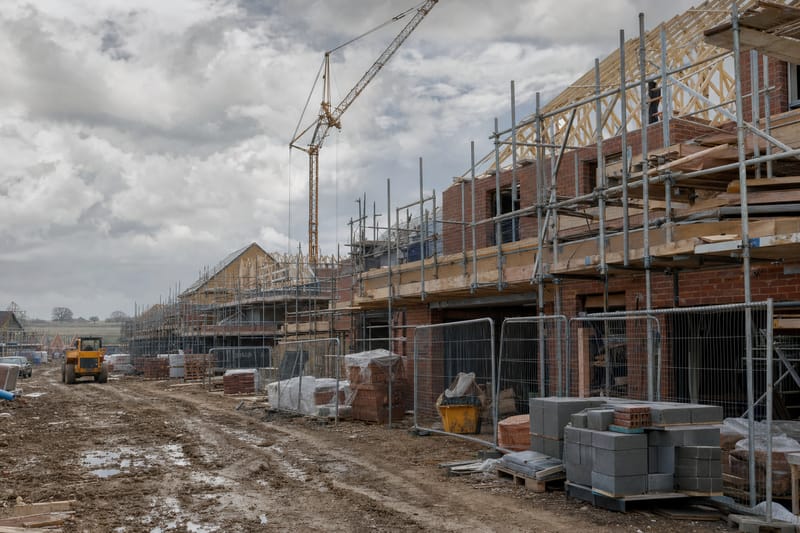
If you've reserved, exchanged, or are living through the build of a new home and the news breaks that your developer has been acquired, merged, or has sold the site to another housebuilder, the first question is simple: does your contract still stand? The short answer is usually yes — but a housebuilder merger or acquisition mid-build can still change who you deal with, what gets built, and how quickly. This happens more often than most buyers realise. UK housebuilding is a consolidating industry: smaller regional builders get bought by national groups, national groups buy out stalled sites from administrators, and even large listed developers occasionally sell off whole developments to a rival to free up capital.
None of this is necessarily bad news. Many acquisitions are financially driven corporate events that have little practical effect on the person buying plot 42. But some do affect specification, build quality, warranty administration, and the people you call when something goes wrong. This guide sets out what legally carries over when a new build site changes ownership, what can legitimately change, and the concrete steps to take whether you're about to exchange on a site that might be vulnerable, or you're already partway through a purchase when the takeover is announced.
As of 2026, it's worth remembering that consolidation in housebuilding isn't new — it has happened in every market cycle, including after downturns when distressed sites change hands cheaply. What's different for today's buyers is that reservation and exchange periods on new builds can run many months, sometimes over a year on larger developments built in phases, which gives corporate events more time to intersect with an individual purchase.
Why Housebuilders Get Taken Over Mid-Build
Understanding why a takeover happens helps you judge how disruptive it's likely to be. Broadly, mid-build changes of ownership fall into a few categories, and each carries a different risk profile for buyers.
- Corporate acquisition of the whole business. A larger housebuilder buys a smaller or regional builder outright — shares, land bank, staff, and live sites included. This is the least disruptive scenario for existing buyers: the legal entity that signed your contract may continue to exist (sometimes as a subsidiary brand) and your contract is unaffected in law.
- Site or land sale between developers. A developer sells an individual, part-built development to another housebuilder, often to release capital or because the site no longer fits its strategy. Here the contracting party can genuinely change, which has more legal consequences for buyers who haven't yet exchanged.
- Insolvency or administration followed by a rescue sale. The original developer runs into financial difficulty, appoints administrators, and the site (or the whole business) is sold on, sometimes at a discount, to keep it moving. This is the scenario with the most potential disruption — and the one where warranty and deposit protection genuinely matter.
- Joint venture restructuring. Many large sites are built under joint ventures between a housebuilder and a housing association, a land promoter, or a build-to-rent investor. A change in one partner's involvement can look like a "takeover" from the outside without actually changing your contracting developer at all.
From a buyer's armchair, these can look identical: new hoarding goes up, the sales office rebrands, and the site manager's email signature changes. But the legal consequences are very different, which is why the first step after any such announcement is working out which scenario you're actually in.
A change of sales-office branding does not automatically mean a change of the legal entity you contracted with — always check the actual company name on your reservation form, contract, and warranty certificate, not just the hoarding outside.
What Legally Carries Over Automatically
If you have already exchanged contracts, you are in the strongest position. A signed, exchanged contract for the sale of land (which is what a new build purchase legally is) creates binding obligations that don't simply evaporate because the seller's shareholders change or because the seller sells the underlying business. Key things that generally carry over:
- The exchanged contract itself. If the original developer company remains the legal seller (even as a subsidiary of a new parent group), your contract terms, agreed price, and specification schedule attached to the contract remain binding on that company.
- Your deposit protection. Deposits paid under schemes such as the NHBC Buildmark deposit indemnity, the Consumer Code for Home Builders, or a solicitor's undertaking holding funds in a client account are protected independently of the developer's corporate fate, provided the scheme was correctly put in place at the time.
- Statutory warranty cover already registered. If NHBC, LABC, Premier Guarantee, or another approved warranty provider has already issued (or committed to issue) cover for your plot, that cover sits with the warranty provider, not the developer. The provider, not the builder, is ultimately on the hook for the structural guarantee in years 3–10.
- Planning permission and building regulations approval attach to the land, not the company, so a new owner inherits the same permitted scheme (though it can apply to vary it — see below).
| What you have | Does it survive a takeover? | Who enforces it |
|---|---|---|
| Exchanged contract | Yes, if the contracting entity continues to exist | You, via solicitors; ultimately the courts |
| Reservation agreement only | Often not binding in the same way — can lapse or be renegotiated | Developer's discretion, subject to Consumer Code |
| NHBC/LABC/Premier warranty | Yes, cover sits with the provider | The warranty provider directly |
| Deposit protection (indemnity/undertaking) | Yes, if correctly set up pre-sale | Scheme provider or your conveyancing solicitor |
| Verbal promises/incentives from sales team | No automatic protection unless written into the contract | None, unless documented |
This is why the single most important document in a mid-build takeover is your exchanged contract, including the specification schedule. If it isn't written down and attached, it generally isn't enforceable against a new owner.
What Can Legitimately Change
Even with a solid exchanged contract, some things are outside its scope and can change when a new build site is taken over. Knowing the difference helps you pick the right battles.
- The sales and site management team. Expect new faces, a new customer portal or CRM system, and sometimes a complete rebrand of the sales office and hoarding, even where the legal seller hasn't changed.
- Incentives not written into your contract. A verbal promise of free flooring, a stamp duty contribution, or a part-exchange deal is only binding if it appears in your contract or a written side-letter. A new owner is not obliged to honour undocumented sales-team promises.
- Build programme and phasing. A new owner may re-sequence later phases, pause unsold plots, or change the order in which roads and landscaping are finished, provided it doesn't breach your specific completion obligations.
- Specification on plots not yet exchanged. If you've only reserved (not exchanged), a new owner can in principle change kitchen ranges, external materials, or even house types for remaining plots, subject to planning constraints and the Consumer Code's fair-trading requirements.
- Site amenities and future phases. Promised future facilities — a shop, a play area, further landscaping — are sometimes tied to a section 106 agreement (which does carry over) but sometimes were only ever a marketing aspiration, which does not.
- Management company and estate charges. If the development has a private management company for shared areas, a takeover can bring in a new managing agent, sometimes with revised service charge estimates.
If you're still at reservation stage when a takeover is announced, treat it as a prompt to re-read everything before exchanging, rather than assuming the deal you were verbally offered will automatically survive.
Warranty and NHBC Cover After a Takeover
Warranty cover is usually the thing buyers worry about most, and it's also the area with the clearest answer. In the UK, new build structural warranties — NHBC Buildmark, LABC Warranty, Premier Guarantee, Build-Zone, and similar — are issued by an independent warranty provider, not by the developer itself. The developer pays a premium and agrees to build to the provider's technical standards; the provider then stands behind the ten-year structural guarantee (years 3–10) regardless of what later happens to the building company.
This structure exists precisely because developers can go under, merge, or disappear, and buyers need cover that survives that. In practice, NHBC cover after a developer acquisition works like this:
- Cover already registered against your plot under a Buildmark (or equivalent) certificate remains valid and is unaffected by who owns the building company.
- In years 0–2 (the developer's own defects liability period), the party obliged to fix defects is still the contracting developer, or its successor if the company has been acquired and continues trading. If the original developer has gone into insolvent administration with no successor, NHBC's own resolution service can in some circumstances step in for this early period too — check the specific terms of your policy and ask NHBC directly rather than assuming.
- If a new developer takes over an unfinished site, it typically needs to register the remaining plots under its own warranty arrangement (sometimes with the same provider, sometimes a different one) before legal completion can happen on those plots — this is a standard condition of mortgage lending, since lenders won't advance funds on a new build without current warranty cover in place.
- Where plots already have cover and a new developer finishes the build, the warranty provider may carry out additional inspections before releasing the final certificate, particularly if there's been a pause in construction.
| Build stage at takeover | Typical warranty outcome |
|---|---|
| Foundations/early structure only | New developer usually re-registers the plot; may involve a provider switch |
| Wind and watertight, fit-out ongoing | Existing registration often continues; provider may re-inspect before completion |
| Practically complete, pre-handover | Certificate issued as planned, usually with minimal disruption |
| Already handed over, in years 0–10 | Cover unaffected; claims go to the warranty provider regardless of ownership changes |
If you're worried, the practical step is to contact your warranty provider directly (not just the sales office) and ask them to confirm, in writing, the status of cover on your specific plot number.
Takeover vs Insolvency: Why the Distinction Matters
Buyers often use "the developer was taken over" loosely to describe two very different events, and it's worth being precise because your protections differ sharply.
A solvent acquisition
Here, the original developer is a going concern that has agreed to be bought, merged, or to sell a site as a normal commercial transaction. Contracts, staff, and obligations typically transfer in an orderly way, often with months of planning and a formal legal handover. Your existing contract remains valid against the continuing legal entity (or its successor in title), and there is rarely any interruption to deposit protection or warranty status.
Insolvency, administration, or liquidation
Here the original developer has run out of cash and appointed insolvency practitioners, who then try to sell the business or its sites to recover value for creditors. This is riskier for buyers because:
- Reservation fees not protected by a scheme can be lost if the company goes into liquidation before you exchange.
- Exchanged contracts are usually still enforceable against the company, but if the company has no money, suing it for specific performance or damages may be of limited practical value — you'd be relying on an administrator finding a buyer willing to honour your contract, or on your deposit protection scheme paying out.
- Unsecured creditors (which can include buyers without protected deposits) rank low in an insolvency, behind secured lenders.
- Subcontractors may down tools, halting the site physically until a new owner is found, which can add months to your timeline even if your contract is eventually honoured.
If your developer's name has appeared in press reports alongside words like "administration," "CVA," "pre-pack," or "creditors' voluntary liquidation," you are in the higher-risk category and should contact your solicitor and warranty/deposit protection provider immediately, rather than waiting for the sales office to update you.
Protecting Yourself Before You Exchange on a Live Site
If you're still choosing a plot, or you've reserved but not yet exchanged, you have the most room to protect yourself. A takeover rumour, or simply buying from a developer with a complex corporate structure, is a reasonable prompt to do extra diligence.
- Check the actual contracting company at Companies House. Look up the exact legal name on your reservation form (not just the trading brand), check its filing history, accounts, and whether it's a subsidiary of a larger group. A dormant-looking shell company with minimal filed accounts building a large site is a flag worth asking questions about.
- Ask who the warranty provider is and get the plot-specific certificate reference in writing before you exchange, not just a generic brochure mention of "NHBC-backed."
- Confirm how your deposit/reservation fee is protected. Is it held in a solicitor's client account, covered by a deposit indemnity, or simply paid to the developer's general trading account? The last option carries the most risk if the company becomes insolvent.
- Get every incentive in writing and, ideally, reflected in the contract or a signed side-letter referencing the contract — not just an email from a sales negotiator who may not be there in six months.
- Check the Consumer Code / New Homes Quality Board status of the developer. Builders signed up to the Consumer Code for Home Builders or the New Homes Quality Code commit to specific pre-sale information and dispute resolution standards that survive personnel changes, even if the underlying company changes hands.
- Review the specification schedule line by line and keep a dated copy, including brochure/plan versions, so you can prove what was promised if later plots or showhomes are altered.
| Check | Where to look | Why it matters |
|---|---|---|
| Contracting company identity | Companies House, reservation form | Confirms who you're actually suing/relying on |
| Warranty provider & certificate | Written confirmation from provider | Confirms 10-year structural cover is live |
| Deposit protection method | Your solicitor | Determines recovery route if developer fails |
| Consumer Code / NHQB membership | Code websites, sales brochure | Gives you an independent complaints route |
None of this guarantees a takeover won't happen — it can't — but it ensures that if one does, you have documented evidence of exactly what you were promised and how your money is protected.
What to Do If It Happens to You Mid-Purchase
If you've already reserved or exchanged and the takeover news lands while you're mid-purchase, work through this sequence rather than reacting to the first headline or sales-office email.
- Get it in writing from the new owner. Ask them to confirm in writing: who the new contracting entity is (if it has changed), that your exchanged contract and agreed price stand, and the current warranty arrangements for your specific plot.
- Instruct your solicitor to review the position before you do anything else, including before paying any further money or agreeing to any "updated" paperwork the new owner sends you. Your solicitor can confirm whether the legal entity has actually changed and what that means for your existing contract.
- Do not sign a fresh contract without legal advice, even if you're told it's "just a formality to reflect the new ownership." In some cases a new owner may ask buyers to re-contract on revised terms — you are not obliged to accept worse terms than you originally agreed, and your solicitor should compare clause by clause.
- Chase written confirmation of warranty cover directly from NHBC, LABC, or Premier Guarantee (whichever applies), quoting your plot number, rather than relying on the sales team's assurance.
- Keep a written record of every promise, specification detail, and incentive, dated, in case the people who made them are no longer on site in a few months.
- Ask about the completion date in plain terms. A change of ownership can realistically add weeks or months to a build programme, particularly if subcontractors paused work during the transition — ask for a realistic revised target rather than accepting a vague "business as usual" reassurance.
- If you have a mortgage offer with an expiry date, tell your lender and broker immediately. Offers typically last three to six months; a construction delay caused by a takeover can run past that, and you may need an extension or a fresh application.
Your exchanged contract is your strongest asset in this situation. Read it again, slowly, with your solicitor, before engaging with anything the new sales team sends you.
If the new owner refuses to confirm your existing terms, or tries to materially alter the specification or price after exchange, that is a breach of contract issue for your solicitor to pursue — not something to resolve informally over email with a new sales negotiator.
Specification Changes and Your Rights Under the Consumer Code
One of the most common friction points after a takeover is specification. A new owner may want to simplify kitchen ranges, switch brick suppliers, swap a landscaping scheme, or change an energy system across the remaining phases of a site — often for perfectly legitimate supply-chain or cost reasons. Whether that affects you depends heavily on timing and documentation.
- If you've exchanged with a specification schedule attached to your contract, the developer (original or successor) is bound by it. Changes to your specific plot would need your agreement, typically with a credit or alternative offered if an item genuinely can't be sourced.
- If you've only reserved, or the specification was described in a brochure or showhome without being incorporated into the contract, a new owner has more latitude to vary it for unsold plots, subject to not misrepresenting what's actually being sold.
- Showhome and display material accuracy is covered to some extent by the Consumer Code for Home Builders and the newer New Homes Quality Code, both of which require developers to market homes accurately and not mislead buyers about specification, even where sales teams and ownership have changed.
The New Homes Quality Board (NHQB), which oversees the New Homes Quality Code, gives buyers of homes from registered developers an independent route to raise a complaint if a developer (old or new) fails to meet its commitments, including around information accuracy and post-completion customer service. If your original developer was a Code member, check whether the new owner is too — membership doesn't automatically transfer and it's worth confirming directly with the NHQB or the Consumer Code scheme administrator.
| Stage at time of spec change | Your leverage |
|---|---|
| Exchanged, spec in contract | Strong — enforceable term, new owner must honour or formally vary with your consent |
| Reserved only, spec in brochure | Moderate — Consumer Code/NHQB fair-marketing rules apply, but not contractually binding |
| Not yet reserved, viewing showhome | Limited — confirm current spec in writing before reserving |
In practice, most reputable acquirers of part-built sites want to protect the development's reputation and sales rate, so wholesale downgrades are relatively rare — but "value engineering" of non-structural finishes on later phases is common enough that it's worth asking directly what, if anything, has changed for plots like yours.
Completion Dates, Snagging, and Aftercare After a Change of Owner
Beyond contracts and warranties, a takeover affects the day-to-day experience of buying and then living in the home. Three practical areas tend to feel the impact most.
Completion dates
Even a solvent, well-managed acquisition usually causes some pause while new management teams, site managers, and subcontractor agreements are put in place. Expect target completion dates on remaining plots to slip by weeks rather than days in most cases, and potentially longer where an insolvency was involved. If you're renting, serving notice on a chain sale, or relying on a mortgage offer with a fixed expiry, build in contingency and ask your solicitor to confirm what notice period and long-stop date clauses exist in your contract — these protect you if completion drags on indefinitely.
Snagging standards
A new site team inherits whatever has already been built, including any shortcuts taken by predecessor subcontractors. It's reasonable to ask whether the new owner has carried out its own quality audit of work completed before the handover, particularly on structural and weatherproofing elements that are expensive to remediate later. Your right to a thorough pre-completion inspection and snagging list doesn't change — if anything, it's worth being more thorough than usual on a site that's changed hands mid-build.
Aftercare and customer service
The two-year developer defects period is where buyers most feel a change of ownership, because the people answering the phone, the systems for logging issues, and the service-level commitments can all change. Ask explicitly: who do I contact for defects now, what's the target response time, and has my case history been transferred to the new system? Keep your own paper trail (dated emails, photos, reference numbers) independent of whatever portal the developer uses, in case systems are migrated or lost during the transition.
Real-World Patterns: How Different Takeovers Have Played Out
You don't need named case studies to see the pattern — UK housebuilding has seen all the scenarios below recur across market cycles, and it's useful to recognise which one you might be in.
| Pattern | Typical buyer impact | What helped buyers most |
|---|---|---|
| Large group acquires a smaller regional builder, keeps the brand as a subsidiary | Minimal — same site teams for a time, gradual rebrand, contracts honoured | Having specification written into the contract; little extra action needed |
| National developer sells a single site to another national developer | Moderate — new sales team, revised future-phase specification, timeline reset | Documented reservation terms; direct contact with warranty provider |
| Developer enters administration, site stalls for months before a buyer is found | Significant — delays, uncertainty, possible loss of unprotected reservation fees | Protected deposits; exchanged (not just reserved) contracts; solicitor engagement early |
| Joint venture partner changes but original housebuilder continues managing the site | Low — often barely visible to buyers day-to-day | Little action needed; worth confirming warranty provider is unaffected |
The consistent thread across every pattern is that buyers who had their position properly documented — exchanged contracts with specification schedules attached, protected deposits, and written confirmation of warranty cover — came through with the least disruption, regardless of which type of corporate event occurred. Buyers relying on verbal promises or unprotected reservation fees were the ones most exposed when things moved slowly or badly.
The practical lesson isn't "avoid developers that might be acquired" — that's nearly impossible to predict — it's "always buy as if a takeover might happen," by insisting on documentation and protection from day one.
Related Risks Worth Checking at the Same Time
A developer takeover rarely arrives in isolation — it's often a good prompt to double-check other parts of your purchase that buyers sometimes overlook until something forces the issue.
- Reservation fee protection. If you've only reserved and haven't exchanged yet, it's worth re-reading Is a New Build Reservation Fee Refundable? Your Legal Rights so you understand exactly what you'd be owed, and by whom, if the sales process is disrupted.
- Developer quality track record. Use the independent HBF Star Rating to compare new build developers — it's worth checking the rating for the new owner, not just the one you originally reserved with, since it reflects a different company's customer service record.
- Industry standards membership. The New Homes Quality Board gives you an independent escalation route if a takeover leads to a dispute over specification, timing, or aftercare that the developer won't resolve directly.
- Quality trends generally. New Build Quality Improvements: Industry Progress in 2026 gives useful context on what's improved across the industry and what standards a new owner should be maintaining, not lowering.
- Incentives you were promised. If part of your deal included a discount, stamp duty contribution, or free extras, revisit New Build Incentives in 2026: What Discounts Are Really on Offer to understand how firmly such offers are normally documented, and make sure yours is in writing.
Running through these alongside the specific takeover questions in this guide gives you a fuller picture of where your purchase stands, rather than treating the ownership change as an isolated event.
Frequently Asked Questions
Does my exchanged contract automatically transfer if my developer is bought by another company?
If the original developer company continues to exist (even as a subsidiary of a new parent group), yes — your exchanged contract remains binding on that company and your terms don't change. If the specific site itself is sold to a different legal entity, your solicitor needs to confirm whether and how the contract transfers; this is usually handled formally as part of the sale, but it's worth independent confirmation rather than assuming.
Will my NHBC warranty still be valid if the developer is taken over or goes into administration?
Generally yes for cover already registered against your plot, because NHBC (and equivalents like LABC and Premier Guarantee) are independent warranty providers, not the developer itself. Cover sits with the provider. For plots not yet registered, a new or successor developer typically needs to arrange cover before legal completion, which lenders require anyway.
Can a new developer change the specification of my home after a takeover?
Not if the specification is written into your exchanged contract — that remains binding. If you've only reserved, or the specification was only shown in a brochure or showhome, a new owner has more scope to change it for plots not yet exchanged, within the limits of fair-trading rules under the Consumer Code or New Homes Quality Code.
What happens to my reservation fee if the developer becomes insolvent before I exchange?
This depends entirely on how it was protected. If it was held in a solicitor's client account or covered by a specific deposit protection scheme, you have a direct recovery route. If it was simply paid into the developer's general trading account with no protection, you may become an unsecured creditor in the insolvency, which carries real risk of partial or total loss. Always ask how your fee is protected before paying it.
Should I be worried if the hoarding and sales office suddenly rebrand?
Not automatically. Rebranding alone doesn't tell you whether the legal contracting entity has changed. Check your actual contract and, if in doubt, ask your solicitor to confirm the identity of the company you're contracting with via Companies House.
Can I pull out of my purchase if I don't like the new developer taking over my site?
If you've exchanged, you're contractually committed and withdrawing would normally mean losing your deposit and potentially facing a claim for damages, unless the new owner has materially breached the contract (for example, failing to deliver the agreed specification or warranty cover). If you've only reserved, you typically have more flexibility, subject to the terms of your reservation agreement.
How do I find out if a developer is a member of the New Homes Quality Board or Consumer Code?
Check the developer's own marketing material, ask the sales office directly for written confirmation, or search the New Homes Quality Board and Consumer Code for Home Builders websites, which list registered developer members. Confirm membership for the current owner specifically, since it doesn't automatically carry over from a predecessor.
Does a site change of ownership affect my mortgage offer or exchange timetable?
It can, particularly if completion is delayed. Mortgage offers typically expire after three to six months, so tell your lender and broker as soon as you're aware of a material delay, and ask about extension options well before your existing offer lapses.
Next Steps
A developer takeover is ultimately a corporate event you can't control — but how well-documented and protected your purchase is before it happens largely determines how smoothly you come through it. Use these tools to check your position and compare your options.
- Browse /developments to see current status, developer, and phase information for sites you're considering or already own on.
- Check /builders to research the track record, star rating, and corporate background of both your original developer and any new owner.
- Search /properties for comparable plots if you're reconsidering your options on a site that has changed hands.
- Use /map to see other developments nearby in case a delay or change of plan means you want to compare alternatives.
- Explore /tools for calculators covering affordability, stamp duty, and mortgage timing — useful if your completion date shifts.
- Use /compare to weigh up developers side by side on specification, warranty provider, and customer ratings before committing further.
Whatever stage you're at, the core principle holds: get the detail in writing, know exactly who you're contracting with, and confirm your warranty and deposit protection directly with the provider rather than relying solely on reassurances from a sales team that may itself be new to the site.