What Is NHBC Buildmark and Why Does It Matter?
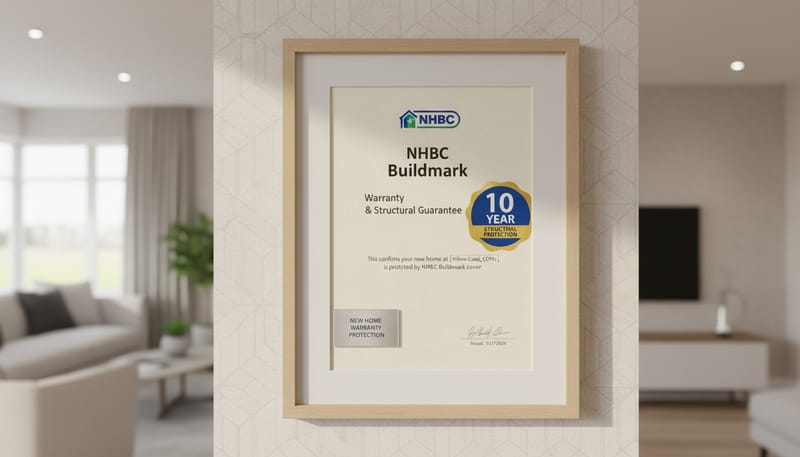
The NHBC (National House Building Council) Buildmark warranty is the most widely recognised structural warranty for new build homes in the United Kingdom. It provides protection to buyers of new build properties for a period of up to 10 years from the date of legal completion, covering defects, structural damage, and — crucially — providing a safety net if the builder fails to complete the property or goes out of business before you move in.
Understanding the precise scope of Buildmark cover is essential for any new build buyer. Too many homeowners assume that their NHBC warranty covers everything that could possibly go wrong with their home, only to discover — when they need to make a claim — that certain issues fall outside the warranty’s scope. This guide provides a detailed, plain-English explanation of what is and is not covered under each of the three periods of Buildmark protection, how to make a claim, and how Buildmark interacts with your other legal rights.
If you are purchasing a new build home, your solicitor should have confirmed that the property is enrolled for Buildmark cover as part of the pre-exchange checklist. Most mortgage lenders require a recognised structural warranty as a condition of lending, making Buildmark (or an equivalent scheme) effectively compulsory for new build purchases.
Jurisdictional note: NHBC Buildmark is available across England, Wales, Scotland, and Northern Ireland. However, certain consumer rights legislation referenced in this article (such as the Consumer Rights Act 2015) applies specifically to England & Wales. Scottish and Northern Irish buyers should seek local legal advice on the interaction between Buildmark and their domestic consumer protection laws.
Disclaimer: This article provides general information about NHBC Buildmark warranty cover. It does not constitute legal advice, and the specific terms of your Buildmark policy may differ from the general description provided here. Always refer to your actual Buildmark documentation and consult a qualified solicitor if you have questions about your legal rights.
The Three Periods of Buildmark Cover
Buildmark protection is divided into three distinct periods, each with different coverage, different obligations, and different parties responsible for resolving issues. Understanding which period applies at any given time is the key to knowing who to approach and what you can claim for.
| Period | Timeframe | Who Is Responsible | What Is Covered |
|---|---|---|---|
| Period 1: Pre-completion insurance | From exchange of contracts to legal completion | NHBC (insurance-backed) | Deposit protection if builder becomes insolvent or fails to build to NHBC standards; cost of completing or rectifying the home |
| Period 2: Builder warranty | Years 1–2 after legal completion | The builder (developer) | Defects caused by breach of NHBC technical requirements; builder must put right at own expense |
| Period 3: NHBC insurance | Years 3–10 after legal completion | NHBC (insurance-backed) | Physical damage to the home caused by defects in specified structural elements; contamination; non-compliance with Building Regulations |
Let us examine each period in detail to understand exactly what is covered, what is not, and how to make a claim.
Period 1: Pre-Completion Insurance
Period 1 of Buildmark provides protection from the moment you exchange contracts until legal completion. This is a particularly valuable form of cover because it protects your financial investment during the most vulnerable phase of a new build purchase — when you have committed your deposit but the property is not yet yours.
What Is Covered
- Builder insolvency: If the builder becomes insolvent (goes into liquidation, administration, or receivership) after you have exchanged contracts but before completion, Buildmark provides cover for the financial loss you suffer. This typically includes the return of your deposit and any amounts paid towards the purchase price.
- Failure to build to NHBC standards: If the builder fails to build the home to the standard required by NHBC technical requirements, and does not rectify the issue, NHBC may step in to arrange for the necessary work to be completed or fund the cost of rectification.
- Cost of alternative completion: If the builder cannot or will not complete the home, Buildmark may cover the additional cost of having the home completed by another builder, up to a specified financial limit.
Financial Limits
Period 1 cover is subject to financial limits, which are specified in the Buildmark documentation. The maximum amount payable is typically linked to the original purchase price of the property and is subject to an overall cap. The cap amount has varied over the years but is generally in the region of £100,000 to £120,000. For properties with a purchase price above this cap, the excess would not be covered, which is an important consideration for buyers of higher-value homes.
Your solicitor should confirm the specific financial limits of your Buildmark cover before exchange. If the cover is insufficient for your purchase price, additional insurance may be available, or you may wish to negotiate alternative protections with the developer. This should form part of your pre-exchange legal checklist before exchanging.
Period 2: Builder Warranty (Years 1–2)
Period 2 runs from the date of legal completion to the second anniversary of legal completion. This is often referred to as the “defects liability period” and is the phase during which the builder (developer) has a direct obligation to put right defects in your home.
What Is Covered
During Period 2, the builder must put right, at their own expense, any defect or damage caused by the builder’s failure to meet the NHBC’s technical requirements. This includes:
- Structural defects (subsidence, wall cracking, roof defects)
- Issues with weatherproofing (water ingress through walls, windows, or roofs)
- Defective drainage and plumbing installations
- Problems with heating and electrical systems where they do not meet NHBC standards
- Issues with internal walls, floors, and ceilings (such as excessive cracking or movement)
- Problems with staircases, balconies, and other structural elements
- Defects in common parts of buildings (for flats and apartments)
The Builder’s Obligation
The critical point about Period 2 is that it is the builder’s responsibility to remedy defects, not NHBC’s. NHBC acts as the backstop — if you report a defect to the builder and they refuse to address it, or do not respond within a reasonable time, you can escalate the matter to NHBC’s Resolution Service. NHBC will investigate and, if the builder is at fault, will direct the builder to carry out the necessary repairs.
If the builder still refuses to comply, or if the builder has become insolvent, NHBC may arrange for the repairs to be carried out at its own expense and recover the costs from the builder. This backstop is one of the most valuable aspects of Buildmark — it provides a mechanism for resolving disputes without needing to go to court.
Important Limitations During Period 2
Period 2 cover has some important limitations that you should be aware of:
- Cosmetic issues vs structural defects: Minor cosmetic issues (such as small nail pops in plasterwork, minor paint imperfections, or small gaps in joinery) are snagging checklist-new-build-complete-guide">snagging items rather than warranty claims. While the builder should address snagging items, they are not covered under Buildmark if the builder disputes them.
- Wear and tear: Normal wear and tear is not covered. Items that deteriorate through normal use (such as carpet wear, tap washer replacement, or boiler servicing) are the homeowner’s responsibility.
- Homeowner modifications: Defects caused or contributed to by the homeowner’s own actions (such as failure to maintain, improper DIY modifications, or failure to ventilate the property properly) are not covered.
- Shrinkage cracking: Minor shrinkage cracks in plaster and mortar are considered normal in new buildings (as materials dry out and the structure settles) and are generally not covered unless they indicate a structural problem.
Period 3: NHBC Insurance (Years 3–10)
Period 3 runs from the third anniversary to the tenth anniversary of legal completion. From year 3 onwards, the cover is provided directly by NHBC as an insurance policy, and the scope of cover is narrower than during Period 2. This reflects the principle that by year 3, most construction defects should have manifested and been addressed under the builder’s warranty.
What Is Covered
During Period 3, NHBC covers physical damage to the home caused by a defect in specified elements of the structure. The key covered elements include:
- Foundations
- Load-bearing walls (external and internal)
- Non-load-bearing partition walls forming part of the external envelope
- Ground floors, intermediate floors, and roofs (structural elements)
- Staircases and landings providing primary structural support
- Flue and chimney structures
- Retaining walls necessary for the structural stability of the building
- External render and cladding where it forms part of the weatherproofing envelope
The “Physical Damage” Requirement
The most important distinction between Period 2 and Period 3 cover is the physical damage requirement. During Period 3, NHBC will only pay a claim if the defect has caused (or is an imminent danger of causing) physical damage to the home. This means that a latent defect that has not yet caused visible damage may not be covered, even if it is identified by a surveyor.
For example, if a surveyor discovers that the foundations are defective but no cracking or movement has occurred, you may not be able to claim under Period 3 until physical damage actually manifests. This can be a source of frustration for homeowners who are aware of a problem but cannot claim until it causes visible harm.
Financial Limits and Excess
| Aspect | Details |
|---|---|
| Maximum claim amount | The original purchase price of the home (or the rebuild cost, whichever is lower), subject to an overall cap |
| Minimum claim amount (excess) | Typically £1,750 (indexed); claims below this threshold are not covered |
| Aggregate limit | The total amount payable over the life of the policy is subject to an aggregate cap; multiple claims reduce the remaining cover |
| Alternative accommodation | If the home is uninhabitable due to a covered claim, NHBC may contribute to the cost of alternative accommodation |
| Contamination cover | Cover for necessary remediation if contamination of the site is discovered that was not identified at the time of construction |
How to Make a Claim & Dispute Resolution
Making a Buildmark claim follows a structured process that differs depending on whether you are in Period 2 (builder responsibility) or Period 3 (NHBC insurance).
Period 2 Claims Process
- Report to the builder first: Contact the developer’s customer care or after-sales team in writing (email is usually acceptable) and describe the defect clearly. Include photographs where possible. Give the builder a reasonable time to respond — typically 28 days for a non-urgent defect.
- Follow up in writing: If the builder does not respond or refuses to remedy the defect, send a formal letter setting out the defect, your request for it to be rectified, and a reasonable deadline for the work to be completed.
- Escalate to NHBC: If the builder still does not resolve the issue, contact NHBC’s Resolution Service. You can do this through the NHBC website, by phone, or in writing. NHBC will assign a claims handler who will review the issue and, if necessary, inspect the property.
- NHBC investigation: NHBC will assess whether the defect constitutes a breach of their technical requirements. If it does, NHBC will direct the builder to carry out repairs within a specified timeframe.
- NHBC intervention: If the builder does not comply with NHBC’s direction, NHBC may arrange for the repairs to be carried out by an alternative contractor at NHBC’s expense.
Period 3 Claims Process
- Contact NHBC directly: For Period 3 claims, you deal with NHBC as the insurer, not the builder. Contact NHBC’s claims department and provide full details of the damage, including photographs, a description of the problem, and when you first noticed it.
- NHBC inspection: NHBC will arrange for an inspection of the property by one of their assessors. The assessor will determine whether the damage falls within the scope of Period 3 cover.
- Decision and remediation: If the claim is accepted, NHBC will arrange for the necessary repairs or provide a financial settlement. If the claim is rejected, NHBC will explain the reasons in writing.
- Appeal: If you disagree with NHBC’s decision, you can appeal through their internal complaints process. If the internal process does not resolve the issue, you can escalate to the Financial Ombudsman Service (FOS), as Buildmark is a regulated insurance product.
NHBC’s Role vs the Developer’s Obligations
It is important to understand the distinction between NHBC and the developer:
- NHBC is not the builder: NHBC is a warranty and insurance provider. They set building standards, inspect construction during the build process, and provide the Buildmark policy. They are not responsible for building your home.
- During Period 2, the builder is responsible: NHBC acts as a mediator and backstop during the first two years, but the primary obligation to fix defects lies with the builder. NHBC only steps in if the builder fails to act.
- During Period 3, NHBC is the insurer: From year 3 onwards, your claim is against NHBC’s insurance policy, not against the builder. The builder has no obligation to you under Buildmark after year 2 (although they may have separate contractual or statutory obligations).
What Is NOT Covered by Buildmark
Understanding the exclusions is just as important as understanding what is covered. Many homeowner complaints about Buildmark arise from misunderstandings about the scope of cover. The following are not covered by Buildmark at any stage:
- Normal wear and tear: Components that deteriorate through normal use (taps, door handles, boiler parts, appliances) are not covered
- Cosmetic or minor snagging issues: Paint imperfections, minor plaster cracking, small gaps in joinery, and similar snagging items are not warranty claims (although the builder should address them under their customer care obligations)
- White goods and appliances: Kitchen appliances, boilers, and other mechanical equipment are covered by the manufacturer’s warranty, not Buildmark
- Landscaping and garden: Fences, turf, plants, driveways, and external surfaces are generally not covered (with the exception of structural retaining walls)
- Condensation and damp from poor ventilation: If condensation or mould results from the homeowner’s failure to adequately ventilate the property, it is not covered. However, if it results from a construction defect (such as inadequate ventilation provision), it may be
- Damage caused by the homeowner: Any defects caused or worsened by the homeowner’s actions, modifications, or failure to maintain the property
- Issues outside NHBC technical requirements: If an element of the home was not required to meet NHBC standards (for example, if it is a non-structural decorative feature), defects in that element are not covered
- Consequential losses (in most cases): Loss of earnings, hotel costs, or other consequential losses arising from a defect are generally not covered, although NHBC may contribute to alternative accommodation costs in severe cases
Common Exclusion Scenarios
| Scenario | Covered? | Explanation |
|---|---|---|
| Boiler breaks down in year 1 | No | Covered by manufacturer’s warranty, not Buildmark |
| Major cracking appears in external walls in year 4 due to foundation defect | Yes (Period 3) | Physical damage to the structure caused by a defect in a covered element (foundations) |
| Roof tiles blow off in a storm in year 5 | Possibly | If tiles were properly installed and the storm was exceptional, this is likely a buildings insurance claim. If tiles were defectively fixed, it may be a Buildmark claim |
| Mould appears due to homeowner not using extractor fans | No | Homeowner responsibility; not a construction defect |
| Garden fence falls down in year 1 | No | Fencing is not covered under Buildmark; a snagging issue to raise with the builder |
| Water ingress through walls due to defective cavity insulation in year 6 | Yes (Period 3) | Physical damage to the home caused by a defect in the external weather envelope |
How Buildmark Interacts with Consumer Rights Law
Buildmark is an important protection, but it exists alongside — and does not replace — your other legal rights as a consumer. Understanding how these rights interact is essential for getting the best outcome if something goes wrong with your new build home.
Your Statutory Rights
As the buyer of a new build home, you have statutory rights under several pieces of legislation:
- Consumer Rights Act 2015: This Act requires that goods supplied to a consumer must be of satisfactory quality, fit for purpose, and as described. While a house is primarily “land” rather than “goods” in legal terms, certain elements of a new build (fitted kitchen, appliances, fixtures and fittings) may be classified as goods and benefit from these protections. The Act also implies that services (including construction services) must be performed with reasonable care and skill.
- Supply of Goods and Services Act 1982: For contracts entered into before October 2015, this Act provides similar protections regarding the quality of goods and the standard of services.
- Defective Premises Act 1972: This Act imposes a statutory duty on builders to ensure that dwellings are built in a workmanlike manner, with proper materials, and so that the dwelling is fit for habitation when completed. Claims under this Act must be brought within 15 years (extended from 6 years by the Building Safety Act 2022), giving you a significantly longer period to claim than the 10-year Buildmark warranty. This is a powerful right that exists independently of Buildmark.
- Consumer Code for Home Builders: While not legislation, the Consumer Code provides an additional framework for resolving disputes with developers, including access to an Independent Dispute Resolution Scheme.
Buildmark Does Not Limit Your Other Rights
A critical point that all new build buyers should understand is that Buildmark does not limit or replace your statutory or common law rights. The Buildmark documentation itself states that your legal rights are not affected by the warranty. This means:
- If an issue is not covered by Buildmark, you may still have a claim against the builder under the Defective Premises Act 1972, the Consumer Rights Act 2015, or in common law negligence
- If NHBC rejects a Buildmark claim, this does not prevent you from pursuing the builder directly through the courts
- If the financial limits of Buildmark are insufficient to cover the cost of repairs, you may be able to recover the balance from the builder under contract or statute
- After Buildmark expires (year 10), the Defective Premises Act 1972 continues to provide protection for up to 15 years from the date the dwelling was completed
Choosing the Right Route for Your Claim
When something goes wrong with your new build home, you may have multiple routes to resolution. The best approach depends on the nature of the problem, the time since completion, and the developer’s willingness to engage:
- Within years 1–2: Start with the builder under their defects liability obligations. If they do not respond, escalate to NHBC. If NHBC cannot resolve it, consider legal action under the contract, the Consumer Rights Act, or the Defective Premises Act.
- Within years 3–10: Claim under Buildmark Period 3 for covered defects. For issues not covered by Buildmark, consider the Defective Premises Act 1972 or a claim in negligence against the builder.
- After year 10: Buildmark has expired, but you may still have rights under the Defective Premises Act 1972 (up to 15 years) or in common law negligence (typically 6 years from discovery of the defect, subject to a 15-year longstop).
Frequently Asked Questions
Does Buildmark transfer to a new owner if I sell the property?
Yes. Buildmark cover runs with the property, not the individual buyer. If you sell your home within the 10-year Buildmark period, the remaining cover automatically transfers to the new owner. The new owner does not need to register separately or pay any additional fee — the cover continues for the remaining period as if they were the original purchaser. This is one of the advantages of Buildmark and can be a selling point when marketing your property.
Is Buildmark the only new build warranty available?
No. While NHBC Buildmark is the most widely used, there are several other new build warranty providers operating in the UK, including Premier Guarantee, LABC Warranty, Zurich (Building LifePlans), and Checkmate (ICW). Each provider offers slightly different terms and conditions, and not all are accepted by all mortgage lenders. Your solicitor should confirm that the warranty provider for your new build is accepted by your lender.
Can I claim on Buildmark and my buildings insurance at the same time?
Buildmark and buildings insurance cover different risks, and there should generally be no overlap. Buildmark covers defects in construction (poor workmanship, materials, or design), while buildings insurance covers damage from external events (storms, floods, fire, subsidence from natural ground movement). If you are unsure which policy covers your issue, report it to both NHBC and your buildings insurer. They will determine between them which policy responds.
What if the builder has gone out of business during Period 2?
This is exactly the scenario that Buildmark is designed to address. If the builder becomes insolvent during Period 2 and cannot fulfil their obligation to repair defects, NHBC will step in under the Buildmark policy. NHBC will assess the defects and either arrange for repairs to be carried out by an alternative contractor or provide a financial settlement. This backstop protection is one of the primary reasons mortgage lenders require NHBC or equivalent warranty cover.
How long do I have to report a defect under Buildmark?
You should report defects as soon as you become aware of them. For Period 2 claims, there is no formal deadline other than the end of the two-year period, but prompt reporting helps ensure that the builder addresses the issue while they are still responsible. For Period 3 claims, the 10-year period runs from the date of legal completion, and claims must be made within this period. Reporting promptly also helps establish a clear timeline and prevents issues from worsening.
Conclusion: Understand Your Cover and Use It Wisely
NHBC Buildmark is a valuable and comprehensive warranty that provides new build buyers with significant protection against construction defects. However, it is not a catch-all guarantee that everything about your new home will be perfect. Understanding the three periods of cover, the distinction between what is and is not included, and the claims process will help you navigate any issues that arise with confidence.
The key points to take away from this guide are:
- Buildmark provides three distinct periods of cover: pre-completion insurance, a two-year builder warranty, and an eight-year structural insurance policy
- During years 1–2, the builder is primarily responsible for defects; NHBC acts as a backstop
- During years 3–10, NHBC provides direct insurance cover, but only for physical damage caused by defects in specified structural elements
- Buildmark does not cover cosmetic issues, wear and tear, appliances, or damage caused by the homeowner
- Buildmark does not replace your statutory rights — the Defective Premises Act 1972 and Consumer Rights Act 2015 provide additional protections that may extend beyond the Buildmark period
- Always report defects promptly and in writing, keeping copies of all correspondence
If you have questions about your Buildmark cover or are considering making a claim, consult your solicitor or contact NHBC directly. For more information on the legal aspects of buying a new build home, see our guides to the conveyancing process-process-new-build">new build conveyancing process and the complete buying process.
This article provides general information about NHBC Buildmark warranty cover. It does not constitute legal advice. The specific terms and conditions of your Buildmark policy may differ from the general description provided here. Always refer to your actual Buildmark documentation and consult a qualified solicitor if you have questions about your legal rights.