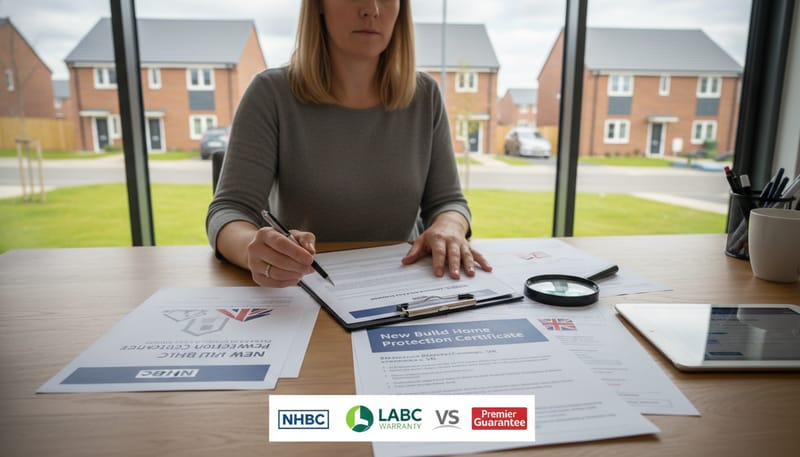
How New Build Warranties Work: The Three Phases
A new build warranty isn't a single 10-year blanket of protection. It's three distinct phases with different rules, different responsibilities, and different levels of cover. Understanding these phases is essential — most disputes arise because buyers expect warranty cover that doesn't apply in their current phase.
Phase 1: Builder Warranty Period (Years 1–2)
During the first two years, the developer is responsible for fixing defects — not the warranty provider. This is the most important phase for homeowners because it covers the widest range of issues.
- What's covered: Any defect that breaches the warranty provider's technical standards. This includes faulty plumbing, electrical issues, poor plastering, defective windows and doors, drainage problems, inadequate insulation, and any aspect of construction that doesn't meet the standards the developer was registered to build to
- What's NOT covered: Normal wear and tear, cosmetic preferences (you don't like the paint colour), shrinkage and settlement within industry tolerances (hairline cracks, small gaps between skirting and floors), damage caused by you (drilling into pipes, blocking drains), and items excluded in your warranty documentation (landscaping, driveways sometimes, white goods)
- Who fixes it: The developer's aftercare team, not the warranty provider. You report defects to the developer and they arrange repairs. The warranty provider only gets involved if the developer fails to act
- Time limit: You must report defects within the 2-year period. Anything reported after year 2 falls under the structural phase — which covers far less
Phase 2: Structural Insurance Period (Years 3–10)
From year 3 onwards, the warranty provider takes over — but only for specific structural defects. The developer is no longer responsible (unless they've given you a separate contractual commitment).
- What's covered: Defects that affect the structural integrity of the building or cause a present or imminent danger to the physical health and safety of occupants. This includes: foundation failures, load-bearing wall defects, roof structure issues, defective floor slabs, chimney and flue failures, and waterproofing failures that affect the structure
- What's NOT covered: Cosmetic issues, general wear and tear, plumbing and electrical faults (unless they cause structural damage), boiler failures, window mechanism issues, damp caused by condensation (rather than structural defects), garden walls, paths, drives, and fencing
- The key test: Does the defect affect the structure or make the home unsafe? If yes, it's likely covered. If it's annoying but not structural, it's probably not covered after year 2
Phase 3: After Year 10
The warranty expires. You're responsible for all repairs. However, some components have their own manufacturer warranties that may extend beyond year 10 — boilers (often 5–10 years from installation), windows (typically 10 years for frames, 5 years for mechanisms), and roofing materials (up to 20–30 years for tiles). Keep all manufacturer warranty documents in a safe place.
NHBC Buildmark: The Most Common Warranty
Approximately 80% of new build homes in the UK are registered with the NHBC (National House Building Council). Their Buildmark warranty is the industry standard.
What NHBC Buildmark Includes
- Pre-completion cover: If the developer becomes insolvent before you move in, NHBC will either arrange for the home to be completed or refund your exchange deposit (up to £100,000). This protection applies from exchange of contracts
- Years 1–2 (builder warranty): The developer must fix defects that breach NHBC's technical requirements. NHBC sets the standards and can intervene if the developer doesn't act
- Years 3–10 (structural insurance): NHBC provides insurance cover for structural defects. Claims are made directly to NHBC, who arrange inspections and authorise repairs
- Contaminated land cover: If the site is found to be contaminated after purchase (and this wasn't disclosed), NHBC provides cover for necessary remediation
NHBC Technical Standards
NHBC publishes detailed technical requirements that registered builders must follow. These cover everything from foundation depth to plaster finish. When you report a defect in years 1–2, NHBC assesses it against these standards — not against your expectations or the show home finish. Key tolerances include:
- Plaster finish: Waviness of up to 5mm over a 2-metre span is acceptable
- Floor levelness: Variation of up to 10mm over a 3-metre span for timber floors
- Door and window gaps: Gaps up to 4mm around frames are within tolerance
- Skirting and floor gaps: Gaps up to 3mm are considered acceptable
- Hairline cracks: Cracks under 1mm wide in plaster are classed as normal settlement
Understanding these tolerances helps you distinguish between genuine defects (which must be fixed) and cosmetic imperfections within acceptable standards (which the developer can refuse to fix). For a complete list of what to check, see our room-by-room snagging checklist.
NHBC Resolution Service
If you and the developer can't agree on whether something is a defect, NHBC offers a resolution service. An NHBC inspector visits your home, assesses the issue against their technical standards, and issues a written decision. If they agree the issue is a defect, the developer must fix it within a specified timeframe. If the developer still refuses, NHBC can arrange for the work to be done independently and recover the costs from the developer.
The resolution service is free during years 1–2 and is the most effective tool for getting reluctant developers to act. Request it in writing through NHBC's claims portal or by calling 0800 035 6422.
Alternative Warranty Providers
Not all new builds have NHBC Buildmark. Alternative providers cover the remaining 20% of the market. They offer similar 10-year structural warranties but with differences in cover, claims processes, and builder standards.
LABC Warranty
- Provider: Local Authority Building Control
- Structure: Similar 2+8 year split (builder period + structural insurance)
- Key difference: Inspections are carried out by local authority building control rather than NHBC inspectors. Some argue this provides more independent oversight since LABC isn't funded by the developers it inspects
- Accepted by lenders: Yes — most mainstream mortgage lenders accept LABC warranties
Premier Guarantee
- Provider: MD Insurance Services
- Structure: 10-year cover with a 2-year defects insurance period and 8-year structural insurance
- Key difference: Premier Guarantee's defects period is insurance-backed from day one — meaning if the developer won't fix defects in years 1–2, Premier Guarantee pays for repairs directly rather than chasing the developer first. This can be faster than the NHBC process
- Accepted by lenders: Widely accepted, though a small number of lenders only accept NHBC
ICW (International Construction Warranties)
- Structure: 10 or 12-year structural warranties
- Key difference: Often used for self-build projects and smaller developers. Cover is broadly similar but the claims process may be less well-established than NHBC
- Accepted by lenders: Most lenders accept ICW warranties, but check with your broker
Checkmate and Others
Several other providers exist, including Checkmate, BLP Insurance, and Protek. They all provide similar 10-year cover. The critical questions for any warranty are:
- Is it accepted by your mortgage lender?
- What's the claims process and average response time?
- What happens if the developer goes into administration during construction?
- Is there a resolution service for disputes?
How to Make a Warranty Claim: Step by Step
Years 1–2: Claiming Against the Developer
- Document the defect. Take photographs with timestamps. Measure any cracks or gaps with a ruler for scale. Describe the issue clearly — "crack in plaster above kitchen door, approximately 3mm wide, appeared within first 4 months"
- Report in writing to the developer. Email their aftercare or customer care team. Include photos, location, and when you first noticed it. Keep copies of everything. Don't just tell the site manager verbally — you need a written trail
- Allow reasonable time for response. Most developers commit to acknowledging reports within 5 working days and resolving issues within 28 days (for non-emergency defects). Check your warranty documentation for their specific commitments
- Follow up systematically. If no response within 14 days, send a follow-up email referencing the original report and attaching the same photos. Copy in the developer's head office customer care team
- Escalate to the warranty provider. If the developer hasn't acted within 56 days (8 weeks), contact your warranty provider directly. For NHBC: request a resolution service investigation. For other providers: file a formal claim. The warranty provider will contact the developer on your behalf — and developers respond faster to warranty providers than to individual homeowners because unresolved claims affect their registration status
- New Homes Ombudsman. If the warranty provider's resolution isn't satisfactory, you can escalate to the New Homes Quality Board (NHQB) ombudsman service, which was established to handle complaints about new build developers. The developer must be registered with the NHQB for this to apply — most major developers are
Years 3–10: Claiming Against the Warranty Provider
- Assess whether the defect is structural. Only structural defects are covered in this phase. If your issue is a leaking tap or a broken window handle, it's your responsibility. If it's a cracking foundation, failing roof structure, or water ingress through a structural defect, it's covered
- Contact the warranty provider directly. Submit a claim through their portal or by phone. Provide photographs, a description, and any reports from tradespeople or surveyors who've assessed the issue
- Warranty provider inspection. They'll send an inspector to assess the defect. This typically happens within 2–4 weeks of your claim
- Decision. The inspector determines whether the issue meets the structural defect criteria. If accepted, the warranty provider arranges and pays for repairs. If rejected, they'll explain why and what your options are
- Appeals. If your claim is rejected and you disagree, you can appeal the decision. Most providers have a formal appeals process. Independent structural engineer reports (£400–£800) carry significant weight in appeals
What to Do When the Developer Refuses to Fix Defects
This is the most frustrating scenario — and it's more common than it should be. Here's your escalation ladder:
- Written complaint to the developer's customer care director (not the site team). Reference your warranty, the specific NHBC/provider technical standard breached, and the timeline of your reporting. State that you'll escalate to the warranty provider if not resolved within 14 days
- Warranty provider resolution service. As described above — this is your most powerful tool
- New Homes Quality Board ombudsman. For complaints about the developer's handling of your case (not just the defects themselves). The ombudsman can award compensation up to £25,000
- Trading Standards. If the developer is making misleading claims about what's covered or what they'll fix, report them to your local Trading Standards office
- Legal action. Under the Defective Premises Act 1972 (strengthened by the Building Safety Act 2022), builders owe a duty to build dwellings properly. You have the right to pursue the developer through the courts for defective work. The limitation period was extended to 15 years for claims under the Defective Premises Act — so even after the 10-year warranty expires, you may still have legal recourse for serious defects
- Social media and reviews. Developers are sensitive to public complaints. A factual, well-documented post on social media or a review site often generates a faster response than weeks of emails. Stick to facts — don't exaggerate or make accusations you can't evidence
Protecting Your Warranty: Things That Can Void It
Your warranty has conditions. Breaching them can reduce or void your cover:
- Unauthorised structural alterations: Removing a load-bearing wall, adding an extension, or converting the loft without proper approvals and building regulations sign-off. Always notify your warranty provider before undertaking structural work
- Failing to maintain the property: Blocked gutters leading to water damage, failure to ventilate properly (causing condensation damp), or neglecting to maintain external surfaces. The warranty covers defects, not damage caused by lack of maintenance
- Not registering manufacturer warranties: Your boiler warranty may require registration within 30 days of commissioning. If you don't register it, the manufacturer may refuse warranty claims — and the structural warranty provider won't cover boiler failures. Register everything: boiler, windows, doors, kitchen appliances, bathroom fittings
- Commercial use: If you convert part of your home to commercial use without appropriate consents, your warranty may be affected
- Late reporting: Defects reported after the 2-year builder warranty period that should have been obvious earlier may be harder to claim for. Report issues as soon as you notice them — don't "save them up" for a big list
The Warranty Documents You Should Keep
Gather and store these documents safely — you'll need them for claims and when you eventually sell:
- ☐ Warranty certificate (NHBC Buildmark or alternative provider)
- ☐ Policy document with cover details and exclusions
- ☐ Warranty provider's contact details and claims process
- ☐ Building regulations completion certificate
- ☐ Boiler installation certificate and warranty registration
- ☐ Electrical installation certificate (Part P)
- ☐ Gas safety certificate
- ☐ Window and door guarantees (FENSA or CERTASS certificate)
- ☐ Kitchen and appliance warranties
- ☐ Any independent snagging reports
- ☐ All correspondence with the developer about defects
- ☐ Copies of your snagging lists (original and follow-ups)
When you sell the property, the warranty transfers to the new owner for the remaining period. Your solicitor will include the warranty documentation in the legal pack — having everything organised makes the process faster.
Key Dates to Remember
- Day 1 (completion): Complete your initial snagging inspection. Register your boiler warranty. Photograph the condition of every room
- Day 7–14: Submit your formal snag list to the developer in writing
- Month 11–12: Request the developer's 12-month cosmetic rectification visit. Submit a comprehensive updated snag list
- Month 23–24: Final check before the 2-year builder warranty period ends. Report EVERYTHING — even minor issues. After month 24, the developer is no longer obligated to fix non-structural defects
- Year 10: Warranty expires. Ensure all outstanding structural claims are filed before this date