Understanding Glazing Performance in New Build Homes
Windows are one of the most thermally vulnerable elements of any home. Even in a well-insulated new build with excellent wall, roof, and floor insulation, a significant proportion of heat loss occurs through the glazing. This is why the type of glazing you have — and specifically whether it is double or triple — makes a measurable difference to your energy bills, comfort, and the overall EPC rating of your property.
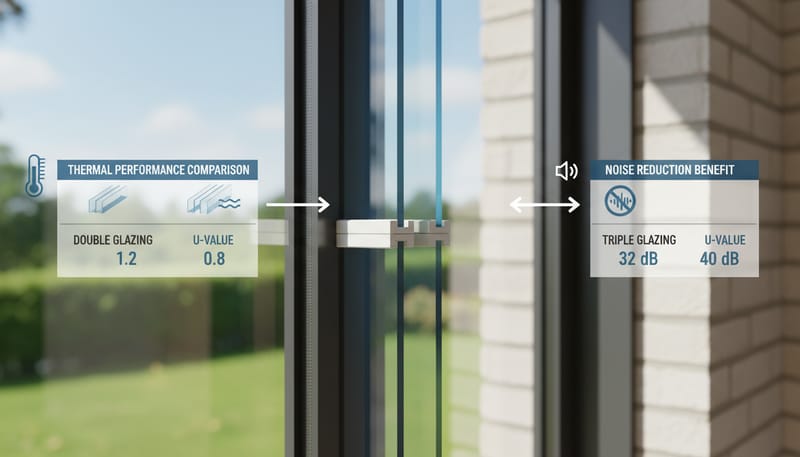
Most new build homes in the UK are fitted with double glazing as standard. Current Building Regulations (Part L) require windows to achieve a minimum U-value of 1.4 W/m²K, and modern double-glazed units comfortably meet this at 1.2–1.4 W/m²K. However, triple glazing achieves U-values of 0.6–0.8 W/m²K — roughly half the heat loss of double glazing.
The question for new build buyers is whether the additional cost of triple glazing (£3,000–£7,000 for a typical home) is justified by the energy savings, comfort improvements, and noise reduction benefits it delivers. The answer depends on your specific circumstances, location, and priorities.
What Is a U-Value?
A U-value measures how effectively a building element insulates against heat loss. It represents the rate of heat transfer through a material, expressed in watts per square metre per degree Kelvin (W/m²K). The lower the U-value, the better the insulation performance. A U-value of 0 would mean perfect insulation (no heat loss), while higher values indicate greater heat loss.
For context, here are typical U-values for different building elements in a modern new build:
| Building Element | Typical New Build U-Value | Part L 2021 Maximum | Future Homes Standard Target |
|---|---|---|---|
| External walls | 0.18–0.26 W/m²K | 0.26 W/m²K | 0.15–0.18 W/m²K |
| Roof | 0.11–0.16 W/m²K | 0.16 W/m²K | 0.11–0.13 W/m²K |
| Floor | 0.13–0.18 W/m²K | 0.18 W/m²K | 0.11–0.15 W/m²K |
| Double-glazed windows | 1.2–1.4 W/m²K | 1.4 W/m²K | 1.2 W/m²K |
| Triple-glazed windows | 0.6–0.8 W/m²K | N/A (exceeds requirements) | 0.8 W/m²K expected |
| Doors | 1.0–1.4 W/m²K | 1.4 W/m²K | 1.0 W/m²K |
As the table shows, even the best double-glazed windows have a U-value many times higher than the surrounding walls and roof. This means windows are by far the weakest point in the building envelope from a thermal perspective. Triple glazing addresses this by nearly halving the glazing U-value, bringing it closer (though not equal) to the performance of the surrounding insulated structure.
Double vs Triple Glazing: Detailed Performance Comparison
The difference between double and triple glazing goes beyond just U-values. Here is a comprehensive side-by-side comparison covering all the key performance metrics that matter for new build homeowners.
Full Performance Comparison
| Feature | Double Glazing (Standard) | Triple Glazing (Upgrade) |
|---|---|---|
| Number of glass panes | 2 | 3 |
| Number of cavities | 1 (16–20mm) | 2 (12–16mm each) |
| Cavity gas fill | Argon (standard) or Krypton | Argon or Krypton |
| Overall unit thickness | 24–28mm | 36–44mm |
| Centre-pane U-value | 1.0–1.1 W/m²K | 0.5–0.6 W/m²K |
| Whole-window U-value | 1.2–1.4 W/m²K | 0.6–0.8 W/m²K |
| Weight per m² | 20–22 kg | 29–33 kg |
| Sound insulation (Rw) | 29–32 dB reduction | 33–38 dB reduction |
| Solar gain (g-value) | 0.55–0.72 | 0.45–0.62 |
| Internal surface temperature (at -5°C outside) | 12–14°C | 16–18°C |
| Condensation risk (internal) | Low to moderate | Very low |
| Low-E coatings | 1 coating (on pane 2) | 2 coatings (on panes 2 and 5) |
| Estimated lifespan | 20–25 years | 25–35 years |
The performance improvement from double to triple glazing is significant across multiple metrics. The U-value improvement of approximately 50% is the headline figure, but the enhanced comfort (warmer internal glass surface), noise reduction, and reduced condensation risk all contribute to the overall value proposition.
Costs and Payback Period
The financial case for triple glazing hinges on two factors: the additional upfront cost compared to double glazing, and the annual energy savings that result from the improved thermal performance. Here is a detailed breakdown.
Upgrade Cost by House Type
| House Type | Number of Windows (typical) | Triple Glazing Upgrade Premium | Annual Energy Saving | Payback Period |
|---|---|---|---|---|
| 2-bed apartment | 6–8 | £1,500–£3,000 | £80–£120 | 15–25 years |
| 3-bed semi-detached | 10–14 | £3,000–£5,000 | £120–£180 | 18–28 years |
| 3-bed detached | 12–16 | £3,500–£5,500 | £140–£200 | 18–28 years |
| 4-bed detached | 16–22 | £5,000–£7,000 | £180–£260 | 20–28 years |
| 5-bed detached | 20–28 | £6,000–£9,000 | £220–£320 | 20–28 years |
Understanding the Payback Period
The payback period for triple glazing is typically 15–28 years based on energy savings alone. This is longer than many other energy-efficiency upgrades such as solar panels (8–12 years) or heat pumps (10–15 years). However, the payback calculation does not capture the full picture:
- Energy price inflation: If energy prices increase by 3–5% per year (as they have historically), the payback period shortens significantly. At 5% annual energy inflation, a 25-year payback drops to approximately 17 years.
- Comfort value: The warmer internal glass surface (16–18°C vs 12–14°C) eliminates cold spots near windows, allowing comfortable use of window seats, desks against windows, and rooms with large glazing areas. This comfort improvement has no direct monetary value but is frequently cited by homeowners as transformative.
- Noise reduction: The additional 4–6 dB sound reduction can be significant in noisy locations. For homes near roads, railways, or flight paths, the noise benefit alone may justify the investment.
- Property value: Triple glazing is increasingly associated with premium quality and high energy performance. While difficult to quantify precisely, it contributes to a higher EPC rating (typically 3–6 SAP points) and may support a higher resale value.
- Reduced condensation: The warmer internal glass surface virtually eliminates condensation, protecting window frames and surrounding plaster from moisture damage.
When Triple Glazing Is Worth the Upgrade
Triple glazing is not equally beneficial in all situations. For some buyers and locations, it offers excellent value; for others, the investment is harder to justify. Here are the scenarios where triple glazing makes the strongest case.
Strong Case for Triple Glazing
- North-facing elevations with large windows: North-facing windows receive no direct solar gain, so they are net energy losers throughout the year. Triple glazing minimises this heat loss. If your home has significant north-facing glazing, the upgrade is particularly worthwhile for those windows.
- Noisy locations: Homes near busy roads (especially A-roads and motorways), railways, airports, or commercial areas benefit significantly from the enhanced sound insulation of triple glazing. The additional 4–6 dB reduction represents a noticeable improvement in perceived noise levels.
- Exposed or elevated sites: Properties on hilltops, coastal locations, or other exposed sites experience higher wind speeds, which increase heat loss through glazing. Triple glazing provides better thermal performance in these conditions.
- Homes with heat pumps and underfloor heating: The reduced heat loss through triple-glazed windows allows heat pumps to operate at even lower flow temperatures, further improving their efficiency. The combined system works optimally when the building envelope is as efficient as possible.
- Future Homes Standard-ready developments: Developments designed to meet or exceed the Future Homes Standard often include triple glazing as part of an integrated approach to achieving very low energy demand.
- Buyers planning to stay long-term: If you intend to live in the home for 20+ years, you will see the full payback period through and enjoy decades of lower bills and enhanced comfort beyond that.
Weaker Case for Triple Glazing
- South-facing glazing in well-insulated homes: South-facing windows receive significant solar gain, which helps heat the home passively. Triple glazing has a lower g-value (solar transmittance) than double, meaning it lets in less free solar heat. On south-facing elevations, the reduced heat loss must be weighed against the reduced solar gain.
- Budget-constrained buyers: If the £3,000–£7,000 upgrade cost would be better invested in other energy improvements (such as solar panels or battery storage) with faster payback periods, those alternatives may offer better value.
- Small homes with limited glazing: In a compact apartment or terraced home with relatively small windows, the total heat loss through glazing is a smaller proportion of overall energy demand, and the absolute savings from triple glazing are correspondingly modest.
- Short-term ownership: If you plan to sell within 5–10 years, the payback period means you are unlikely to recoup the full investment through energy savings, though the EPC improvement may support a slightly higher sale price.
Solar Gain Considerations
One of the most debated aspects of triple glazing is its impact on solar gain — the free heat that enters the home through windows from sunlight. Understanding this trade-off is essential for making an informed decision.
What Is Solar Gain (g-value)?
The g-value (or Solar Heat Gain Coefficient) measures the proportion of solar energy that passes through the glazing into the home. A g-value of 0.6 means 60% of the sun’s energy is transmitted through the glass. A higher g-value means more free solar heat, which is beneficial in winter but can cause overheating in summer.
Solar Gain: Double vs Triple
| Glazing Type | Typical g-value | Solar Energy Transmitted | Winter Benefit | Summer Risk |
|---|---|---|---|---|
| Standard double (soft-coat Low-E) | 0.63–0.72 | 63–72% | Good passive solar heating | Moderate overheating risk |
| High-performance double | 0.55–0.63 | 55–63% | Moderate passive solar heating | Lower overheating risk |
| Standard triple | 0.50–0.62 | 50–62% | Moderate passive solar heating | Lower overheating risk |
| High-performance triple | 0.45–0.55 | 45–55% | Reduced passive solar heating | Low overheating risk |
The g-value difference between double and triple glazing is typically 0.05–0.15, which translates to approximately 5–15% less solar energy entering the home. In practice, this means slightly less free solar heating in winter on south-facing windows, but also a reduced risk of overheating in summer — an increasingly important consideration as UK summers become warmer.
The optimal approach, recommended by many building physicists, is to consider different glazing specifications for different orientations:
- North and east-facing: Triple glazing with standard g-value — maximum insulation benefit, minimal solar gain to lose.
- South and west-facing: Either double glazing with high g-value for maximum solar gain, or triple glazing with a higher g-value glass specification for balanced performance.
Some new build developers and window manufacturers now offer orientation-optimised glazing packages that use different specifications for different elevations. Ask your developer whether this option is available on your chosen development.
Part L Requirements and the Future Homes Standard
Current Building Regulations in England (Part L 2021) set a maximum whole-window U-value of 1.4 W/m²K. Standard double glazing with a whole-window U-value of 1.2–1.4 W/m²K meets this requirement, meaning there is currently no regulatory requirement for triple glazing in new homes.
However, the Future Homes Standard, expected to take full effect from 2025, will significantly tighten energy performance requirements. While the final glazing U-value target has not been confirmed, industry expectations are for a maximum of approximately 0.8–1.2 W/m²K. At the lower end of this range, triple glazing would be required to comply; at the upper end, high-performance double glazing may still be sufficient.
Current and Expected Glazing Standards
| Standard | Status | Max Window U-Value | Glazing Needed |
|---|---|---|---|
| Part L 2013 | Superseded | 1.6 W/m²K | Standard double glazing |
| Part L 2021 | Current | 1.4 W/m²K | Good-quality double glazing |
| Future Homes Standard (expected) | From 2025 | 0.8–1.2 W/m²K (expected) | High-spec double or triple glazing |
| Passivhaus | Voluntary standard | 0.8 W/m²K (max) | Triple glazing required |
| Net Zero Carbon homes | Aspirational | 0.6–0.8 W/m²K | Triple glazing standard |
The trend is clearly towards higher glazing standards. Developers building today to the Future Homes Standard (ahead of the mandatory deadline) are already specifying triple glazing on many developments. For buyers, choosing triple glazing now means your home is future-proofed against tightening regulations and is positioned at the premium end of the market for resale purposes.
Developer Upgrade Availability
The availability of triple glazing as a developer upgrade varies significantly between housebuilders and between individual developments. Here is an overview of the current landscape.
Developer Triple Glazing Availability
| Developer | Triple Glazing Availability | Typical Upgrade Cost (3-bed) | Notes |
|---|---|---|---|
| Barratt Homes | Available on select developments | £3,500–£5,500 | Typically available on premium range (David Wilson Homes) |
| Taylor Wimpey | Varies by region and site | £3,000–£5,000 | More commonly available in Scotland and north of England |
| Berkeley Group | Standard on some developments | Included or £2,000–£4,000 | Often standard on premium London schemes |
| Countryside Partnerships | Standard on many developments | Included in specification | Part of energy-efficient build approach |
| Hill Group | Standard on most developments | Included in specification | Typically paired with MVHR and heat pumps |
| Bellway | Available as upgrade on select sites | £3,000–£5,000 | Availability increasing with Future Homes Standard |
| Persimmon | Limited availability | £3,500–£6,000 | Available mainly on regeneration sites with noise requirements |
If triple glazing is important to you, raise it with your sales advisor as early as possible in the buying process. Changes to glazing specifications are much easier (and cheaper) before window orders are placed, which typically happens well before the home is at roof level. Our guide to negotiating new build incentives includes tips on securing upgrade packages at the best possible price.
Frequently Asked Questions
Is triple glazing required by building regulations?
Not currently. Part L 2021 requires a maximum whole-window U-value of 1.4 W/m²K, which standard double glazing achieves. However, the upcoming Future Homes Standard is expected to tighten this to 0.8–1.2 W/m²K, which may require triple glazing to comply depending on the final figures adopted. Developers building to the higher end of current standards already achieve compliance with double glazing.
How much does triple glazing add to the cost of a new build?
As a developer upgrade, triple glazing typically adds £3,000–£7,000 to the cost of a new build home depending on the number and size of windows. This is significantly cheaper than retrofitting triple glazing into an existing home, where full window replacement can cost £8,000–£15,000 or more.
Will triple glazing make my home too dark?
No. Modern triple-glazed units have a visible light transmittance (VLT) of 70–74%, compared to 78–82% for standard double glazing. This small reduction is barely perceptible to the human eye. Some older triple-glazed units or heavily tinted specifications could appear slightly darker, but current-generation triple glazing from leading manufacturers is virtually indistinguishable from double in terms of light quality.
Does triple glazing eliminate condensation?
Triple glazing dramatically reduces internal condensation because the inner glass surface stays warmer (16–18°C compared to 12–14°C for double). The warmer surface is less likely to reach the dew point of the indoor air, so condensation is very rare. However, in very cold weather with very high indoor humidity, some condensation can still occur. Good ventilation remains important regardless of glazing type.
Is triple glazing better for noise reduction?
Yes. Triple glazing typically provides a sound reduction of 33–38 dB (Rw rating), compared to 29–32 dB for standard double glazing. This additional 4–6 dB reduction represents a significant improvement in perceived noise levels, as decibels are measured on a logarithmic scale. For homes near busy roads or railways, specialist acoustic double glazing (with different glass thicknesses) can also achieve good noise reduction, but triple glazing offers both thermal and acoustic benefits in a single unit.
Should You Choose Triple Glazing for Your New Build?
Triple glazing is a premium upgrade that offers genuine benefits in thermal performance, comfort, noise reduction, and condensation prevention. Whether it represents good value depends on your specific circumstances.
If your new build has north-facing windows, is located in a noisy area, features a heat pump heating system, or you plan to live in the home for 20+ years, triple glazing is a strong investment. The energy savings, combined with the comfort improvements and future-proofing against tightening regulations, make a compelling case.
If budget is tight and you must choose between triple glazing and other upgrades, consider that solar panels or battery storage may offer faster financial payback. However, triple glazing provides comfort and noise benefits that these alternatives do not.
For a complete picture of new build energy performance, explore our guides on insulation types, ventilation systems, and underfloor heating. For overall running cost guidance, see our utility bills and running costs guide, and browse available new build homes to find developments that match your energy efficiency priorities.