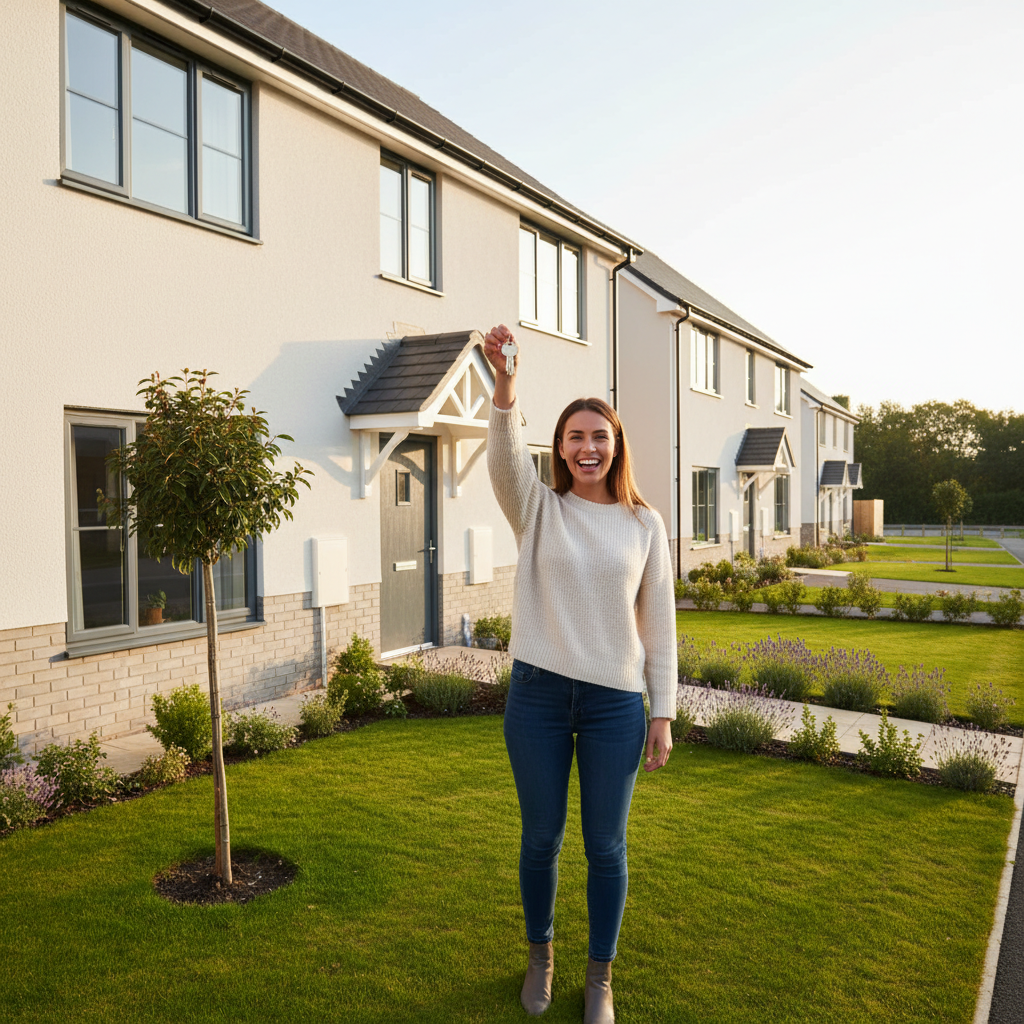
Story 1: Sarah and James — First-Time Buyers, Shared Ownership, 2-Bed Apartment in Manchester
Background and Starting Position
Sarah, 28, works as a primary school teaching assistant earning £22,500 per year. James, 30, is a warehouse supervisor on £27,000. Combined household income: £49,500. They had been renting a one-bedroom flat in Salford for three years at £750 per month and had managed to save £12,000 — a significant achievement given their rent burden, but nowhere near enough for a deposit on a full-price property in the Manchester area.
"We felt completely stuck," Sarah recalls. "We'd been saving for years, but property prices kept going up faster than we could save. Every time we got close to what we thought was enough for a deposit, the goalposts moved. A two-bed flat in a decent area of Manchester was £200,000 to £220,000, and we needed 5% minimum — that's £10,000 to £11,000 just for the deposit, without factoring in solicitor fees, mortgage fees, and moving costs. And even then, could we actually afford the mortgage payments on a £200K flat? It felt impossible."
A friend mentioned Shared Ownership, and Sarah started researching. The concept of buying a 25% to 75% share of a property, paying rent on the remaining share to a housing association, and having a much smaller mortgage and deposit requirement seemed too good to be true. "I was suspicious at first," she admits. "In my experience, if something sounds too good to be true, it usually is. But the more I looked into it, the more it seemed like a genuine route onto the property ladder for people in our situation."
Finding the Development
Sarah and James registered with three housing associations operating in Greater Manchester: Jigsaw Homes, Great Places, and L&Q. They also browsed Share to Buy, the national Shared Ownership portal, which lists available properties from multiple housing associations in one place.
After several weeks of searching, they found a development in East Manchester — a new build scheme of 120 apartments being delivered by a regional developer in partnership with Great Places Housing Association. The development offered a mix of one-bed and two-bed apartments, with Shared Ownership available on approximately half the units.
A two-bedroom apartment was priced at £195,000 full market value. At a 40% share, Sarah and James would need a mortgage of £78,000, a deposit of £3,900 (5% of their share), and they would pay rent on the remaining 60% to the housing association. The monthly breakdown they were quoted:
- Mortgage payment (£78,000 at 5.2% over 30 years): approximately £428 per month
- Rent on the 60% share: £292.50 per month (2.75% of the unsold share, divided by 12)
- Service charge: £125 per month
- Ground rent: £0 (new build, so peppercorn ground rent under the Leasehold Reform Act)
- Total monthly housing cost: approximately £845
"It was only about £100 more than our rent, and we'd actually be building equity," James notes. "That was the moment it clicked for us."
The Buying Process
The Shared Ownership buying process was more complex than they expected. First, they had to prove eligibility — household income under £80,000, no existing property ownership, unable to afford to buy on the open market, and a local connection to Manchester. Then came an affordability assessment by the housing association, which was separate from the mortgage affordability check.
"The housing association assessment was quite invasive," Sarah says. "They wanted three months of bank statements, details of all debts, regular spending breakdowns. They were checking not just that we could afford it, but that we could sustainably afford it without financial hardship. Which, looking back, was actually quite responsible of them, even if it felt intrusive at the time."
Finding a mortgage proved challenging. Not all lenders offer Shared Ownership mortgages, and those that do often have different criteria. Their first mortgage broker was not experienced with Shared Ownership and suggested a lender that ultimately declined their application because of James's employment history (he had changed jobs six months earlier). They switched to a specialist broker recommended by the housing association, who secured them a mortgage offer within three weeks.
The conveyancing was also more complex than a standard purchase. The lease involved both the developer (as original freeholder) and the housing association (as their landlord for the unsold share). Their solicitor needed to review not just the standard new build documentation but also the Shared Ownership lease, the memorandum of staircasing (the process for buying additional shares), and the housing association's management arrangements.
"Our solicitor said it took about twice as long as a standard new build purchase because of all the additional documentation," James recalls. "Total conveyancing fees were £1,800 including disbursements, which was more than we'd budgeted."
For a comprehensive guide to the Shared Ownership process, see our Shared Ownership new build guide.
Moving In and Early Days
They collected keys in October, approximately five months after their initial reservation. The apartment was in good condition overall — "It smelled of fresh paint and new carpet, which was exciting," Sarah says — but the snagging process revealed a number of issues.
"We hired a professional snagging inspector — it cost £350 but was absolutely worth it," James explains. "He found 47 items. Some were cosmetic — paint splashes on windowsills, a scratch on the kitchen worktop, a cupboard door slightly out of alignment. But some were more significant: the extractor fan in the bathroom was not connected to the ducting (so it was just spinning in a void), one of the bedroom windows had a broken seal causing condensation between the panes, and the shower tray was not properly sealed, which could have caused water damage over time."
The developer addressed all 47 items within six weeks, though Sarah notes that some required multiple visits. "They'd send someone to fix the window, but they would not have the right part. Then they'd come back a week later. For the shower seal, they fixed it once and it started leaking again within a month, so they had to come back and redo it properly. It was not a disaster, but it was frustrating when you've just moved into a brand new home and you're already dealing with maintenance issues."
For a detailed guide to the snagging process, see our new build snagging checklist.
What They Love
- Energy efficiency: "Our energy bills are about £80 per month for a two-bed flat. Our friends in older properties are paying £150 to £200. The insulation is excellent and the double glazing keeps the heat in."
- Modern layout: "Open-plan kitchen-living area, built-in storage, en-suite shower room. It feels much bigger than our old one-bed rental."
- The neighbourhood: "It's a new development, so everyone moved in around the same time. There's a real community feel — we know our neighbours, there's a WhatsApp group, people look out for each other."
- No immediate maintenance: "Everything was new. No boiler worries, no dodgy wiring, no damp. For the first year at least, we had zero unexpected maintenance costs."
What They Wish They Had Known
- Service charges increase: "The service charge was £125 per month when we moved in. After the first year, it went up to £142. The housing association explained that the developer subsidises the charge in the first year to make properties easier to sell. We had no idea."
- Rent reviews: "The rent on the unsold share increases every year, linked to RPI plus 0.5%. In year two, our rent went from £292 to £310. Over time, these increases are significant."
- Restrictions on changes: "You cannot make any significant changes to a Shared Ownership property without permission from the housing association. We wanted to put up some shelves and a curtain pole, which was fine. But when we asked about replacing the bathroom tiles, we were told we needed written consent, and it would need to be done by a qualified tradesperson. It's their property too, so it makes sense, but it does not feel like it's fully your home."
- Staircasing costs: "We looked into buying additional shares (staircasing). You have to pay for a RICS valuation each time — about £350 — plus solicitor fees of around £1,000 to £1,500 for the legal work. If you want to staircase in stages, those costs multiply."
Verdict After 12 Months
"Overall, we're glad we did it," Sarah says firmly. "We went from renting with no prospect of buying to owning 40% of our own home. Yes, there are compromises — the service charge, the rent increases, the restrictions. But we're building equity, we have a beautiful modern flat, and we feel settled for the first time in our adult lives. Would we do it again? Absolutely. Would we do anything differently? We'd read the lease more carefully before signing, and we'd budget an extra £200 per month as a buffer for service charge increases and unexpected costs."
Story 2: The Hendersons — Family Upsizing from Victorian Terrace to 4-Bed Detached Barratt Home
Background and Starting Position
Mark, 42, is an IT project manager earning £58,000. His wife Claire, 39, works part-time as a dental hygienist earning £18,000. They have two children, aged 7 and 4. They had been living in a three-bedroom Victorian mid-terrace in Stockport for eight years, purchased for £185,000 and now worth approximately £265,000 with an outstanding mortgage of £142,000.
"We loved our Victorian terrace," Claire says, "but with two growing kids, it was getting tight. The bedrooms were small, there was no downstairs loo, the kitchen was a galley style with no room for a table, and the garden was north-facing and dark. Plus, the maintenance was constant — pointing needed redoing, the sash windows were draughty, the boiler was on its last legs. We reckoned we were spending £3,000 to £4,000 a year on repairs and upkeep."
They considered extending the terrace but got quotes of £45,000 to £60,000 for a rear extension, and the planning constraints on a Victorian terrace limited what they could do. "At that point, the maths pointed toward moving rather than improving," Mark explains.
Why New Build
Mark was initially resistant to new builds. "I had this image of identikit boxes on cramped estates with paper-thin walls," he admits. "But Claire dragged me to a David Wilson show home one Saturday, and I was genuinely surprised. The space, the layout, the finish — it was nothing like I expected. The master bedroom was twice the size of ours. The kitchen-diner was huge. There was an integral garage, a utility room, a downstairs cloakroom, and a south-facing garden."
They spent three months visiting show homes from Barratt, David Wilson, Taylor Wimpey, and Bellway across South Manchester and Cheshire. Ultimately, they reserved a four-bedroom detached house on a Barratt development in Cheadle — a Bradgate-style home priced at £435,000.
The incentive package they negotiated (in late May, approaching Barratt's June year-end):
- Part-exchange on their Victorian terrace at £258,000 (97% of valuation)
- Flooring throughout (carpet and luxury vinyl tile): retail value approximately £6,500
- Upgraded kitchen with Silestone worktops and Bosch appliances: retail value approximately £5,000
- Turfed and fenced rear garden: approximately £3,500
- Legal fees contribution: £1,500
- Total incentive value: approximately £16,500 (plus the convenience of a chain-free part-exchange)
For more detail on how part-exchange works and how to maximise its value, see our guide on new build incentives explained.
The Part-Exchange Process
The part-exchange was one of the main reasons they chose new build. With two young children and busy jobs, the idea of managing a property chain — finding a buyer, coordinating completion dates, dealing with a chain of three or four transactions — was deeply unappealing.
"Part-exchange removed all that stress," Mark says. "Barratt sent two independent estate agents to value our house. The valuations came in at £263,000 and £268,000. Barratt offered us £258,000, which was about 97% of the average. We accepted because the certainty of no chain was worth the small discount."
The part-exchange process required them to have their terrace in presentable condition, with no major structural issues. Barratt conducted a survey of the property, which flagged the ageing boiler and some damp in the cellar. However, because they were buying at a price that factored in these issues, no remedial work was required before the exchange.
"The only downside was timing," Claire notes. "We had to complete on both properties on the same day. That meant moving out of our terrace in the morning and into the new build in the afternoon. With two kids and a van full of furniture, it was one of the most stressful days of our lives. In hindsight, we should have booked a hotel for the night before and had the removals team handle everything while we stayed out of the way."
Unexpected Costs
Despite careful budgeting, the Hendersons were surprised by several costs they had not fully anticipated:
- Stamp duty: £11,250 on a £435,000 purchase. They knew about stamp duty but had underestimated the amount. "When you're coming from a house you bought for £185,000, the stamp duty on a £435,000 house is a shock," Mark says.
- Window coverings: Despite having flooring included, the house came with no curtains, blinds, or other window coverings. The cost of fitting blinds to 14 windows: approximately £2,800. "Every single window is bare when you move in. It sounds obvious, but we did not think about it until we were sleeping in a bedroom with no curtains on the first night."
- Garden finishing: The turfed garden was a flat rectangle. Adding a patio, fencing the sides (the rear fence was included but not the sides), a shed, and some basic planting cost an additional £4,500.
- Light fittings: The house came with basic pendant light fittings only. "No ceiling lights in the bedrooms, no wall lights, no under-cabinet lighting in the kitchen. We spent about £800 on light fittings and electrician's fees to install them."
- Broadband: The development was so new that only one broadband provider had infrastructure in place. "We were stuck with a single provider for the first six months, paying more than we were used to and with slower speeds. OpenReach eventually connected full fibre, but it took time."
Snagging Experience
The Hendersons completed their own snagging inspection using a checklist they found online, supplemented by a professional inspection that cost £400.
"The professional found things we would never have spotted," Mark admits. "The garage floor had not been properly sealed, there was a gap under the front door where you could feel the draught, two of the radiators had not been properly bled and had cold spots at the top, and one of the upstairs windows was misaligned so it did not close flush. In total, there were 62 snagging items."
Barratt's aftercare team addressed most items within the first eight weeks, though some required multiple visits. "The window took three visits to sort out — the first fitter adjusted it, but it still was not right. The second time they ordered a new frame section. The third time it was finally fixed. Each visit meant taking time off work to be home. That was probably the most annoying part."
What They Love
- Space: "After living in a Victorian terrace, the space is extraordinary. The kids have their own bedrooms with room for desks. The kitchen-diner is the heart of the house. The utility room means the washing machine is not in the kitchen. Small things that make a huge difference to daily life."
- Running costs: "Our old terrace had an energy rating of D. The new build is B. Our gas and electricity bills dropped by about 40%. Over a year, that's saving us around £1,200."
- NHBC warranty: "Having a 10-year warranty gives us peace of mind. When we noticed a crack in the render after six months, we reported it and Barratt fixed it under warranty at no cost."
- Modern living: "USB sockets built into the walls, a wired smoke alarm system, good water pressure, underfloor heating in the bathrooms. These things were not even on our radar when we bought, but we appreciate them every day."
What They Wish They Had Known
- Management company charges: "The development has a management company that maintains communal areas — the green spaces, the play area, the entrance roads. The annual charge is £350 per household. This was mentioned in the small print but we did not fully appreciate it. It's essentially an additional annual cost on top of council tax."
- Development phasing: "When we moved in, only about half the development was completed. That meant living next to a building site for another 18 months. The noise during the day, the construction traffic, the dust — it was not pleasant. We knew it was a new development, but we did not fully think through what living on an active construction site would be like."
- The new build premium: "About a year after we moved in, we checked what similar houses on the development were selling for resale. The resale prices were about 3% to 5% below what we paid new. That's the 'new build premium' — you pay extra for being the first owner. We knew about this intellectually but seeing it in our own numbers was sobering."
Verdict After 12 Months
"We love the house. Genuinely love it," Claire says. "The space, the warmth, the modern design — it's everything we wanted. The part-exchange process, despite the stressful moving day, was a revelation. No chain, no collapse anxiety, no gazumping. Would we buy new build again? Yes, without hesitation. But we'd budget an extra £10,000 to £15,000 for all the finishing touches — curtains, garden, lights, and the other bits that the show home makes you forget are not included."
Story 3: Priya — Single Professional Buying Off-Plan Studio Apartment in Birmingham
Background and Starting Position
Priya, 31, is a marketing manager at a tech company in Birmingham city centre, earning £42,000. She had been renting a one-bedroom flat in the Jewellery Quarter for four years at £850 per month and had saved £18,000 for a deposit. As a single buyer, she was looking for a compact, well-located property that she could afford on her sole income.
"Birmingham city centre was my non-negotiable," Priya explains. "I walk to work, I love the restaurants and culture, and I did not want to trade city living for a bigger property in the suburbs. That meant my budget was tight — a one-bed or studio in the city centre, ideally under £200,000."
The Off-Plan Decision
Priya chose to buy off-plan — purchasing a property before it was built, based on floor plans, CGI images, and a show apartment that represented the specification. The development was a 15-storey apartment building in Digbeth, with a mix of studios and one-beds, being developed by a mid-size regional developer.
"Buying off-plan was terrifying and exciting in equal measure," she says. "I was committing £189,000 to something that did not exist yet. The only physical thing I could see was a show apartment in a temporary building on the site, and the construction hoarding around a hole in the ground. But the location was incredible, the specification looked good, and the price was lower than comparable completed apartments nearby."
She reserved a one-bed apartment (not a studio in the end — the one-bed was only £15,000 more and the extra space seemed worth it) on the eighth floor with a south-facing balcony. The reservation fee was £500, and she exchanged contracts three months later with a 10% deposit (£18,900, slightly more than her savings — she borrowed the shortfall from her parents).
The Wait — and the Delays
The estimated completion date at the time of reservation was 14 months away. Priya settled in for the wait. The developer provided quarterly updates with photographs showing construction progress, which was reassuring for the first nine months.
"Then the updates started getting vague," she recalls. "Instead of specific construction milestones, they talked about 'supply chain challenges' and 'adjustments to the programme.' I started to worry."
At month 10, the developer formally notified buyers that completion would be delayed by four months. The reasons cited were supply chain issues with specialist cladding materials (post-Grenfell fire safety requirements had created backlogs) and labour shortages on site.
"Four months does not sound like much, but it had a cascade of consequences. My mortgage offer had a six-month validity. With the delay, it would expire before completion, meaning I'd have to reapply — potentially at a higher interest rate, since rates had gone up since I first applied. I was also stuck in my rental flat for an additional four months at £850 per month — that's £3,400 of unexpected cost."
Priya's mortgage broker managed to secure a three-month extension on her mortgage offer, but she had to pay a £99 extension fee and provide updated payslips and bank statements.
Then came a second delay — an additional two months, taking the total delay to six months. "At this point, I was furious and anxious in equal measure. My mortgage offer extension would not cover the extra two months. I'd need to apply for a completely new mortgage."
Specification Changes
During the extended build period, the developer made changes to the specification. Some were minor (a different brand of bathroom taps — same quality, different manufacturer). Others were more significant.
"The balcony was originally specified as a 'Juliet balcony with French doors.' What I received was a full-width window that opened at the top, with a glass balustrade outside. There was no step-out balcony. When I challenged this, the developer showed me the small print in the contract that said 'the developer reserves the right to make changes to the specification where reasonably necessary.' I was livid, but legally there was nothing I could do. That balcony was one of the reasons I chose that particular apartment."
"The lesson is brutal but important: read every clause of the contract, especially the parts about specification changes and the developer's right to substitute materials. If I had flagged this clause with my solicitor before exchange, we could have tried to negotiate a tighter specification lock-in."
Completion Day
Completion finally happened 20 months after reservation — six months late. The day itself was chaotic.
"The developer arranged completions for about 15 apartments on the same day. There was a queue in the lobby to collect keys. The lift was being shared by removal teams, furniture deliveries, and bewildered new owners. My apartment was on the eighth floor and I waited 40 minutes for a lift that was not packed with boxes."
"When I finally got inside, the apartment was... fine. It was clean, it was finished, it matched the specification (apart from the balcony issue). But it was also smaller than I expected. I know that sounds naive, but seeing a floor plan and standing in the actual room are very different experiences. The bedroom, which measured 3.2m by 2.8m on the plan, felt tight with a double bed and a wardrobe. The open-plan living area was fine for one person but would feel cramped with guests."
Snagging
Priya conducted her own snagging inspection using a guide she found online. She identified 28 items, including scratched kitchen worktops, poorly sealed silicone around the bath, uneven grouting in the bathroom, a bedroom door that stuck at the top, paint drips on the skirting boards, and a slow-draining kitchen sink.
"The developer's aftercare team were initially responsive. They came within two weeks to address the first batch of issues. But the scratched worktop required a replacement, which took eight weeks to arrive. And the slow-draining sink turned out to be an installation issue with the waste pipe, which needed a plumber to re-route the pipework under the sink unit. That took three visits to resolve."
Actual Costs
Priya kept meticulous records of every cost associated with the purchase:
- Purchase price: £189,000
- Reservation fee: £500 (deducted from purchase price)
- Deposit: £18,900 (10%)
- Stamp duty: £0 (first-time buyer relief)
- Solicitor fees including disbursements: £1,950
- Mortgage arrangement fee: £999
- Mortgage valuation fee: £0 (included with mortgage product)
- Professional snagging inspection: £0 (self-conducted)
- Additional rent during 6-month delay: £5,100 (6 months at £850)
- Mortgage extension fee: £99
- Second mortgage application fee (when extension expired): £0 (fee-free product)
- Furnishing and decorating: £4,200
- Total cost above purchase price: approximately £12,850
Verdict After 12 Months
"I have genuinely mixed feelings," Priya says. "I love living in my own place in the city centre. The location is perfect, the apartment is warm and well-insulated, and the building amenities (concierge, bike storage, roof terrace) are great. But the delays, the balcony specification change, and the overall stress of the off-plan process left a bad taste. I feel like I paid for something and received something slightly different, slightly later, at a slightly higher total cost than promised."
"Would I buy off-plan again? Honestly, probably not. Next time, I'd buy a completed property — either a new build that's already finished or a resale. The uncertainty of off-plan is not worth the modest price saving, in my opinion. But would I buy new build again? Yes, I think I would. The apartment itself is lovely. It was just the process that let me down."
Story 4: David — Investor Buying BTL New Build Apartment in Liverpool
Background and Starting Position
David, 48, is a chartered accountant who already owns his home (mortgage-free) in Chester and has one existing buy-to-let property — a converted Victorian flat in Birkenhead that he has owned for 12 years. He wanted to add a second investment property to his portfolio, with a focus on low-maintenance, strong rental demand, and decent yield.
"I'd been looking at Liverpool for a while," David explains. "The city has strong fundamentals: three universities producing a constant stream of young professionals, major regeneration projects, relatively low property prices compared to Manchester, and good transport links. The rental market seemed robust, and yields in Liverpool city centre were consistently in the 5% to 7% range, compared to 3% to 4% in most of the South East."
Why New Build for Investment
David's experience with his Victorian flat in Birkenhead had taught him the true cost of older property. "In 12 years, I've replaced the boiler, rewired the electrics, replaced the bathroom, fixed the roof twice, and dealt with a damp problem that cost £3,500 to resolve. Total maintenance spend: roughly £22,000, or about £1,800 per year. That significantly eats into the rental yield."
A new build apartment, by contrast, would come with an NHBC warranty covering structural defects for 10 years and manufacturer warranties on the boiler, appliances, and fixtures. The EPC rating would be B or higher, making it more attractive to tenants and reducing the risk of future EPC compliance issues for landlords. And the specification — modern kitchen, contemporary bathroom, clean design — would appeal to the professional tenant market David was targeting.
The Purchase
David purchased a two-bedroom apartment in a new development near Liverpool ONE, the city's main shopping and leisure destination. The development comprised 180 apartments across a single building, with a concierge, gym, and communal roof terrace.
- Purchase price: £215,000
- Deposit: £53,750 (25% — the minimum for most BTL mortgages)
- Stamp duty: £14,250 (including the 3% additional property surcharge, plus the standard rates)
- BTL mortgage: £161,250 at 5.8% fixed for 2 years, interest-only
- Monthly mortgage payment: £779
- Service charge: £185 per month
- Ground rent: Peppercorn (£0)
- Letting agent fees (10% of rent): £115 per month (based on £1,150 rental income)
The projected yield on paper: £1,150 per month rent, giving a gross yield of 6.4%. After mortgage interest, service charge, and letting agent fees, the net monthly position was: £1,150 - £779 - £185 - £115 = £71 positive cash flow per month.
"A slim margin," David acknowledges, "but I was buying for capital growth as much as income. Liverpool city centre prices have been rising, and I expected the apartment to be worth significantly more in five to ten years."
Yield Expectations vs Reality
The reality of the first year was more challenging than the spreadsheet suggested.
Void periods: The apartment was listed for rent immediately after completion, but it took five weeks to find a tenant. That was five weeks of mortgage payments with no rental income — a cost of approximately £3,900 (mortgage plus service charge for five weeks). "I'd budgeted for two weeks void, not five. The development had 180 apartments, and a lot of them hit the rental market at the same time. Suddenly there were 30 identical two-bed apartments all competing for the same tenant pool. Rents softened and it took longer to let."
Actual rent achieved: Rather than the £1,150 per month he had projected based on comparable rentals at the time of purchase, David had to accept £1,075 per month to secure a tenant. "The oversupply of identical apartments in the same building pushed rents down. When a prospective tenant can choose between my eighth-floor apartment and five others at the same price, they have all the leverage."
Additional costs: Safety certificates (gas, electrical, EPC) cost approximately £350 per year. Landlord insurance added £25 per month. The letting agent charged a tenant-find fee of one month's rent (£1,075) on top of the ongoing 10% management fee. David also spent £1,200 furnishing the apartment to a lettable standard (bed, sofa, dining table, white goods).
Revised first-year numbers:
- Rental income: £1,075 x 10.5 months (allowing for 5-week void and 1-week turnover): approximately £11,288
- Mortgage interest: £779 x 12 = £9,348
- Service charge: £185 x 12 = £2,220
- Letting agent fees: £1,075 + (£1,075 x 10% x 10.5) = £2,204
- Insurance: £300
- Safety certificates: £350
- Furnishing: £1,200
- Net position year 1: -£4,334 (loss)
"A loss in year one," David admits. "Not what any investor wants to see. The furnishing and tenant-find fee were one-off costs, so year two should be better. But it was a sharp reminder that investment property yields are gross figures, and the reality after all costs can be very different."
Tenant Feedback
David's tenant — a young professional working for a financial services company — was generally positive about the apartment but raised several points:
- Sound insulation: "The tenant reported being able to hear the neighbours' TV through the party wall, and footsteps from the apartment above. New build apartments are not always well insulated for sound, despite meeting building regulations. The tenant found this frustrating and it was a factor in their decision about whether to renew the tenancy."
- Storage: "New build apartments are designed to maximise floor area, but storage is often lacking. My apartment had no dedicated storage cupboard — no airing cupboard, no utility cupboard. The tenant had to buy freestanding storage solutions."
- Communal areas: "The building's communal areas — the lobby, corridors, gym, and roof terrace — are maintained by a management company. In the first year, the standard was acceptable. But the gym equipment was basic and not always maintained, the roof terrace furniture was cheaply made and deteriorated quickly, and the concierge service was not as comprehensive as the marketing materials suggested. The tenant felt the service charge was high for what was delivered."
Verdict After 12 Months
"As an investment, the first year has been disappointing financially but not disastrous," David says. "I'm taking a long-term view — I believe Liverpool city centre will see strong capital growth over the next decade, and the apartment will be a good asset to hold. But if I were advising someone else, I'd say: do not buy a new build apartment for rental yield alone. The yields quoted by developers and agents are almost always gross figures that ignore the real-world costs of voids, agent fees, insurance, maintenance, and service charges. The actual net yield in year one can easily be zero or negative."
"The biggest lesson? Do not buy in a development where the majority of units are being purchased by investors. When everyone is trying to let identical apartments at the same time, rents drop and voids increase. Look for developments with a healthy mix of owner-occupiers and investors."
Story 5: Margaret and Bill — Downsizing from Family Home to New Build Bungalow
Background and Starting Position
Margaret, 68, and Bill, 71, had lived in their four-bedroom detached house in Harrogate for 32 years. The house was mortgage-free and worth approximately £485,000. Bill had recently retired from his role as a civil engineer, and Margaret had been retired for three years from her career in local government. Their children — two daughters in their late 30s — had long since moved out.
"The house was far too big for us," Margaret explains. "Four bedrooms, three reception rooms, a large garden. We were living in about a third of it and spending all our time and energy maintaining the rest. Bill was up a ladder cleaning gutters, I was mowing a lawn that took two hours. We were heating rooms nobody used. It was time to downsize."
They wanted a bungalow — single-storey living was important for future-proofing, as Bill had a knee condition that made stairs increasingly uncomfortable. They also wanted something modern, low-maintenance, and energy-efficient. A new build bungalow ticked every box.
The Search
Finding a new build bungalow proved more challenging than expected. "Developers do not build many bungalows," Bill notes. "They're less profitable than two-storey houses because you need more land per unit. We searched for about four months before finding anything suitable."
They eventually found a small development of 12 bungalows being built by a regional developer on the outskirts of Knaresborough, about five miles from Harrogate. The development was specifically targeted at downsizers and retirees, with two-bedroom and three-bedroom bungalows, level access throughout, and wider doorways as standard.
They chose a three-bedroom detached bungalow priced at £395,000. The specification included underfloor heating, a level-access wet room in the master en-suite, a modern kitchen with integrated appliances, and a manageable south-facing garden.
The Part-Exchange Experience
The developer offered a part-exchange service, which Margaret and Bill were keen to use. "We'd lived in our house for 32 years. The thought of staging it for viewings, keeping it immaculate while people tramped through, dealing with estate agents and potential buyers — we just could not face it," Margaret says.
Two independent estate agents valued the Harrogate house at £480,000 and £490,000. The developer's part-exchange offer came in at £455,000 — approximately 94% of the average valuation.
"That was a £30,000 discount on what we might get on the open market," Bill says. "We agonised over it. £30,000 is a lot of money. But our friends had recently sold a house and the process took eight months, involved two collapsed sales, and cost them about £6,000 in estate agent fees anyway. When we factored in the agent fees we would not be paying (approximately £12,000 on a £485,000 sale), the risk of delays, and the stress, the gap narrowed to about £18,000. We decided the certainty and convenience were worth that."
The part-exchange completed smoothly. They moved directly from the Harrogate house to the bungalow on the same day, with a professional removals company handling everything. "We paid for the full packing and unpacking service — about £2,500. Best money we've ever spent. They packed the old house, moved everything, and unpacked in the new bungalow. By 8pm on moving day, the kettle was on and the beds were made."
Adaptation Challenges
Moving from a 1,800 square foot family home to a 1,100 square foot bungalow required significant adjustment — not just physically, but emotionally.
Furniture: "Most of our furniture was too big. The dining table that seated eight would not fit in the new dining area. The six-seater sofa overwhelmed the living room. We ended up selling or donating about half our furniture and buying new pieces that fit the space. That was an unexpected cost — about £3,500 on new furniture — but it was also emotionally difficult. That dining table was where our daughters did their homework, where we hosted Christmas dinners for 30 years. Letting go of furniture is letting go of memories."
Possessions: "We had 32 years of accumulated stuff. The loft, the garage, the spare bedrooms — all full. We spent three months before the move sorting, donating, selling, and throwing away. It was exhausting and emotional. Margaret cried when we took the girls' childhood artwork to the charity shop. But the decluttering was also liberating — by the time we moved, we only had what we actually needed and wanted."
The neighbourhood: "We had deep roots in Harrogate. Our neighbours were friends, we knew the shopkeepers, we belonged to clubs and groups. Moving five miles away does not sound far, but it meant starting again socially. The bungalow development is lovely, but our fellow residents are all in a similar position — retired, new to the area, finding their feet. It took about six months before we felt we had a social circle again."
Space adjustment: "For the first few months, the bungalow felt small. Not cramped, but noticeably smaller than what we were used to. You are suddenly aware of each other in a way you are not in a big house where you can retreat to different rooms. It took time to adjust to living in closer proximity. Now, 18 months on, we would not want anything bigger. But the transition period was real."
What They Love
- Single-storey living: "Bill's knee has deteriorated further since we moved. If we were still in the Harrogate house with its steep Victorian staircase, he'd be struggling. The bungalow means he can access everything without stairs. Future-proofing was absolutely the right decision."
- Energy efficiency: "Our Harrogate house had single-glazed windows in some rooms, poor insulation, and a 15-year-old boiler. Heating it cost over £200 per month in winter. The bungalow, with its underfloor heating and modern insulation, costs about £75 per month — and it's more consistently warm."
- Low maintenance: "No gutters to clean (the bungalow has a different drainage design), no external painting (render finish), a small manageable garden. Bill estimates we've gone from spending 15-20 hours per month on house maintenance to about 3-4 hours. That's time we spend walking, visiting the grandchildren, or simply enjoying retirement."
- Modern design: "The wet room en-suite, the wide doorways, the level threshold front door — these are features that make daily life easier. The kitchen has soft-close drawers, built-in recycling bins, and a layout that actually works. After decades in a kitchen designed in 1967, the difference is transformative."
What They Wish They Had Known
- The emotional toll of downsizing: "Nobody prepares you for how emotional it is to leave a family home. We had 32 years of memories in those walls. Even though the move was the right decision, there were days of genuine grief. If you are downsizing, acknowledge the emotional side and give yourself time to process it."
- The true cost of part-exchange: "We accepted £455,000 against a potential market value of £485,000. That £30,000 gap bought us convenience and certainty, which we valued highly. But in retrospect, we might have explored selling on the open market while reserving the bungalow — the developer might have held the plot for us for a few months while we sold. We did not even ask about that option."
- New build bungalow scarcity: "There are so few new build bungalows that you have very little choice. We effectively had one development in our search area. If we had not liked it, we would have had to compromise on location or buy an older bungalow. The lack of supply means developers can charge a premium for bungalows, and there is less room to negotiate."
Verdict After 18 Months
"Best decision we ever made," Bill says emphatically. "Margaret agrees. The bungalow is warm, comfortable, manageable, and beautiful. Our running costs have dropped by hundreds of pounds per month. We've freed up capital from the house sale (the difference between what we sold for and what we bought for) which gives us financial security in retirement. And most importantly, we are future-proofed. Whatever happens with our health, we can live in this home."
"My advice to other downsizers: do it sooner than you think you need to. We waited until Bill's knee was already causing problems. If we'd moved five years earlier, we'd have had five more years of easier, cheaper, less stressful living. Do not wait for a crisis — plan ahead and make the move while you are fit enough to enjoy the transition."
Common Themes Across All Five Experiences
Despite their very different circumstances, several themes emerge from these five buyer stories that are relevant to anyone considering a new build purchase:
1. Budget for More Than the Purchase Price
Every single buyer in our five stories spent significantly more than the headline purchase price. Between stamp duty, legal fees, furnishing, window coverings, garden finishing, and unexpected extras, the additional costs ranged from £8,000 to £20,000. Build a realistic budget that includes everything, not just the deposit and mortgage.
2. Snagging Is Real and Important
Every property had snagging issues, ranging from minor cosmetic defects to functional problems. Professional snagging inspections consistently found issues that buyers missed. The £300 to £500 cost of a professional inspection is one of the best investments you can make. For a complete snagging guide, see our new build snagging checklist.
3. Read the Small Print
Service charges, management company fees, rent reviews, specification change clauses, incentive conditions — the details matter enormously. Several of our buyers were surprised by costs or conditions that were technically disclosed in the paperwork but not prominently communicated. Your solicitor should flag these, but you should also read the key documents yourself.
4. The Show Home Is Not Your Home
Show homes are professionally dressed, optimally lit, and carefully staged. Your actual home will not look like the show home without significant additional spending on furniture, accessories, and finishing touches. Manage your expectations and budget for the gap.
5. Timelines Are Estimates
Off-plan purchases are particularly vulnerable to delays, but even ready-to-move-in properties can involve longer timescales than expected due to mortgage processing, legal searches, and administrative holdups. Build buffer time into your plans and do not make irrevocable commitments (ending a tenancy, for example) based on the developer's estimated completion date.
6. New Build Is Still a Good Choice for Most Buyers
Despite the frustrations, complications, and unexpected costs, four out of five of our buyers said they would buy new build again. The benefits — modern design, energy efficiency, warranties, low maintenance, and in some cases the chain-free convenience of part-exchange — outweigh the drawbacks for most people. The key is going in with realistic expectations and thorough preparation.
For a complete step-by-step guide to the new build buying process, see our step-by-step guide to buying a new build home in the UK.