Why New Builds Can Be Ideal for Pet Owners
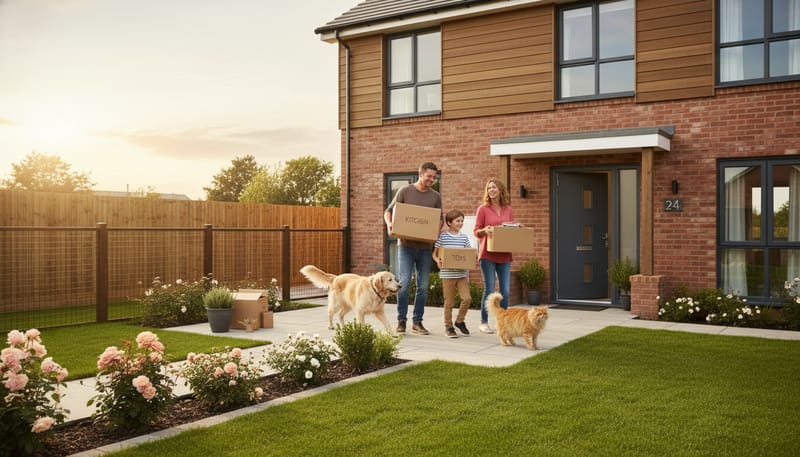
If you share your life with a dog, cat, rabbit, or any other beloved pet, choosing the right home takes on an extra dimension. You are not just buying for yourself — you are creating a safe, comfortable environment for every member of your household, including the four-legged ones. The good news is that modern new build homes offer several genuine advantages for pet owners that older properties simply cannot match.
New build homes are designed and constructed from scratch, which means their layouts, gardens, and specifications are consistent and predictable. Unlike period properties where you might inherit crumbling fences, toxic plants, or gaps in boundary walls, a new build gives you a blank canvas with known dimensions, secure boundaries, and modern materials. For pet owners, this predictability is invaluable.
Consider the practical benefits: new build gardens are typically delivered with close-board fencing at 1.8 metres, creating an immediately secure perimeter for dogs. Internal layouts often include dedicated utility rooms — perfect for muddy paw washing stations and pet feeding areas. Modern hard-wearing flooring options in kitchens and hallways stand up to claws and accidents far better than the original Victorian floorboards in an older home. And because everything is new, there are no hidden hazards like lead paint, rotting fence panels, or unsecured garden ponds that previous owners may have left behind.
That said, buying a new build with pets is not without its considerations. Leasehold properties can carry restrictive pet clauses, garden sizes on modern developments are generally smaller than those on estates built decades ago, and communal living on a new build development brings its own set of rules about pets in shared spaces. This guide covers everything you need to know to make the right choice for you and your pets.
With over half the UK population owning pets, it is no surprise that pet-friendliness has become a genuine selling point for new build developers. Many leading housebuilders now actively promote pet-friendly features in their marketing, and some offer optional upgrades specifically designed with animals in mind. Understanding what is available — and what questions to ask — puts you in the strongest possible position when choosing your plot and negotiating your purchase.
Leasehold Restrictions for Pets in New Build Apartments
One of the most critical considerations for pet owners buying a new build is whether the property is leasehold or freehold. This distinction has a direct and sometimes dramatic impact on whether you can keep pets at all.
The Leasehold Pet Clause Problem
Most new build apartments in the UK are sold on a leasehold basis. The lease is a legal document that sets out the terms under which you occupy your home, and it frequently includes clauses about keeping animals. These clauses range from permissive to highly restrictive:
- No restriction: Some leases contain no mention of pets at all, meaning you are free to keep any domestic animal. This is relatively uncommon in modern apartment leases.
- Permission required: Many leases state that you may keep pets with the written consent of the freeholder or management company. Consent is typically “not to be unreasonably withheld,” but obtaining it can be a bureaucratic process.
- Small pets only: Some leases permit small caged animals (hamsters, fish, birds) but prohibit dogs and cats entirely.
- Complete prohibition: Certain leases contain an outright ban on keeping any animals. This is more common in city-centre apartment developments and purpose-built blocks.
It is essential that your conveyancing solicitor reviews the pet clauses in the lease before you exchange contracts. If you already own pets or plan to get them, a lease that prohibits animals is a dealbreaker that must be identified early.
Management Company Rules
Even where the lease permits pets, the management company that oversees the communal areas of an apartment development may impose additional rules. These can include:
- Dogs must be kept on leads in all communal areas, corridors, lifts, and car parks
- Pet owners must clean up after their animals immediately
- Dogs may not be left alone in the apartment for extended periods if barking causes disturbance to neighbours
- Pets must not cause damage to communal areas, landscaping, or shared facilities
- A maximum number of pets per apartment (commonly one dog or two cats)
- Certain breeds may be restricted (though this is less common and legally contentious)
Leasehold Pet Clauses: What to Look For
| Lease Clause Type | What It Means | Impact on Pet Owners | How Common |
|---|---|---|---|
| No pet clause | Lease is silent on pets | You can keep pets freely — but check management company rules | Uncommon in new builds |
| Consent required (not unreasonably withheld) | You must ask permission, but it should be granted for reasonable requests | Generally positive — most standard pet requests are approved | Most common |
| Consent required (at landlord’s discretion) | Permission is at the freeholder’s sole discretion | Risky — permission can be refused without strong justification | Moderately common |
| Small animals only | Only fish, birds, hamsters, or similar caged animals permitted | No dogs or cats allowed | Common in city-centre flats |
| Complete pet ban | No animals of any kind permitted | Dealbreaker for any pet owner | Less common but exists |
The Renters’ Reform Bill and Pets
While the UK government’s Renters’ Reform Bill primarily targets the private rented sector, its provisions around pet ownership have sparked wider discussion about pet clauses in leasehold properties. The bill’s principle — that tenants should have the right to request permission to keep a pet, and landlords should not unreasonably refuse — is increasingly influencing how freeholders and management companies approach pet policies on new build developments. Some progressive developers are now actively marketing their apartments as pet-friendly and including explicit pet-permission clauses in their standard leases.
Freehold Houses: More Freedom, But Still Check
If you are buying a new build freehold house, you generally have far more freedom to keep pets. There is no lease to restrict you, and no management company controlling your private dwelling. However, new build freehold properties can still carry restrictive covenants in the title deeds. While it is rare for these to restrict domestic pets in houses, some estate covenants may include rules about:
- Keeping livestock or poultry (chickens, goats, etc.) on domestic plots
- The number of dogs allowed on the property
- Running a pet-related business from home (breeding, boarding, grooming)
Again, your solicitor should flag any such covenants during the conveyancing process.
Choosing the Right Plot for Pets on a New Build Development
Not all plots on a new build development are created equal, and when you have pets, certain plot positions offer clear advantages. Taking the time to study the site plan carefully before reserving can make a significant difference to your daily life with animals.
Best Plot Positions for Pet Owners
Here are the plot characteristics that pet owners should prioritise:
- Corner plots: These often have larger and more irregularly shaped gardens than mid-terrace or standard semi-detached plots. The extra space is valuable for dogs who need room to run, and the additional boundary length means more garden perimeter — useful for scent-enrichment walks around the garden.
- Plots backing onto green space: If the development includes public open space, wildlife corridors, or retained hedgerows, plots that back directly onto these areas benefit from a sense of openness and easy access to walking areas. Your dog can be out of the front door and onto green space in moments.
- Plots away from main estate roads: Quieter positions, particularly those on cul-de-sacs or at the edges of the development, mean less traffic when you are walking your dog around the estate and lower risk if a pet escapes through an open door.
- South or west-facing rear gardens: A sunny garden is not just pleasant for you — cats love basking in afternoon sun, and dogs are happier in gardens where they can find both sun and shade. Check the site plan orientation carefully.
- Proximity to development green spaces: Many larger developments include dedicated open spaces, ponds, or nature areas. Being within a short walk of these is particularly valuable for daily dog walking.
- Ground-floor apartments with patio access: If you are buying an apartment with a pet, a ground-floor unit with a private patio or garden offers direct outdoor access without navigating lifts and communal corridors — a huge convenience advantage for dog owners.
Plot Features to Check for Pet Safety
When you visit the development or review the site plan, look specifically for:
- Fencing completeness: Will your garden be fully enclosed on all sides? Some plots have open frontages or gaps where fences meet the house wall. Ask the developer to confirm that the rear garden will be fully secure.
- Gate access: Does the garden have a side gate? If not, can one be fitted? A side gate allows you to access the garden without going through the house — essential for muddy dogs returning from walks.
- Nearby roads: How close is your plot to busy roads outside the development? For cats that go outdoors, proximity to a main road is a significant safety concern.
- Water features: Some developments include decorative ponds or sustainable drainage systems (SuDS) that may pose a risk to curious dogs or cats. Note the location of these features relative to your plot.
For a broader guide to evaluating your development’s location and amenities, see our location checklist for buyers.
Garden Specifications: What to Expect and What to Request
The garden is arguably the most important outdoor feature for pet owners buying a new build. Understanding what the developer provides as standard — and what you may need to request, negotiate, or add yourself — is essential for creating a safe and enjoyable space for your pets.
Standard Garden Provision on New Builds
Most UK housebuilders deliver new build gardens in a basic but functional state. The standard package typically includes:
- Turf: Rear gardens are usually turfed with a standard lawn-grade grass. Some developers provide topsoil and grass seed instead — always confirm which you will receive.
- Fencing: Close-board timber fencing to the sides and rear, typically at 1.8 metres (6 feet) in height. Front boundaries may have lower fencing, open railings, or no boundary treatment at all.
- Patio: A small paved patio area adjacent to the rear of the house, though this is not universal and varies by developer and house type.
- External tap: A cold water tap on the external wall, useful for pet bathing, water bowls, and garden maintenance.
For more detail on garden setup, our new build garden setup guide covers everything from turfing to planting.
Minimum Garden Sizes for Different Pets
How much garden space do you actually need for your pets? This depends on the type and number of animals you keep. The table below provides a practical guide:
| Pet Type | Minimum Recommended Garden | Ideal Garden Size | Key Garden Features Needed |
|---|---|---|---|
| Small dog (e.g., Cavalier King Charles, French Bulldog) | 30m² | 50m²+ | Secure fencing, grass area, shaded spot |
| Medium dog (e.g., Cocker Spaniel, Border Collie) | 50m² | 80m²+ | Secure fencing, open lawn for play, side gate access |
| Large dog (e.g., Labrador, German Shepherd) | 70m² | 100m²+ | Secure 1.8m fencing, large lawn area, hard-standing path, shade |
| Multiple dogs (2–3) | 80m² | 120m²+ | Robust fencing, spacious lawn, separate toilet area, wash station |
| Cat (outdoor access) | Any size (cats roam) | 20m²+ for cat-proofed enclosure | Cat flap access, secure fencing or cat-proof netting |
| Rabbits or guinea pigs | 10m² dedicated area | 20m²+ | Flat grass area for run, sheltered spot for hutch, predator-proof fencing |
These figures align broadly with the space standards and garden dimensions you will find across UK new build developments. A typical three-bedroom semi-detached new build provides a rear garden of approximately 40–70m², which is comfortable for one or two medium-sized dogs with regular walks supplementing the garden exercise.
What to Request or Negotiate
Many developers offer optional extras or are willing to make modifications if you ask during the reservation stage. Pet-related requests that are commonly accommodated include:
- Side gate installation: If your house type does not include a side gate as standard, request one. This allows direct garden access from the front without trailing mud through the house — invaluable for dog owners.
- Upgraded fencing: If the standard fence is 1.5 metres rather than 1.8 metres, or if there are gaps between panels and posts, ask for taller or more secure fencing. Some developers will upgrade at cost or for free as part of the negotiation.
- Hard-standing area: Request a paved or gravelled area in the garden near the back door for muddy paw cleaning, pet feeding, or placing a dog kennel.
- External tap positioning: Ask whether the external tap can be positioned in a convenient location for pet washing, ideally near the back door or side gate.
- Garden size priority: If you have the choice between house types on the development, consider opting for a slightly smaller house on a larger plot rather than the maximum house size on a minimum plot. The extra garden space will benefit your pets enormously.
Developer Pet-Friendly Upgrades and Specifications
New build developers have become increasingly aware that pet ownership is a major factor in homebuying decisions. As a result, many now offer specification choices and optional upgrades that cater specifically to pet owners. Knowing what to look for — and what to ask about — can help you create a truly pet-optimised home from day one.
Internal Specifications That Benefit Pet Owners
When reviewing the specification brochure for your chosen house type, pay particular attention to these features:
- Hard-wearing flooring: Many developers offer luxury vinyl tile (LVT), engineered hardwood, or ceramic tile flooring as an upgrade in hallways, kitchens, and utility rooms. These surfaces are far more practical with pets than carpet — they resist scratches, are easy to clean, and do not trap pet hair. Karndean, Amtico, and similar brands are popular choices offered by UK housebuilders.
- Utility room or boot room: A dedicated utility room is one of the most valuable features for pet owners. It provides space for a washing machine (essential for muddy pet bedding), a deep sink or Belfast sink for pet bathing, storage for pet food and supplies, and a transition zone between the garden and the main living areas. Check whether the utility room is standard on your house type or an optional layout change.
- Underfloor heating: Increasingly common on new build ground floors, underfloor heating eliminates radiators (which pets can burn themselves on) and provides consistent, gentle warmth that dogs and cats love to lie on. It also reduces dust circulation compared to convection heating, benefiting pets with allergies.
- French doors or bi-fold doors to the garden: Wide-opening doors to the rear garden make it easy for pets to move freely between inside and outside when the doors are open. They also allow you to keep visual contact with pets in the garden from the kitchen or living area.
- Trickle vents and ventilation: Modern new builds are well-sealed for energy efficiency, but this can trap pet odours. Ensure your home has adequate ventilation options, including trickle vents in windows, an MVHR (mechanical ventilation with heat recovery) system, or at minimum, extract fans in the kitchen and utility room.
Typical Costs of Pet-Friendly Upgrades
Cat Flaps and New Build Doors
Fitting a cat flap to a new build home requires some thought. Modern new build external doors are typically composite or uPVC, and cutting into them can affect their thermal performance and, in some cases, void the door warranty. Here is what to consider:
- Composite doors: Most new builds feature composite front and back doors. Fitting a cat flap to a composite door is possible but should be done by a specialist fitter to maintain the door’s structural integrity and weather seal.
- Wall-mounted cat flaps: An alternative is to have a cat flap installed through an external wall rather than a door. This avoids any door warranty issues and can be positioned at any height. This is particularly viable during the build stage if requested early enough.
- Microchip cat flaps: Modern microchip-activated cat flaps (such as the SureFlap range) only open for your cat, preventing neighbourhood cats or wildlife from entering your home. These are highly recommended for new builds, where an unsealed entry point could attract unwanted visitors.
- Planning and building control: Fitting a cat flap to a new build typically does not require planning permission, but check with the developer whether modifications to external doors within the warranty period are permitted without prior approval.
New Build Estate Considerations for Pet Owners
Living on a new build estate with pets involves more than just your own home and garden. The wider development — its communal areas, layout, rules, and community — all play a role in how enjoyable (or challenging) pet ownership will be.
Communal Areas and Dog Walking
Most modern new build developments of any significant size include communal green spaces, landscaping, and pedestrian routes. These can be excellent for daily dog walking, but their usability depends on the development’s design and the management company’s rules:
- Public open space (POS): Many developments include areas of public open space as a planning requirement. These are typically maintained by the management company or transferred to a local land trust. Dogs are usually welcome on leads, but some areas may restrict dogs entirely (particularly children’s play areas and formal gardens).
- Pedestrian and cycle paths: New developments often feature networks of footpaths and cycle routes connecting different parts of the estate and linking to nearby facilities. These provide convenient dog walking routes that avoid estate roads.
- Nature areas and SuDS features: Sustainable drainage systems (SuDS), including ponds, swales, and wetland areas, are increasingly common on new developments. While visually attractive, these features may pose safety risks for dogs who love water. Check whether they are fenced or accessible.
Management Company Pet Policies on Estates
On developments with a management company (which is most modern estates, even for freehold houses), there are usually community rules that apply to all residents, including pet owners. These commonly include:
- Dogs must be on leads in all communal areas of the estate
- Pet waste must be picked up and disposed of properly — some developments provide dog waste bins
- Excessive noise from barking dogs may be addressed by the management company as an antisocial behaviour concern
- Pets must not damage communal planting, landscaping, or play equipment
- Feeding stray or wild animals in communal areas may be discouraged
Living with Neighbours and Their Pets
On a new build estate, you will be living in relatively close proximity to your neighbours — closer, typically, than on an older, lower-density street. This proximity means pet-related considerations need extra thought:
- Fence boundaries: Dogs in adjacent gardens separated by standard fencing may bark at each other or attempt to dig under or jump over fences. If your neighbour also has dogs, consider adding trellis to the top of your fence or installing a more robust boundary.
- Shared driveways and parking courts: Some new build layouts feature shared driveways or parking areas where loose pets could be at risk from vehicles. Always supervise pets in these areas.
- Cat territory: Cats on a new build estate will establish their own territories, which inevitably overlap with neighbours’ gardens. This is rarely a serious issue but is worth bearing in mind if your neighbours have bird feeders, fish ponds, or their own cats.
For families with both children and pets, our guide to buying a new build family home covers related considerations about layout, safety, and garden design.
Insurance, Warranties, and Pets in New Build Homes
Owning pets in a new build home has implications for both your home insurance and the builder’s warranty that comes with the property. Understanding these interactions will help you avoid unexpected costs and ensure you have the right cover in place.
Home Insurance and Pets
When arranging buildings and contents insurance for your new build, be aware of the following pet-related considerations:
- Accidental damage cover: Standard contents insurance often excludes damage caused by pets. If your dog chews the skirting boards, your cat scratches the wallpaper, or a pet knocks over a television, this is unlikely to be covered unless you have accidental damage added to your policy. This is a relatively inexpensive addition (typically £20–£50 per year) and is highly recommended for pet owners.
- Liability cover: If your dog bites a visitor or escapes and causes damage to a neighbour’s property, you could face a liability claim. Most home insurance policies include public liability cover (typically £1–£2 million), but check the terms — some policies exclude incidents involving certain dog breeds or may limit liability cover if the dog was not under control.
- Garden and outbuildings: Contents insurance usually covers garden items such as furniture, planters, and tools, but damage caused by your own pets is typically excluded. Buildings insurance covers permanent structures like fences and sheds, but again, pet damage is unlikely to be covered.
Pet-Related Insurance Costs
| Cover Type | What It Covers | Typical Annual Cost | Relevance to Pet Owners |
|---|---|---|---|
| Accidental damage (contents) | Damage to your belongings from any accidental cause, including pets | £20–£50 | Essential — covers pet-related interior damage |
| Accidental damage (buildings) | Damage to fixtures, fittings, and the building itself | £15–£40 | Recommended — covers damage to doors, floors, and walls |
| Public liability (home insurance) | Claims from third parties injured on your property or by your pet | Included in standard policies | Check it covers pet-related incidents |
| Pet insurance | Vet bills, third-party liability, and sometimes boarding fees | £150–£600+ (dogs) / £80–£300 (cats) | Separate from home insurance — strongly recommended |
| Landlord or management company insurance | Covers communal areas in leasehold buildings | Included in service charge | Does not cover your pet’s damage to communal areas — you are personally liable |
New Build Warranties and Pet Damage
New build homes come with a structural warranty (typically 10 years from NHBC, Premier Guarantee, LABC, or similar providers). It is important to understand that:
- Warranty covers defects, not pet damage: If your dog scratches the internal doors, chews the skirting boards, or urinates on the flooring, this is not covered by the builder’s warranty or the structural warranty. These are considered homeowner maintenance issues.
- Snagging items remain valid: Pet damage does not invalidate your right to report genuine snagging issues (construction defects). However, if a warranty inspector cannot distinguish between a pet-related issue and a construction defect, it may complicate your claim.
- Garden warranties are limited: Developer warranties on garden elements (turf, fencing, planting) are typically short — often just the first year or the initial defects period. Pet damage to turf or fencing during this period will not be covered.
- Document the condition: When you move in, photograph all surfaces, doors, flooring, and garden features before your pets have access. This creates a baseline record that distinguishes between construction defects and later pet damage, which is helpful for both snagging reports and insurance claims.
Frequently Asked Questions
Can I be refused permission to keep a pet in a new build leasehold apartment?
Yes, it is possible. If your lease contains a clause prohibiting pets or requiring the freeholder’s consent, the freeholder or management company can refuse permission. However, if the lease states consent is “not to be unreasonably withheld,” a blanket refusal for a well-behaved domestic pet may be challengeable. Always review the lease in detail with your solicitor before exchanging contracts, and if you have existing pets, seek written confirmation that they are permitted before committing to the purchase.
What garden size do I need for a dog on a new build development?
As a practical minimum, aim for at least 30m² for a small dog, 50m² for a medium dog, and 70m² for a large breed. However, garden size alone is not the whole picture — regular walks, nearby green spaces on the development, and proximity to parks and countryside all supplement the garden. A medium-sized new build garden combined with good walking access can be perfectly adequate for most dogs. Check the outdoor space guide for typical garden dimensions by property type.
Will keeping pets void my new build warranty?
No. Keeping pets does not void your NHBC, Premier Guarantee, or other structural warranty. However, the warranty does not cover damage caused by pets. Scratched doors, chewed skirting boards, stained flooring, and dug-up turf are all considered homeowner responsibility. The structural and defect warranty protects against construction defects regardless of whether you have pets.
Can I install a cat flap in my new build home?
Yes, but do so carefully. New build external doors are typically composite or uPVC, and cutting into them may affect their thermal efficiency and could void the door manufacturer’s warranty. The best approach is to use a specialist installer experienced with composite doors, or consider a wall-mounted cat flap as an alternative. If your home is still being built, ask the developer whether a cat flap can be factory-fitted during construction, which avoids any warranty complications.
Are there any dog breeds that are restricted on new build developments?
While the Dangerous Dogs Act 1991 prohibits certain breeds nationally (Pit Bull Terrier, Japanese Tosa, Dogo Argentino, and Fila Brasileiro), individual new build development leases or management company rules rarely impose breed-specific restrictions beyond the law. However, some leasehold developments — particularly apartment buildings — may include broad clauses about “nuisance” animals or impose size limits (for example, dogs under 10kg only). Always check the specific lease terms and management company policies for your development.
Making Your New Build a Happy Home for the Whole Family
Buying a new build with pets requires a little extra research and planning, but the rewards are significant. New build homes offer pet owners distinct advantages that older properties often cannot: secure, well-fenced gardens from day one; modern, hard-wearing interior specifications; dedicated utility rooms for muddy paws and pet supplies; and well-designed estates with green spaces and walking routes.
The key steps to getting it right are straightforward. First, if you are buying a leasehold apartment, ensure the lease permits your pets — this is non-negotiable and must be confirmed before you exchange contracts. Second, study the site plan carefully and choose a plot that gives your pets the space and safety they need, whether that is a corner plot with a larger garden or a ground-floor apartment with patio access. Third, review the developer’s specification and negotiate pet-friendly upgrades like hard-wearing flooring, side gates, and secure fencing. Fourth, understand the estate’s management company rules and communal area policies around pets, so you know what to expect from day one.
Finally, get the right insurance in place. Add accidental damage cover to your home insurance policy, check that your public liability cover extends to pet-related incidents, and invest in comprehensive pet insurance for peace of mind. With the right property, the right plot, and the right preparation, your new build can be the perfect home for every member of your family — whether they walk on two legs or four.
The UK’s leading developers increasingly understand that pet owners are a huge and growing segment of the housing market, and many are responding with homes and communities that genuinely welcome animals. Your job is to ask the right questions, read the fine print, and choose wisely.
For a broader overview of the new build buying journey, explore our guides to property types explained and the complete guide to buying a new build home in the UK.