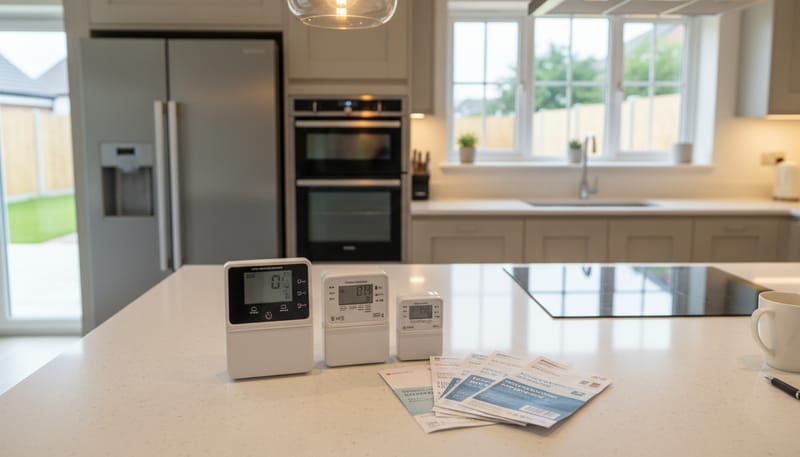
The keys are in your hand, the front door swings open to the smell of fresh paint, and your brand-new home stretches out before you — immaculate, untouched, and entirely yours. It's a moment every new-build buyer dreams about. But alongside the excitement comes a question that many first-time owners underestimate until the direct debits start flowing: exactly how much does it cost to actually run a new build home, month by month, from day one? The answer involves far more than just the mortgage payment. Council tax, energy bills, water rates, buildings and contents insurance, broadband, a TV licence, service charges (on many new developments), a maintenance reserve for the unexpected, and a host of smaller recurring costs all combine to create a monthly outgoing figure that can catch the unprepared off guard.
This guide breaks down every significant running cost you'll face in your first year of new-build ownership, using real UK figures for 2024/25. We'll build a complete monthly budget from scratch, show you where the money goes, and highlight the areas where new-build owners can save compared to buyers of older properties. Whether you're buying a £200,000 starter home or a £500,000 family detached, the structure of your running costs is remarkably similar — it's the scale that changes. By the end of this article, you'll have a clear, realistic picture of what year one looks like financially. For help understanding the purchase costs that come before this stage, see our guide to the true cost of buying a new build home.
The Complete Monthly Cost Breakdown
Before diving into the detail of each cost category, let's establish the headline numbers. Based on a typical 3-bedroom new-build semi-detached house purchased for £300,000 with a £270,000 mortgage, here's what year-one running costs look like for an average UK household:
1. Mortgage Payments
Your mortgage will be far and away the biggest monthly outgoing. For a £270,000 repayment mortgage on a 25-year term at 4.3% (a competitive 5-year fixed rate in early 2025), the monthly payment is approximately £1,190. This covers both the capital repayment (reducing the amount you owe) and the interest charged by the lender. In the early years of the mortgage, the majority of each payment goes towards interest — on the figures above, around £970 of the first month's £1,190 payment is interest, with only £220 actually reducing the capital. This balance shifts gradually over time.
If you're on a tracker or variable rate, your payments will fluctuate with the Bank of England base rate. In early 2025, the base rate sits at 4.5%, with market expectations of gradual reductions. If rates fall, your payments decrease — but the uncertainty makes budgeting harder. Fixed-rate deals provide certainty and are overwhelmingly the most popular choice for new-build buyers (over 90% according to UK Finance data).
2. Council Tax
Council tax is a local authority charge that funds services including refuse collection, street lighting, schools, police, and fire services. The amount depends on your property's council tax band and the rates set by your local council. For a typical new-build semi-detached at £300,000, you're likely looking at Band D in most areas outside London and the South East. The average Band D council tax in England for 2024/25 is £2,065 per year — approximately £172 per month. This figure varies significantly: inner London boroughs can be as low as £1,200 (Band D), while some county councils charge over £2,300.
New-build buyers benefit from a couple of council-tax advantages. First, as discussed in our tax benefits guide, new builds are often banded lower than equivalent older properties because of the 1991 valuation basis. Second, many new developments qualify for a temporary council-tax exemption during construction. Once the property is completed and you move in, you become liable from the date of occupation. If the property was completed but empty before you moved in, the developer may have been paying council tax on it — always check that you're not inheriting any arrears.
Council tax can be paid in 10 monthly instalments (April–January), though most councils now offer 12-monthly payment options if you prefer smaller payments spread across the year. Some councils also offer discounts: a 25% single-person discount if you live alone, and exemptions for certain categories including students, people with severe mental impairment, and members of the armed forces.
3. Energy Bills (Gas and Electricity)
Energy is one area where new-build owners have a significant advantage over buyers of older properties. New builds must comply with the latest building regulations (Part L 2021, and the forthcoming Future Homes Standard), which mandate high levels of insulation, double or triple glazing, efficient heating systems, and airtight construction. As a result, a typical new build uses 50–60% less energy for heating than a Victorian or even a 1960s–1980s property of the same size.
Under the Ofgem energy price cap (January 2025), a typical household using a dual-fuel tariff pays approximately £1,738 per year — that's about £145 per month. However, new-build owners typically pay less because their homes are more efficient. Based on EPC data and industry estimates, a well-insulated 3-bedroom new build should have annual energy costs of approximately £1,100–£1,500, or £92–£125 per month. If your new build has a heat pump instead of a gas boiler, your gas bill disappears entirely, though your electricity bill will be higher (heat pumps run on electricity). Smart meters, which come as standard on most new builds, help you monitor and control usage from day one.
Based on 3-bed semi-detached. Actual costs depend on occupancy, usage patterns, and tariff.
4. Water Rates
Water and sewerage charges in England and Wales are set by regional water companies. You'll either pay a flat rate based on the rateable value of your property, or a metered rate based on actual usage. Most new builds come with a water meter installed, meaning you pay for what you use. Average UK water bills for a metered household are approximately £448 per year (£37 per month) for water supply and sewerage combined. An unmetered household pays a flat rate averaging around £480 per year.
New-build owners sometimes face an additional charge from the developer for the provision of water and sewerage infrastructure on the development. This is separate from your regular water bills and is usually a one-off or limited-period charge. Check your purchase documentation carefully. Additionally, some new builds include water-efficient fixtures (low-flow taps, dual-flush toilets, water-efficient showerheads) as standard, which can reduce metered water consumption by 15–25% compared to older fittings. Over a year, that could save £60–£100.
5. Buildings and Contents Insurance
Buildings insurance is a mortgage requirement — your lender will insist you have it in place from completion. It covers the cost of rebuilding your home in the event of fire, flood, subsidence, or other major damage. For a new build, premiums are often lower than for older properties because the construction methods are modern, the roof is new, the electrics and plumbing are current, and the risk of structural issues is lower. A typical buildings insurance premium for a £300,000 new-build is £200–£350 per year (£17–£29 per month), compared to £300–£550 for a Victorian or Edwardian property of similar value.
Contents insurance covers your belongings — furniture, electronics, clothing, jewellery. The average UK contents insurance premium is around £120–£200 per year (£10–£17 per month), though this varies based on the value of your contents and your postcode. Many insurers offer combined buildings and contents policies at a discount. For a new-build couple without especially high-value items, a combined policy typically costs £350–£500 per year (£29–£42 per month). New-build buyers should ensure their buildings sum insured reflects the rebuild cost (not the market value) and that the policy covers any developer-installed fixtures like integrated appliances.
6. Service Charges and Estate Charges
This is one of the most important — and most often overlooked — running costs for new-build owners. Many modern developments include shared spaces and infrastructure that are not adopted by the local council: roads, pavements, lighting, landscaping, play areas, sustainable drainage systems (SuDS), and communal parking areas. The ongoing maintenance of these shared assets is funded through a service charge or estate charge, typically managed by a management company appointed by the developer.
Typical estate charges range from £100 to £500+ per year for houses, and £1,000 to £3,000+ per year for apartments (which also include maintenance of corridors, lifts, communal heating, and building fabric). Some developments charge significantly more, particularly those with premium amenities like gyms, concierge services, or extensive landscaped grounds. The charge can increase annually, and homeowners often have limited ability to challenge the increases — though the Leasehold and Freehold Reform Act 2024 is introducing stronger protections. For a deep dive into this topic, see our dedicated article on understanding estate charges on new build developments.
7. Broadband, TV Licence, and Subscriptions
Most new builds are pre-wired for fibre broadband, which is a significant advantage over older properties that may be limited to slower connections. Fibre-to-the-premises (FTTP) broadband packages typically cost £25–£40 per month for speeds of 100–500 Mbps, or £40–£60 per month for gigabit speeds. Some developments have exclusive deals with specific providers (such as Openreach, CityFibre, or Hyperoptic), which can mean competitive pricing but limited choice.
The BBC TV licence costs £169.50 per year (£14.13 per month) and is required if you watch or record live TV on any channel, or use BBC iPlayer. Streaming services (Netflix, Disney+, Amazon Prime Video) are optional but most households subscribe to at least one — budget £10–£30 per month. Mobile phone contracts, typically £15–£50 per month per person, are another recurring cost. In total, communications and entertainment typically add £80–£150 per month to a household budget.
8. Maintenance Reserve
One of the biggest advantages of buying a new build is that everything is brand new, under warranty, and unlikely to need repair in the first few years. The NHBC Buildmark warranty (or equivalent from Premiere Guarantee, LABC, etc.) covers defects for 2 years and structural issues for 10 years. However, it's still prudent to maintain a reserve for items not covered by warranty: garden maintenance, replacing consumables (filters, light bulbs, batteries), minor cosmetic touch-ups, and any wear-and-tear items like carpets and appliances after the initial warranty period.
A common rule of thumb is to set aside 1% of the property's value per year for maintenance — that's £3,000 per year (£250 per month) for a £300,000 home. In practice, year-one maintenance on a new build is much lower — perhaps £500–£1,000 at most — but building up the reserve early means you're prepared when the boiler needs servicing (year 2+), the garden needs work, or an appliance fails outside its manufacturer's warranty. We'd recommend saving at least £100 per month from day one.
9. Life Insurance and Income Protection
While not a running cost of the property itself, life insurance is effectively essential for mortgage holders. If you die during the mortgage term, a decreasing-term life insurance policy pays off the outstanding balance so your family can keep the home. Premiums depend on your age, health, mortgage amount, and term. For a 30-year-old non-smoker with a £270,000 25-year decreasing policy, typical premiums are £12–£18 per month. For a couple, joint cover costs £20–£30 per month. Critical illness cover (which pays out if you're diagnosed with a serious condition) adds another £15–£30 per month. Income protection (which replaces a percentage of your income if you can't work) costs £20–£50 per month. These aren't optional luxuries when you have a large mortgage — they're financial safety nets.
10. The Complete Year-One Budget
Let's now assemble everything into a single comprehensive budget. This is based on our reference scenario — a 3-bedroom new-build semi-detached at £300,000 with a £270,000 mortgage — but you can adjust the figures proportionally for your own situation.
Where Your Money Goes: Visual Budget Split
Scaling the Budget: Different Price Points
Not everyone buys a £300,000 home. Let's see how the total monthly outgoings scale across different price points, assuming the same 90% LTV mortgage at 4.3% and proportional adjustments to insurance and maintenance:
2-bed
3-bed terrace
3-bed semi
4-bed detached
5-bed detached
Year-One Savings: How to Reduce Your Costs
While many running costs are fixed or semi-fixed, there are genuine opportunities to reduce your outgoings in year one:
Energy: Switch to a competitive fixed tariff as soon as you move in (don't stay on the developer's default). Use your smart meter to track usage. Set heating timers and reduce the thermostat by 1°C (saves approximately £80/year). Consider solar panels if your roof orientation is suitable — the upfront cost is repaid through lower bills and the Smart Export Guarantee (SEG), which pays you for excess electricity exported to the grid.
Insurance: Use comparison sites and don't auto-renew. Multi-policy discounts (buildings + contents + car) can save 10–20%. Increase your excess to reduce premiums — but only to a level you could comfortably pay if you needed to claim.
Council tax: Check your band is correct (see our tax benefits guide for how to challenge). If you live alone, apply for the 25% single-person discount. If you work from home, you may be able to claim a proportion of council tax as a tax-deductible expense.
Broadband: Negotiate. Providers often have unadvertised deals, especially for new customers. If a competing provider serves your development, mention this during negotiations. Some developers negotiate bulk deals with providers — ask your site sales team.
Mortgage: If your deal allows overpayments (most fix at 10% per year without penalty), even small regular overpayments dramatically reduce total interest. Overpaying £100/month on our reference mortgage saves over £18,000 in interest and clears the mortgage nearly 4 years early.
Month-by-Month Cash Flow: What to Expect
Not all costs hit evenly across the year. Here's a month-by-month guide to the financial rhythm of year one:
Month 1 (Move-in): The most expensive month. You'll pay your first mortgage payment (sometimes including a partial month from completion date), set up all utility accounts, pay for broadband installation if required, purchase essential furniture and household items (budget £2,000–£5,000 on top of regular costs), and potentially pay removal costs (£500–£2,000). Many new-build buyers also invest in curtains/blinds, as developments sometimes complete without window coverings.
Months 2–3: Costs begin to normalise. You'll establish your utility usage patterns and get a clearer picture of monthly energy costs. Garden expenditure may spike if you're landscaping (new builds often come with basic turfing only). This is a good time to sort out insurance, set up direct debits for all regular payments, and register with a local GP and dentist.
Months 4–12: The "steady state" period. Monthly outgoings are predictable and manageable. Any snags identified during the first weeks should have been reported to the developer and scheduled for repair. Your maintenance reserve should be growing, and you'll have a clear picture of your actual (vs budgeted) monthly spend. This is a good time to review whether your budget assumptions were accurate and adjust accordingly.
The Affordability Buffer
Mortgage lenders apply stress tests to ensure you can afford payments if interest rates rise. Typically, they test affordability at your mortgage rate plus 3% (so if your fix is 4.3%, they test at 7.3%). You should apply a similar discipline to your own budgeting. If your total monthly running costs are £1,781, stress-test by asking: could I still manage if my costs rose to £2,100? The extra £319 could come from a rate rise at remortgage, an energy price increase, or an unexpected repair.
A sensible affordability buffer is to keep total housing costs (mortgage + all running costs) below 35–40% of your net household income. On the figures above, £1,781 per month means you need a minimum net household income of approximately £4,450–£5,090 per month (£53,400–£61,000 per year net, or roughly £70,000–£80,000 gross for a couple). If you're stretching beyond 40%, think carefully about where you can trim and build your emergency fund faster. For a deeper analysis of total costs and how to calculate your own, see our guide to calculating the true monthly costs of a new build.
Move-In Day Costs: The One-Off Expenses
Beyond the recurring monthly costs, year one includes a wave of one-off expenses that can put significant pressure on your finances if you haven't planned for them. These are the costs that hit in the first few weeks and months of ownership, before you've even settled into a routine of monthly outgoings.
Removal costs: A professional removal company for a 2–3 bedroom house typically costs £500–£1,500 depending on distance and volume. If you're moving from rented accommodation with relatively few possessions, a van hire (£80–£150 per day) plus help from friends can reduce this significantly. However, the stress of moving day is already considerable — paying for professional movers is often money well spent.
Furniture and furnishings: This is typically the single largest year-one expense beyond the property purchase itself. A completely unfurnished 3-bedroom house needs, at minimum, beds and mattresses (£800–£2,000 for a double and two singles), a sofa (£500–£1,500), a dining table and chairs (£200–£800), storage furniture (£300–£600), curtains or blinds for every room (£500–£2,000 depending on approach), and basic lighting (£100–£300). A realistic budget for furnishing a new build from scratch is £3,000–£8,000 for the essentials, rising to £10,000–£20,000 if you want everything to look finished and cohesive from day one.
White goods: Check what the developer includes. Some new builds come with an integrated oven and hob but nothing else. A full set of white goods — fridge-freezer (£300–£700), washing machine (£250–£500), tumble dryer or washer-dryer (£300–£600), dishwasher (£250–£450) — costs £1,100–£2,250 at mid-range prices. Buying these during sales events (Black Friday, January sales) can save 20–30%.
Garden setup: Most new builds come with basic turfing and fencing, but you'll often need to invest in a shed (£200–£600), basic garden tools (£100–£300), a lawn mower (£100–£400), and initial planting (£100–£500). If the garden is unfenced or needs decking, paving, or more substantial landscaping, costs can run into the thousands. Budget at least £500 for year-one garden basics, or £2,000–£5,000 if you want to make it properly usable.
New Build vs Older Home: Annual Running Cost Comparison
One of the strongest financial arguments for buying a new build is the lower annual running costs compared to older properties. This advantage comes primarily from superior energy efficiency, lower maintenance requirements, and modern warranty protection. Let's quantify the difference across the main cost categories.
Energy is where the biggest savings occur. A new build with EPC Band B typically costs £1,000–£1,400 per year in energy bills, compared to £1,700–£2,200 for a 1990s-era home at Band D, and £2,500–£3,500+ for a pre-1930s property at Band E or F. That's a saving of £700–£2,100 per year just on energy — enough to cover your buildings insurance, contents insurance, and broadband combined.
Maintenance provides the second major advantage. In year one, a new build should need virtually zero maintenance spending beyond cosmetic choices. An older home typically requires at least £1,500–£3,000 per year in ongoing maintenance: boiler servicing, gutter clearing, repointing, window repairs, plumbing fixes, and the inevitable surprises that come with aging building fabric. Over a 10-year period, maintenance on an older home can easily exceed £25,000–£40,000, while a new build (with its 10-year structural warranty) might cost £8,000–£15,000 over the same period — a saving of £10,000–£25,000.
Insurance premiums are also lower on new builds, reflecting the reduced risk profile. Modern construction methods, compliant wiring, and up-to-date plumbing mean fewer claims. The typical saving is £100–£300 per year on buildings insurance compared to a Victorian or Edwardian property. Added together, these running-cost advantages mean that a new-build owner can save £1,000–£3,000+ per year compared to owning an equivalent older property — money that can go towards mortgage overpayments, building a savings buffer, or funding home improvements. For financing those improvements, see our guide to financing new build home improvements.
Final Thoughts
Year one in a new build home is financially front-loaded — the move-in costs, the furniture, the garden, the setup of every account and service. But once those one-off expenses are behind you, the ongoing running costs of a new build are among the most predictable and manageable of any property type. Lower energy bills, minimal maintenance, modern warranty protection, and efficient design all work in your favour. The key is to budget honestly, build reserves from day one, and avoid the common trap of underestimating the non-mortgage costs that can add 50% or more to your monthly outgoings.
With the comprehensive budget framework in this guide, you can walk into your new home confident that you know exactly where your money is going — and that you've planned for the unexpected too. For an understanding of the ongoing charges specific to managed developments, read our article on understanding estate charges on new build developments.
Appendix: Utility Setup Checklist for Moving Day
Setting up utilities efficiently on day one avoids billing disputes and ensures you're on the best possible tariffs from the start. Here's a practical checklist for the week of your move. First, take meter readings for gas, electricity, and water on the day you collect your keys — photograph each meter with a timestamp. Second, contact your chosen energy supplier (not the developer's default) and set up an account with your meter readings and move-in date. If you haven't chosen a supplier, use a comparison site to find the best fixed tariff before you move. Third, register with your regional water company using the meter serial number on your water meter — located outside the property, usually near the boundary. Fourth, arrange broadband installation at least two weeks before your move-in date; most providers need 10–14 days to activate a new line, even on developments with pre-installed fibre. Fifth, set up a Royal Mail redirection from your old address (this can be done online and costs £35 for three months or £65 for twelve months). Sixth, update your address with your bank, employer, DVLA, GP, dentist, and any subscription services. Finally, register to vote at your new address through your local council's electoral registration service — this also helps maintain your credit score, which is important if you plan to take on any additional finance in the near future.
Getting these administrative tasks done in the first week means you can focus on settling in and enjoying your new home without the nagging worry of unfinished paperwork. Many new-build buyers find it helpful to create a simple spreadsheet tracking each setup task, the account number, and the monthly cost — this becomes the foundation of your ongoing budget tracker and ensures nothing slips through the cracks. For tax-related advantages of your new build purchase, explore our comprehensive guide to tax benefits of buying a new build home in the UK.