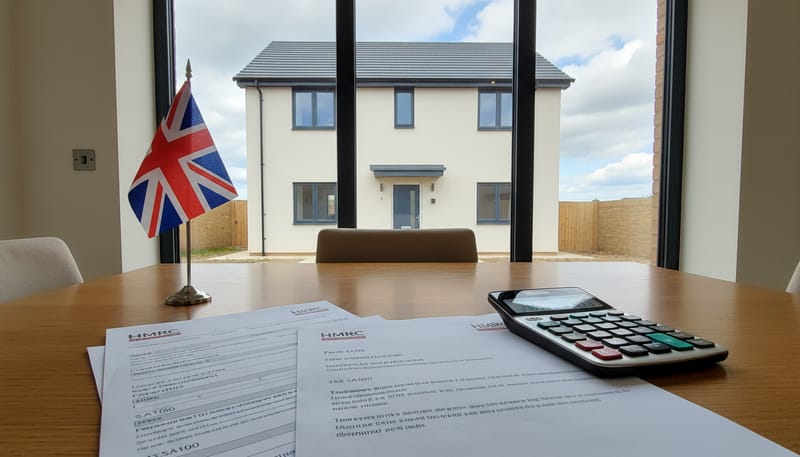
Buying a new build home in the UK comes with a range of financial advantages that many purchasers overlook in the excitement of choosing floor plans and kitchen finishes. While the headline price of a new build can sometimes appear higher than equivalent second-hand stock, a significant portion of that premium is offset — or even reversed — by tax reliefs, exemptions, and incentives specifically designed to support new-build purchasers. From stamp duty land tax (SDLT) relief for first-time buyers that can save up to £11,250 in one go, through to the zero-rated VAT status of new residential properties that keeps the purchase price thousands lower than it would otherwise be, the tax landscape for new-build buyers is considerably more favourable than most people realise.
In this guide we dissect every major tax benefit available to UK new-build buyers in 2024/25, with worked examples, real pound-sign savings, and practical advice on how to claim each benefit. Whether you're a first-time buyer stretching to get on the ladder, a growing family upsizing, or an investor weighing the buy-to-let numbers, understanding these tax advantages can fundamentally change the financial case for choosing new over old. We'll also touch on council tax banding, the capital gains exemption on your main residence, and the growing number of energy-efficiency incentives that reward new-build owners for their home's greener credentials. For a full overview of the buying costs involved, see our guide to the true cost of buying a new build home.
Stamp Duty Land Tax Relief for First-Time Buyers
Stamp duty land tax (SDLT) is typically the single largest tax payable when buying a property in England and Northern Ireland (Scotland has LBTT, Wales has LTT — we'll cover those separately below). For first-time buyers, the government provides significant relief that directly reduces the upfront cost of purchase. Under the current rules (applicable from April 2025), first-time buyers pay no SDLT on the first £300,000 of a property purchase, and 5% on the portion between £300,001 and £500,000. If the property costs more than £500,000, first-time buyer relief does not apply and standard rates kick in.
For new-build buyers, this relief is particularly valuable because many new developments are priced in the sweet spot between £250,000 and £450,000 — exactly where the savings are maximised. On a £350,000 new build, a first-time buyer pays just £2,500 in SDLT (5% on the £50,000 above £300,000). A non-first-time buyer would pay £7,500 on the same property (0% on the first £250,000, then 5% on the next £100,000). That's a saving of £5,000 — money that could furnish the entire ground floor of a new home.
Worked Examples: SDLT at Different Price Points
Scotland (LBTT) and Wales (LTT)
Scotland operates its own Land and Buildings Transaction Tax (LBTT). First-time buyers in Scotland benefit from a relief that raises the nil-rate band from £145,000 to £175,000 — a maximum saving of £600. This is less generous than the England/NI relief, but still valuable. Above £175,000, first-time buyers pay the same rates as other purchasers: 2% from £175,001 to £250,000, 5% from £250,001 to £325,000, 10% from £325,001 to £750,000, and 12% above £750,000.
In Wales, Land Transaction Tax (LTT) does not currently offer specific first-time buyer relief. All purchasers pay the same rates: 0% on the first £225,000, 6% on the next £175,000 (to £400,000), 7.5% from £400,001 to £750,000, 10% from £750,001 to £1.5m, and 12% above £1.5m. The higher nil-rate band of £225,000 partially compensates for the lack of FTB relief, but Welsh first-time buyers purchasing above this level don't enjoy the same savings as their English counterparts.
VAT Zero-Rating on New Build Homes
This is perhaps the single most important — and most misunderstood — tax benefit of buying a new build. In the UK, the sale of a brand-new residential property is zero-rated for VAT purposes. This means the developer charges 0% VAT on the sale price, and the buyer pays no VAT whatsoever. By contrast, the construction services, materials, and professional fees that go into building the property all carry VAT at various rates (20% standard, 5% reduced, or 0% for certain items). The developer absorbs and reclaims these VAT costs as part of the build process.
Why does this matter to the buyer? Because if new builds were standard-rated (20% VAT), a £300,000 home would cost £360,000. The zero-rating effectively provides a hidden saving of £60,000 on that property. Of course, the market price already reflects the zero-rated status, so you don't see "VAT: £0" on your completion statement. But the point is that the tax system fundamentally favours new construction over renovation or conversion — and this is by design, to incentivise the building of new homes.
The zero-rating also applies to certain items supplied as part of the new build, including fitted kitchens, built-in wardrobes, bathroom suites, and central heating systems. If these are installed by the developer before the first sale, they're covered by the zero-rate. However, if you buy upgrades after completion — say, replacing the standard kitchen with a premium one — you'll typically pay 20% VAT on the supply and installation of those upgrades. This creates a financial incentive to negotiate upgrades with the developer before completion, where possible, as they can include them within the zero-rated supply.
The Self-Build VAT Reclaim
While this guide focuses primarily on buying from developers, it's worth noting that self-builders and those building on their own land can reclaim the VAT on most building materials and some services through the DIY Housebuilders' Scheme (VAT Notice 431C). Claims must be made within six months of the building being completed and can be worth £20,000–£60,000+ depending on the size and specification of the build. This is a one-time claim, and HMRC processes it as a refund rather than a relief — so you pay the VAT upfront and claim it back.
Capital Gains Tax: The Main Residence Exemption
Capital gains tax (CGT) is charged on the profit you make when you sell an asset that has increased in value. For most assets, CGT rates are 18% (basic-rate taxpayers) or 24% (higher-rate taxpayers) on residential property gains. However, the UK tax system provides a complete exemption from CGT on the sale of your main residence — known as Private Residence Relief (PRR). If the new build you're buying will be your primary home, any increase in value from the day you buy to the day you sell is entirely tax-free.
This is a massive benefit, especially in areas where property values are rising strongly. If you buy a new build for £300,000 and sell it five years later for £375,000, the £75,000 gain is completely free of CGT. Without PRR, you'd owe between £13,500 and £18,000 in tax. For new-build buyers specifically, there's an additional nuance: properties purchased off-plan often complete 12–24 months after exchange. The PRR clock starts from the date you take up residence, not from exchange. If you exchange in January 2025 but don't complete and move in until March 2026, your PRR period starts in March 2026.
Based on £75,000 gain for a higher-rate taxpayer. Figures illustrative.
CGT and Buy-to-Let New Builds
If you're buying a new build as a buy-to-let investment, PRR does not apply and any capital gain on sale will be subject to CGT. Investors also pay an additional 3% SDLT surcharge on top of standard rates (or 5% surcharge for additional properties from April 2025 under proposed changes). These additional taxes significantly change the financial calculus of new-build investment and should be factored into any yield calculations. However, investors can deduct certain costs from the gain — including legal fees, estate agent fees, and the cost of capital improvements (though not routine maintenance). For more on the overall financial picture, see our article on new build mortgages explained.
Council Tax Bands and New Builds
Council tax is an annual local tax based on the valuation band of your property. In England, bands range from A (lowest) to H (highest), based on what the property would have been worth on 1 April 1991. In Wales, revaluation took place in 2003, and Scotland uses 1991 values like England. New builds present an interesting council-tax situation: because the property didn't exist in 1991, the Valuation Office Agency (VOA) must estimate what it would have been worth at that date. This often results in more favourable banding than the property's actual current market value might suggest, because new builds in 1991 would have been cheaper relative to today's prices in most areas.
For example, a new 3-bedroom semi-detached house selling for £320,000 in 2025 in a Midlands town might be banded at D (properties valued at £68,001–£88,000 in 1991), with an annual council tax of around £2,100. A similar-sized period property in the same area, also valued at £320,000 today, might be banded at E or F due to its larger plot or more established location, with council tax of £2,500–£3,100. The difference of £400–£1,000 per year adds up significantly over a decade of ownership.
Based on average Band D rate of £2,065 for England 2024/25. Actual amounts vary by local authority.
Challenging Your Council Tax Band
If you believe your new build has been placed in too high a council tax band, you have the right to challenge it. New-build owners can make a proposal to the VOA within six months of the property first appearing on the council tax list. After this period, you can still challenge but only in specific circumstances (for example, if a comparable property nearby has been placed in a lower band). The appeal is free and can be submitted online through the VOA website. If successful, the rebanding is backdated to the date you first became liable, and you'll receive a refund. It's worth checking what band similar new builds on the same development have been given — inconsistencies are not uncommon and provide strong grounds for a challenge.
Energy Efficiency Tax Incentives
The UK government has progressively introduced tax incentives that reward energy-efficient properties and penalise inefficient ones. New builds, which must comply with the latest building regulations (Part L of the Building Regulations, updated in 2022 and again under the Future Homes Standard expected in 2025), are significantly more energy-efficient than the existing housing stock. This translates into several tax and financial advantages.
Zero-Rate VAT on Energy-Saving Materials
Since April 2022, the installation of energy-saving materials (ESMs) in residential properties has been zero-rated for VAT (previously 5%). This applies to solar panels, heat pumps, insulation, biomass boilers, micro wind turbines, and other qualifying technologies. While new builds already come with compliant insulation, many buyers choose to add solar panels or upgrade heating systems after completion. The zero-rated VAT saves 20% on the total installation cost. For example, a £10,000 solar panel installation would have attracted £2,000 VAT at standard rate — this is now zero. The zero-rating is currently legislated to remain in place until at least March 2027.
Boiler Upgrade Scheme
The Boiler Upgrade Scheme (BUS) provides upfront grants for heat pump installations: £7,500 for air-source heat pumps and £7,500 for ground-source heat pumps (increased from £5,000/£6,000 in October 2024). While many new builds now come with heat pumps as standard (especially under the Future Homes Standard), those that were completed with gas boilers before the standard took effect can benefit from BUS when switching. The grant is deducted from the installer's invoice, so you don't need to fund the full cost upfront. Combined with zero-rate VAT, a £12,000 air-source heat pump installation could cost as little as £4,500 after the grant — a remarkable saving.
Green Mortgages and Rate Discounts
An increasing number of UK lenders offer "green mortgage" products with preferential interest rates for properties with high EPC ratings (typically A or B). Since most new builds achieve EPC Band B or higher, new-build buyers are well positioned to access these products. The rate discounts are typically 0.05–0.30% below equivalent standard products. On a £250,000 mortgage over 25 years, a 0.2% rate discount saves approximately £6,400 in total interest. Lenders offering green mortgages include Barclays, NatWest, Nationwide, Halifax, and several building societies. This isn't a tax benefit in the strict sense, but it's a financial incentive driven by the same policy objectives.
Inheritance Tax and New Builds
Inheritance tax (IHT) is charged at 40% on estates above the nil-rate band (currently £325,000 per person). However, the Residence Nil-Rate Band (RNRB) provides an additional £175,000 per person when a main residence is passed to direct descendants (children, grandchildren). For a married couple, the combined allowance is £1,000,000 (£325,000 + £175,000 per person). This means a couple's new-build home worth up to £1 million can pass to their children completely free of IHT.
For new-build buyers, the RNRB is particularly relevant because many new builds are purchased as long-term family homes with the intention of eventually passing them down. The RNRB applies regardless of whether the property is new or old, but the key point is that buying a new build doesn't disadvantage you in any way for IHT purposes — and the full tax-free allowance is available from the day you complete the purchase. It's worth noting that the RNRB is tapered away for estates worth over £2 million, reducing by £1 for every £2 above this threshold. For very high-value estates, specialist IHT planning with a financial adviser is recommended.
Total Tax Benefits: A Comprehensive Summary
Let's bring all the tax benefits together in a single scenario. Consider a first-time buyer purchasing a £350,000 new-build 3-bedroom detached home in the West Midlands. Here's the full tax picture compared to buying a similar-aged second-hand property at the same price:
Stamp Duty Additional Property Surcharge
If you're buying a new build as an additional property — perhaps as a buy-to-let investment or a second home — you'll pay an additional 5% SDLT surcharge on top of the standard rates (increased from 3% from late 2024). This surcharge applies to the entire purchase price and significantly increases the upfront cost. On a £300,000 new-build investment property, the surcharge alone adds £15,000 to your stamp duty bill. When combined with the standard SDLT (£2,500 on a £300,000 property), the total SDLT comes to £17,500 — a substantial sum that must be factored into your investment yield calculations.
There is an exemption if you're replacing your main residence: if you sell your old home within 36 months of buying the new one, you can reclaim the surcharge. This is particularly relevant for buyers who purchase a new build off-plan before their existing property sells. You can complete on the new build, pay the surcharge, then reclaim it when the old property sells — provided this happens within three years. The reclaim is processed through HMRC and typically takes 4–8 weeks.
Salary Sacrifice and Workplace Schemes
While not specific to new builds, salary sacrifice schemes can indirectly benefit home buyers. If your employer offers salary sacrifice for pension contributions, making additional contributions reduces your taxable income, which in turn reduces your income tax liability. The tax saved can be redirected towards mortgage payments or deposit savings. For a higher-rate taxpayer earning £60,000, sacrificing £5,000 into a pension saves £2,000 in income tax and £100 in National Insurance. That £2,100 saving could contribute towards the running costs of your new build or help build a home-improvement fund. Some employers also offer Cycle to Work schemes and other salary sacrifice benefits that reduce your taxable income while providing useful items for your new home (electric car charging, for example).
Tax Planning Tips for New-Build Buyers
Tip 1 — Maximise your ISA before buying. Saving in a Lifetime ISA (LISA) gives you a 25% government bonus on up to £4,000 per year — that's a free £1,000 annually, tax-free. You can use a LISA towards your first home (up to £450,000 purchase price). The bonus is effectively a tax benefit, as it's funded by the Treasury. Couples can both have LISAs, potentially earning £2,000 per year in bonuses between them.
Tip 2 — Time your purchase around SDLT thresholds. If your new build is close to a key threshold (£300,000 for the FTB 0% band, £500,000 for the FTB relief upper limit), even a small price negotiation can save thousands. Dropping from £305,000 to £299,000 saves £250 in SDLT plus the psychological benefit of staying within the fully exempt band.
Tip 3 — Negotiate upgrades before completion. Because the developer's sale of a new build is zero-rated for VAT, having them install premium fixtures (upgraded kitchen, built-in wardrobes, upgraded bathroom) before the first sale means those items are covered by the zero-rate. Buying and installing the same items yourself after completion means paying 20% VAT on materials and labour.
Tip 4 — Consider joint ownership carefully. If buying with a partner, consider how the property is held. Joint tenants each own the whole property — on death, it passes automatically to the survivor. Tenants in common own specific shares — useful if you've contributed unequally or want more control over inheritance. The choice doesn't affect tax directly but influences how IHT allowances and CGT relief work on any future disposal. Professional advice from a solicitor is recommended.
Tip 5 — Keep records of all improvement costs. While improvements to your main residence don't attract CGT, they do reduce any taxable gain if you ever let the property. If circumstances change — for example, you keep the new build as a rental when you move — the cost of improvements is deductible from the eventual capital gain. Keep receipts, invoices, and planning documents. For ideas on what to improve and how to finance it, see our guide to financing new build home improvements.
The Lifetime ISA: A Tax-Free Route to Your Deposit
While not exclusively a new-build benefit, the Lifetime ISA (LISA) deserves detailed attention because it's one of the most powerful tax-advantaged savings vehicles available to first-time buyers — and it works particularly well alongside the other new-build tax benefits described above. Opened by anyone aged 18–39, a LISA allows you to save up to £4,000 per year towards your first home (or retirement). The government adds a 25% bonus on every contribution — that's up to £1,000 free money per year, per person. A couple both saving into LISAs can accumulate £10,000 per year in deposits (£8,000 of their own money plus £2,000 in bonuses). Over four years, that's £40,000 including £8,000 in completely free, tax-exempt government contributions.
The LISA can be used towards a first home costing up to £450,000, which covers the vast majority of new-build purchases outside prime London locations. The bonus is paid monthly (since April 2018, if using a cash LISA) and the entire pot — contributions plus bonus — is tax-free when used for a qualifying property purchase. The LISA bonus is in addition to SDLT first-time buyer relief, so a savvy buyer purchasing a £350,000 new build could benefit from £8,000 in LISA bonuses (couple, 4 years saving) plus £2,500 in SDLT savings — a combined tax-related benefit of £10,500 before even considering VAT zero-rating and CGT relief. One important caveat: withdrawing from a LISA for any purpose other than buying a qualifying first home (or retirement at 60) incurs a 25% penalty, which means you actually lose money. Only put money in a LISA if you're confident it will go towards a home purchase.
Interest earned in a cash LISA is tax-free, and gains in a stocks-and-shares LISA are also tax-free. This makes the LISA one of the most tax-efficient savings products available in the UK. For buyers still several years from purchasing, combining LISA savings with the discipline of regular contributions can create a substantial deposit pot that significantly reduces the mortgage amount needed — and therefore the total interest payable over the life of the loan. Every £1,000 less you borrow on a 25-year mortgage at 4.3% saves approximately £640 in interest. That £8,000 couple's LISA bonus translates to a further £5,120 in lifetime mortgage interest savings.
Stamp Duty Land Tax for Non-First-Time Buyers
While first-time buyers enjoy the most generous SDLT relief, non-first-time buyers purchasing new builds still benefit from the standard SDLT structure, which is progressive and relatively favourable at mid-market price points. Under the standard rates applicable from April 2025, no SDLT is payable on the first £250,000 of the purchase price. The rate is 5% on the portion from £250,001 to £925,000, 10% from £925,001 to £1.5 million, and 12% above £1.5 million. For a typical new-build purchase at £350,000, the standard SDLT is £5,000 (5% of £100,000 above the nil-rate band).
It's worth noting that the SDLT nil-rate band was temporarily raised to £250,000 in September 2022, and this was originally scheduled to revert to £125,000 in April 2025. Government policy may adjust these thresholds, so always check the latest HMRC guidance before calculating your liability. If the nil-rate band does revert, SDLT on a £350,000 purchase would rise from £5,000 to £7,500 — an increase of £2,500 that could influence your purchase timing. New-build buyers have a slight advantage here because off-plan purchases allow you to exchange early and potentially lock in the current rates even if thresholds change before completion, depending on when the effective date of the transaction falls.
For those relocating and buying a new build before selling their existing home, the additional-property surcharge of 5% applies at completion. However, as mentioned earlier, you can reclaim this surcharge if you sell the old property within 36 months. The reclaim is worth budgeting for — on a £350,000 purchase, the surcharge is £17,500, which is a significant amount of capital to have tied up while waiting for the old property to sell. Some buyers use bridging finance to cover this gap, though the cost of bridging (typically 0.5–1.5% per month) needs careful consideration.
Common Tax Myths About New Builds
Myth: "You pay VAT on top of the purchase price of a new build." False. The sale of a newly constructed residential property is zero-rated for VAT. The developer does not add VAT to the sale price, and you do not pay it. The developer reclaims VAT on their build costs through the normal VAT return process.
Myth: "First-time buyer relief only applies to second-hand homes." False. SDLT first-time buyer relief applies to any residential property (new or old) up to £500,000 in England and Northern Ireland. In fact, many developers specifically market their properties to first-time buyers because of this relief.
Myth: "New builds always end up in higher council tax bands." Not necessarily. Council tax bands are based on 1991 values, and many new builds are banded at D or below — often lower than comparable period properties in the same area. It's always worth checking and challenging if you believe the band is too high.
Myth: "You can't claim any grants on a new build." False. Several government grants apply to new builds, including the Boiler Upgrade Scheme, the Great British Insulation Scheme (for eligible households), and local authority grants for adaptations. Always check eligibility regardless of your property's age.
Myth: "Selling within five years means you pay capital gains tax." If the property has been your main residence throughout, PRR provides 100% relief regardless of how long you've owned it. There's no minimum holding period. However, if you've let out all or part of the property, partial relief may apply.
Looking Ahead: Future Tax Changes
The UK property tax landscape is always evolving, and several changes are on the horizon that could affect new-build buyers. The government has signalled its intention to reform council tax (potentially moving to a system based on current values rather than 1991 values), reform inheritance tax (with possible changes to the RNRB), and strengthen energy-efficiency requirements (the Future Homes Standard, expected to become mandatory for all new builds from 2025). Each of these changes could either increase or decrease the tax benefits of buying new, depending on the final details.
For now, the balance of tax incentives clearly favours new-build purchasers, particularly first-time buyers. The combination of SDLT relief, VAT zero-rating, CGT exemption on the main residence, favourable council-tax banding, and energy-efficiency incentives creates a compelling financial case that goes well beyond the sticker price. When making your decision, factor in these benefits alongside the direct costs — and consult a tax professional for advice tailored to your specific circumstances. For a complete picture of monthly running costs, read our year one budget guide for new build running costs, and for a methodology to calculate your total outlay, see how to calculate the true monthly costs of a new build.