Understanding Developer Incentives and Why They Exist
If you are a first-time buyer looking at new build homes, you may have noticed developers advertising a range of incentives — from contributions towards your deposit to free upgrades and legal fees paid. These incentives are a standard part of the new build market, and understanding how they work can save you thousands of pounds and make homeownership more accessible than you might think.
Developer incentives exist because housebuilders are motivated to sell homes at a steady pace to maintain their build programmes and meet sales targets. Offering incentives is a way of adding value for buyers without reducing the headline purchase price. This distinction matters — as we will explain later in this guide — because the purchase price is what the mortgage lender values the property against. Incentives that reduce the effective cost to you without lowering the sale price can be genuinely beneficial for both parties.
As a first-time buyer, you are in a particularly strong position to benefit from incentives. You have no chain (no property to sell), which means you can complete quickly and reliably — something developers value highly. This guide will walk you through every type of incentive available, their typical values, when developers are most likely to offer them, and how to make the most of what is on the table. If you are still building your deposit, our guide on saving for a new build deposit complements this information perfectly.
How Incentives Differ from Discounts
It is important to understand the difference between an incentive and a price reduction. A price reduction lowers the purchase price of the property, which directly affects the mortgage valuation and the amount you can borrow. An incentive, on the other hand, adds value on top of the agreed purchase price — for example, the developer paying your stamp duty, covering your legal fees, or including £10,000 worth of kitchen upgrades. The property price remains the same, which protects the valuation for both you and the developer.
Most mortgage lenders allow developers to offer incentives of up to 5% of the purchase price (for properties under £500,000) without affecting the valuation. Above that threshold, lenders may reduce their valuation by the amount of incentive that exceeds the limit. Understanding these rules is essential for structuring the best deal, and we cover this in detail in the mortgage valuations section later in this guide.
Types of Developer Incentives Explained
Developers offer a wide range of incentives, and the availability of each depends on the developer, the development, and current market conditions. Here is a comprehensive breakdown of the most common types you will encounter as a first-time buyer.
Deposit Contribution
A deposit contribution is one of the most valuable incentives for first-time buyers. The developer contributes a sum towards your deposit, typically between £2,000 and £10,000, or sometimes expressed as a percentage of the purchase price (e.g., 3–5%). This money is credited to you at completion and reduces the cash you need to bring to the table. For a first-time buyer who has been diligently saving for a deposit through a Lifetime ISA or other savings vehicles, a deposit contribution can bridge the final gap between what you have saved and what you need.
Stamp Duty Paid
First-time buyers in England and Northern Ireland already benefit from stamp duty relief on properties up to £425,000 (with no stamp duty at all on the first £425,000 under the current first-time buyer relief). However, if you are purchasing above this threshold, the developer may offer to cover some or all of your stamp duty liability. Even within the relief band, some developers advertise “stamp duty paid” as a headline incentive — which effectively becomes a contribution towards other purchase costs since you would not have paid stamp duty anyway.
Upgrades and Specifications
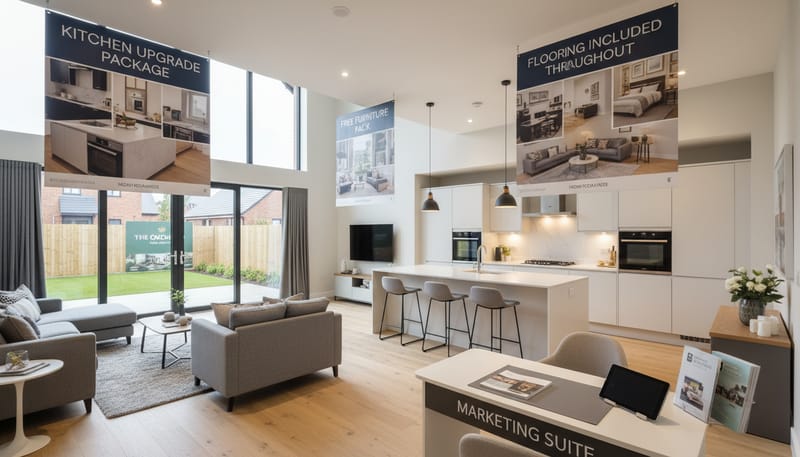
Specification upgrades are among the most popular incentives. The developer offers to include upgraded finishes and features that would normally be optional extras at no additional cost. Common upgrade incentives include premium kitchen worktops (quartz or granite instead of laminate), upgraded appliance packages, enhanced flooring throughout the home, full-height bathroom tiling, fitted wardrobes, and designer kitchen and bathroom fittings. The value of upgrade packages typically ranges from £3,000 to £15,000 depending on the property size and developer.
White Goods and Appliance Packages
Some developers offer a complete white goods package as an incentive, including a washing machine, tumble dryer, fridge-freezer, and dishwasher. This can save you £1,500–£3,000 and means your kitchen is fully equipped from day one. For a first-time buyer moving from rented accommodation where appliances were provided, this is particularly valuable as you may not own any of these items.
Legal Fees Paid
The developer covers your conveyancing and legal costs. This typically saves you £1,000–£2,500 depending on the complexity of the transaction and the solicitor used. Some developers will nominate a solicitor for you (using their panel firm), while others will contribute a fixed amount towards your own choice of solicitor. Using an independent solicitor is generally advisable, but if the developer is covering the full cost through their panel, it can still represent good value.
Part Exchange
While part exchange is more relevant for existing homeowners than first-time buyers, it is worth understanding how it works. The developer purchases the buyer’s existing property (typically at 90–95% of its market value) in exchange for the buyer purchasing a new build home. This eliminates the chain and provides certainty for both parties. As a first-time buyer, you cannot use part exchange directly, but if you are buying as a couple and one of you owns a property, it may be relevant.
Assisted Move and Deferred Payment Schemes
Some developers offer assisted move schemes where they help fund part of the purchase through an interest-free or low-interest loan for a set period. These schemes vary between developers and may have specific eligibility criteria. They can be particularly helpful for first-time buyers who have a good income but need more time to build their deposit.
Typical Incentive Values by Property Price
The value of incentives varies by property price, developer, and market conditions. The table below provides a realistic guide to what you can expect across different price points. These figures are based on typical offerings from major UK housebuilders in the current market.
| Property Price | Max Incentive (5%) | Typical Incentive Range | Common Package |
|---|---|---|---|
| £200,000 | £10,000 | £3,000–£8,000 | Legal fees + £5,000 upgrades |
| £250,000 | £12,500 | £5,000–£10,000 | Deposit contribution + upgrades |
| £300,000 | £15,000 | £5,000–£12,000 | Stamp duty + upgrades + legal fees |
| £350,000 | £17,500 | £7,000–£15,000 | Deposit contribution + full upgrade package |
| £400,000 | £20,000 | £8,000–£18,000 | Premium package: deposit + upgrades + fees |
| £500,000 | £25,000 | £10,000–£22,000 | Comprehensive package with premium upgrades |
These figures represent what is achievable through negotiation. The advertised incentive may be lower, but there is almost always room to discuss additional value, particularly if you are a chain-free first-time buyer who can move quickly.
Incentive Breakdown: Where the Value Goes
Typical ranges for properties priced £200,000–£400,000. Actual values depend on developer and market conditions.
When Developers Are Most Generous with Incentives
Timing can significantly affect the value of incentives available to you. Developers operate on quarterly and annual sales cycles, and their willingness to negotiate varies throughout the year. Understanding these cycles puts you in a stronger negotiating position.
End of Financial Quarter
Most major UK housebuilders report results on a quarterly basis, and their sales teams work to quarterly targets. The weeks leading up to the end of each quarter (typically March, June, September, and December) are often the best time to negotiate enhanced incentives. Sales advisors who are close to hitting their targets may have more flexibility to offer additional value to secure a sale before the quarter closes.
End of Financial Year
The annual target deadline creates even more urgency. For many developers, the financial year ends in June or December. The final weeks before the year-end can be an excellent time to negotiate, as developers are keen to report strong annual results. Completions that fall within the financial year are particularly valuable to the developer, which means plots that can complete quickly may attract enhanced incentives.
Slow Sales Periods
The property market has natural seasonal patterns. January and February can be quieter months for new build sales, as can the late autumn period. During these slower periods, developers may offer enhanced incentive packages to maintain sales momentum. Similarly, if a particular development has unsold stock — especially completed or near-completion plots — the developer will be more motivated to offer attractive incentives.
Development Launch vs Final Plots
There are two distinct opportunities during a development’s lifecycle. At launch, developers sometimes offer early bird incentives to create momentum and demonstrate demand to their board. These might include premium plot choices, enhanced specification, or special pricing for the first buyers. At the end of a development, when only a handful of plots remain, developers are motivated to clear remaining stock and close out the site. These final plots may come with enhanced incentives, though the choice of plot, house type, and orientation will be more limited.
Optimal Timing for Incentives
| Period | Incentive Potential | Why | Best Strategy |
|---|---|---|---|
| End of quarter (Mar, Jun, Sep, Dec) | High | Sales teams pushing to hit quarterly targets | Visit 3–4 weeks before quarter end |
| Financial year end | Very high | Annual results pressure; every sale counts | Be ready to move fast on completion |
| January–February | High | Traditionally slower market; kick-start new year | Express interest early; less competition |
| Development launch | Medium–High | Developers want early momentum | Register early for off-plan releases |
| Final plots on a site | High | Developer wants to close out the development | Be flexible on plot choice |
| Peak season (Apr–Jun) | Low–Medium | High demand; less need to incentivise | Focus on upgrades rather than cash incentives |
How to Ask for Incentives Effectively
Approaching the conversation about incentives requires a balance of confidence and courtesy. Developers expect buyers to ask about incentives — it is a normal and accepted part of the process. Here is how to maximise your chances of a positive outcome.
Do Your Research First
Before visiting the sales office, research what incentives the developer is currently advertising. Check their website, property portals, and social media for any published offers. Also visit competing developments in the area to understand what alternatives are available. Being able to reference a competitor’s offer (“I noticed that the development down the road is including £10,000 of upgrades”) gives you a credible negotiating position without being confrontational.
Demonstrate You Are a Serious Buyer
Developers respond best to buyers who are ready to proceed. Having your mortgage agreement in principle ready, your deposit saved, and your paperwork organised demonstrates that you are serious and can complete quickly. Chain-free first-time buyers are highly attractive to developers because you eliminate the uncertainty and delays associated with property chains.
Be Specific About What You Want
Rather than asking “what incentives can you offer?” (which gives the sales advisor control), be specific about what would help you most. If you need help with your deposit, ask for a deposit contribution. If you want a higher-spec home, ask for an upgrade package. If cash flow is your concern, ask for legal fees and stamp duty to be covered. Tailoring your request to your genuine needs is more likely to result in a meaningful offer.
Practical Negotiation Tips
- Visit on a quiet weekday: Sales advisors have more time and attention to give you when the sales office is not busy. Weekday visits also show you are seriously looking, not just browsing on a weekend.
- Ask about current promotions: Developers frequently run time-limited promotions that are not always prominently displayed. Simply asking “are there any current promotions or incentive packages?” can reveal offers you were not aware of.
- Request a personalised package: If the standard incentive does not suit your needs, ask if the developer can tailor a package. For example, you might prefer £5,000 off your deposit rather than £5,000 of upgrades, or vice versa.
- Consider the total package: Sometimes a smaller cash incentive combined with a generous upgrade package is worth more than a larger cash contribution alone. £8,000 of kitchen and flooring upgrades might cost you £12,000 to replicate independently.
- Be polite and appreciative: Building a positive relationship with the sales team is important. You will be dealing with them throughout the purchase process and potentially for after-sales support too. A collaborative approach works better than a combative one.
How Incentives Interact with Mortgage Valuations
This is one of the most important aspects of developer incentives that many first-time buyers overlook. Your mortgage lender will send a surveyor to value the property, and the incentive package can affect that valuation. Understanding the rules helps you structure the best deal.
The 5% Rule
Most UK mortgage lenders follow guidelines that allow developers to offer incentives of up to 5% of the purchase price without affecting the property valuation. For a £300,000 home, this means up to £15,000 of incentives can be offered without the lender adjusting their valuation downward. If the incentive exceeds 5%, the lender may reduce their valuation by the excess amount, which can affect the mortgage amount you are offered.
For example, if you are buying a £300,000 home and the developer offers £20,000 in incentives (6.67%), the lender might value the property at £295,000 (reducing by the £5,000 excess over the 5% threshold). This would reduce your maximum mortgage and potentially require a larger deposit from you. However, different lenders have slightly different policies, and some are more generous than others with incentive thresholds.
What Counts as an Incentive
From a mortgage lender’s perspective, the following typically count towards the incentive threshold: deposit contributions, cash-back payments, legal fees paid, stamp duty paid, and white goods packages. Specification upgrades that are built into the property (such as upgraded worktops, enhanced flooring, or better bathroom fittings) are sometimes treated differently, as they genuinely add value to the property. However, this varies by lender, so always check with your mortgage broker how incentives will be treated in your specific case.
Structuring Incentives to Maximise Value
Work with your mortgage broker to structure the incentive package in the most beneficial way. In some cases, it may be better to take a larger proportion of the incentive as specification upgrades (which add tangible value to the property) rather than cash contributions. Your broker can advise on the specific policies of your chosen lender and help you and the developer agree a package that maximises value without triggering valuation adjustments.
It is also worth noting that if you are using a scheme like Shared Ownership or another government-backed programme, there may be specific rules about the type and value of incentives that can be offered alongside the scheme. Always check the scheme rules before finalising any incentive package.
Making the Most of Incentives as a First-Time Buyer
As a first-time buyer, you have specific advantages when it comes to incentives. Your chain-free status, willingness to move quickly, and flexibility on completion dates make you an attractive buyer for developers. Here is how to leverage these strengths.
Prioritise What Matters Most to You
Think carefully about which incentives deliver the most value for your personal situation. If you are struggling to reach a 10% deposit, a deposit contribution is the most impactful incentive because it could move you into a lower loan-to-value bracket, unlocking better mortgage rates and potentially saving you thousands over the life of your mortgage. If your deposit is comfortable but your monthly budget is tight, having legal fees and stamp duty covered reduces your upfront costs and preserves your cash reserves for furnishing and setting up your home.
If your budget allows but you want the best possible home from day one, specification upgrades are excellent value because the developer can provide them at trade cost while they would cost you retail prices to arrange independently. A £5,000 upgrade package from the developer might represent £8,000–£10,000 worth of work if you arranged it after moving in.
First-Time Buyer Advantages
- No chain: You can complete in as little as 8–12 weeks from reservation, which is highly attractive to developers
- Flexibility: You can often be flexible on completion dates, which helps the developer manage their build programme
- Mortgage simplicity: First-time buyer mortgages are straightforward without the complications of dependent sales
- Government schemes: Access to first-time buyer stamp duty relief and other support schemes adds to your purchasing power
- Emotional commitment: First-time buyers tend to be highly committed and less likely to withdraw from a purchase, reducing the developer’s risk
Common Mistakes to Avoid
- Focusing only on price: A £5,000 price reduction might seem better than £5,000 of incentives, but it could affect the valuation and your mortgage offer
- Not comparing developers: Visit at least three developments to understand the range of incentives available in your area
- Accepting the first offer: Developers expect negotiation. The initial offer is rarely the final one
- Ignoring upgrades: Specification upgrades can represent the best value-for-money incentive because of the difference between trade and retail pricing
- Not involving your mortgage broker: Always check how incentives will affect your mortgage before agreeing to a package
Frequently Asked Questions
Can I negotiate developer incentives on a new build?
Yes, absolutely. Developer incentives are a normal and expected part of the new build purchasing process, and there is almost always room for discussion. The advertised incentive is a starting point, not a fixed offer. Sales advisors have a degree of flexibility, and their area sales managers can often authorise enhanced packages for serious buyers. The key is to demonstrate that you are ready to proceed quickly and to be specific about what you need. Being chain-free as a first-time buyer gives you a genuine negotiating advantage. Approach the conversation positively and collaboratively — you and the developer both want the same outcome.
Do developer incentives affect the price I pay for my home?
Incentives do not reduce the headline purchase price of your home. The property is sold at the listed price, and the incentives are provided on top of that. This means the Land Registry records the full purchase price, which protects the values of all properties on the development. From your perspective, the effective cost is lower because the developer is covering expenses (legal fees, stamp duty, upgrades) that you would otherwise pay yourself. As long as the total incentive value stays within the mortgage lender’s threshold (typically 5% of the purchase price), there should be no impact on your mortgage valuation or offer.
Which incentive is most valuable for first-time buyers?
This depends entirely on your personal financial situation. If you are close to your deposit target but not quite there, a deposit contribution is the most impactful because it can move you into a better mortgage rate bracket. If your deposit is solid but you want to minimise upfront costs, having legal fees and stamp duty paid preserves your cash reserves. If you want the best-quality home from day one, specification upgrades deliver excellent value because the developer provides them at trade cost. A good approach is to discuss your specific situation with the sales advisor and ask them to tailor a package that addresses your biggest financial priority.
Are developer incentives available on all new build homes?
Incentives are available on the vast majority of new build homes in the UK, from apartments to large family houses. However, the type and value of incentives vary by developer, development, and market conditions. In areas of very high demand where properties sell quickly, incentives may be more modest. In areas with more supply or during quieter market periods, incentives tend to be more generous. Some smaller, boutique developers may offer fewer formal incentives but more flexibility on pricing. It is always worth asking, regardless of the developer or the market — the worst that can happen is they say the current offer is the best they can do.
Can I choose which incentives I receive?
In most cases, yes. While developers often advertise a standard incentive package (e.g., “£10,000 towards your kitchen upgrade”), many are willing to restructure the package to suit your needs. You might prefer to swap an upgrade package for a deposit contribution, or vice versa. The total value of the incentive is usually the fixed element, but how it is allocated can often be negotiated. Always ask “can this incentive be applied differently?” if the standard offer does not match your priorities. Your sales advisor will let you know what is possible within their guidelines.
Make Incentives Work for You
Developer incentives are a genuine and valuable part of the new build buying experience, and as a first-time buyer, you are well positioned to benefit from them. By understanding the types of incentives available, timing your purchase strategically, and approaching negotiations with confidence and preparation, you can save thousands of pounds on your first home.
Remember to work closely with your mortgage broker to ensure any incentive package is structured in a way that maximises value without affecting your mortgage offer. And do not be afraid to ask — developers expect it, and the conversation is a normal part of buying a new build home.
For more guidance on the new build buying journey, explore our guides on the step-by-step buying process, reserving your new build, and renting versus buying to build a complete picture of your options.