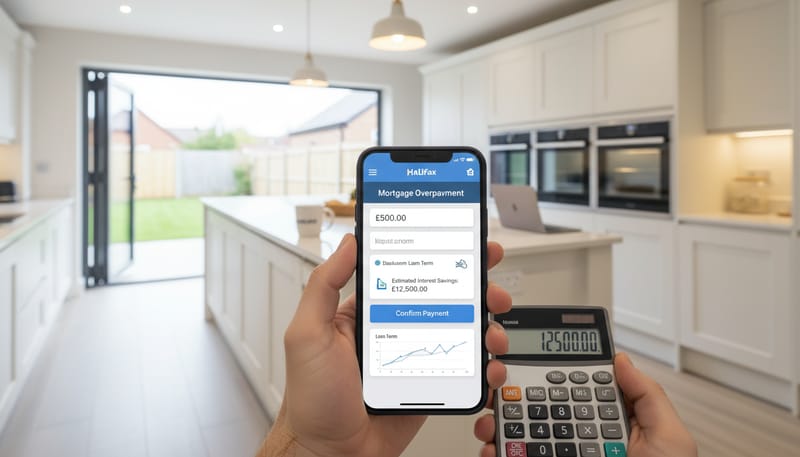
Overpaying Your New Build Mortgage: When It Makes Sense
A detailed guide to mortgage overpayments for UK new build homeowners, covering interest savings, lender limits, flexible mortgage options, and when investing elsewhere might deliver better returns.
If you have recently purchased a new build home in the United Kingdom and find yourself with spare cash at the end of each month, you may be wondering whether you should put that money towards overpaying your mortgage. It is a question that many homeowners grapple with, and the answer is rarely straightforward. Overpaying your mortgage can save you thousands of pounds in interest over the life of the loan and can shave years off your repayment term, but it is not always the most financially efficient use of your money. The decision depends on a range of factors, including your mortgage interest rate, the terms of your mortgage agreement, your other financial commitments, your risk tolerance, and the returns available from alternative investments. For new build homeowners in particular, there are additional considerations around the timing of overpayments, the impact on loan-to-value ratios, and the potential for property value growth in the early years of ownership.
This comprehensive guide will take you through everything you need to know about overpaying your new build mortgage. We will explain how overpayments work in practice, calculate the potential interest savings at different levels of overpayment, examine the typical limits imposed by UK mortgage lenders, explore the concept of flexible mortgages and offset accounts, and analyse the circumstances in which investing your money elsewhere might deliver better returns than paying down your mortgage debt. Whether you are a first-time buyer with a modest amount to spare each month or a more established homeowner with a significant lump sum to deploy, this guide will help you make an informed decision that aligns with your financial goals and circumstances.
How Mortgage Overpayments Work
A mortgage overpayment is any payment you make towards your mortgage that is above and beyond your contractual monthly repayment amount. There are two main types of overpayment: regular overpayments, where you increase your monthly payment by a fixed amount, and lump sum overpayments, where you make a one-off payment of a larger amount, perhaps from a bonus, inheritance, or savings. Both types of overpayment reduce the outstanding balance of your mortgage, which in turn reduces the amount of interest you are charged in subsequent periods.
The mechanics of how this works are straightforward but powerful. Your mortgage interest is calculated on the outstanding balance, typically on a daily basis. When you make an overpayment, you immediately reduce the outstanding balance, which means the interest charged from that point forward is lower. This creates a compounding effect: because less interest is charged, more of each subsequent regular payment goes towards reducing the principal, which further reduces the interest charged in the next period, and so on. Over the full term of a 25 or 30-year mortgage, even modest overpayments can result in substantial interest savings and a significantly reduced repayment term.
Typical Overpayment Limits
Most UK mortgage lenders allow borrowers to make overpayments up to a certain limit, typically 10% of the outstanding mortgage balance per year, without incurring early repayment charges (ERCs). This 10% limit is standard across most fixed-rate and tracker mortgage products from major lenders including Halifax, Nationwide, Barclays, NatWest, HSBC, and Santander. If you exceed this limit, you will typically be charged an ERC, which can be a significant percentage of the amount overpaid above the threshold.
Early repayment charges are structured differently by different lenders, but they typically range from 1% to 5% of the overpaid amount, with the percentage decreasing as you get closer to the end of your fixed or introductory rate period. For example, on a five-year fixed rate mortgage, the ERC might be 5% in year one, 4% in year two, 3% in year three, 2% in year four, and 1% in year five. On a £250,000 mortgage, overpaying by £30,000 (just over 10%) would leave £5,000 above the 10% threshold, which at a 5% ERC would cost you £250 in charges. While this might seem modest, it is an unnecessary expense that can easily be avoided by keeping within the permitted limits.
Some mortgage products, particularly those on a lender's standard variable rate (SVR), allow unlimited overpayments without any charges. If you are on the SVR, which typically happens after your initial fixed or tracker rate period ends, you can overpay as much as you like. However, SVR rates are usually significantly higher than fixed or tracker rates, so most borrowers remortgage to a new deal rather than staying on the SVR. If you know you want to make significant overpayments, it is worth considering this when choosing your mortgage product, as the freedom to overpay without limits can be more valuable than a slightly lower interest rate on a product with stricter overpayment restrictions.
Interest Savings: The Numbers in Detail
To understand the true power of mortgage overpayments, it helps to look at specific examples with real numbers. The following analysis is based on a typical new build mortgage of £250,000 over a 25-year term at an interest rate of 4.5%. The standard monthly payment on this mortgage would be approximately £1,390 per month, and the total amount repaid over the full 25-year term would be approximately £417,000, meaning you would pay around £167,000 in interest alone.
As the chart above demonstrates, the impact of overpayments on total interest is dramatic. Even a modest £100 per month overpayment reduces your total interest bill by over £22,000 and takes 3.5 years off your mortgage term. At £200 per month, the savings more than double to nearly £40,000 with a 6.2-year term reduction. And at £500 per month, which represents a significant but not unrealistic commitment for many dual-income households, you could save nearly £72,000 in interest and pay off your mortgage almost 12 years early.
The power of overpayments is greatest in the early years of your mortgage. This is because interest is calculated on the outstanding balance, and in the early years of a repayment mortgage, the balance is at its highest and the proportion of each payment going to interest rather than principal is at its greatest. An overpayment of £100 in the first year of your mortgage will save you more interest over the life of the loan than the same £100 overpaid in year 15. This is particularly relevant for new build homeowners, who are typically in the early years of their mortgage and therefore in the optimal window for overpayments to have the maximum impact.
When Overpaying Makes the Most Sense
Overpaying your mortgage is not always the right decision, but there are several scenarios where it is particularly compelling. Understanding these scenarios will help you make the right choice for your specific circumstances.
When your mortgage rate is higher than savings rates. The simplest test for whether to overpay is to compare your mortgage interest rate with the after-tax return you could earn on savings. If your mortgage rate is 4.5% and the best savings account available pays 3.5% gross (2.8% after basic rate tax), you are effectively earning a guaranteed 4.5% tax-free return by overpaying your mortgage. Since mortgage overpayment savings are not subject to income tax, the comparison should be between your mortgage rate and the after-tax savings rate, which makes overpayment even more attractive.
When you want to reach a better LTV band. Loan-to-value (LTV) ratio is a critical factor in mortgage pricing. Lenders offer their best rates to borrowers with lower LTV ratios, with significant rate improvements typically available at the 90%, 85%, 80%, 75%, and 60% LTV thresholds. If you are close to one of these thresholds, overpaying to push your LTV below it can unlock a significantly better rate when you come to remortgage. For example, moving from 82% LTV to 79% LTV could save you 0.2% to 0.5% on your next mortgage rate, which on a £250,000 mortgage translates to a saving of £500 to £1,250 per year. This makes overpaying particularly strategic for new build homeowners who may be at higher LTV levels initially.
When you have high-interest debt cleared. Before overpaying your mortgage, you should always clear any higher-interest debt first. Credit cards typically charge 15% to 25% interest, personal loans 5% to 10%, and car finance 5% to 15%. All of these are more expensive than your mortgage, so paying them off first will deliver a greater return than mortgage overpayments. Only once your expensive debts are cleared should you redirect surplus income towards your mortgage.
When you have a sufficient emergency fund. Financial advisers typically recommend maintaining an emergency fund equivalent to three to six months of essential expenses before making mortgage overpayments. This fund provides a safety net against unexpected events such as job loss, illness, or major household repairs. Without an adequate emergency fund, you could find yourself in a position where you have overpaid your mortgage but cannot access the funds to cover an unexpected expense, potentially forcing you into more expensive borrowing. For new build homeowners, the recommended emergency fund might be slightly higher, as new properties can sometimes develop unexpected issues that need addressing, even with the protection of an NHBC or similar warranty.
When Investing Might Be Better
While overpaying your mortgage is a guaranteed, risk-free return equal to your mortgage interest rate, there are circumstances in which investing your money elsewhere might deliver better long-term results. The key consideration is whether the expected return from an investment, adjusted for risk and tax, exceeds your mortgage interest rate.
The UK stock market has historically delivered average annual returns of approximately 7% to 10% before inflation, or around 4% to 7% in real terms. If your mortgage rate is 4.5%, investing in a diversified stock market portfolio could potentially deliver a higher return over the long term. However, this comes with significant caveats. Stock market returns are not guaranteed, and in any given year the market could fall as well as rise. The long-term average includes periods of significant decline, such as the financial crisis of 2008-2009, the Covid crash of 2020, and various other downturns that saw investors lose 20% to 40% of their portfolio value in a matter of months.
The decision between overpaying and investing is fundamentally a question of risk tolerance. Overpaying your mortgage gives you a guaranteed, risk-free return equal to your mortgage rate. Investing in the stock market offers the potential for higher returns but with the very real possibility of losing money in the short to medium term. If you have a long time horizon (10+ years), a high tolerance for risk, and are comfortable with the possibility of your investments declining in value, investing may be the better option. If you prefer certainty, have a lower risk tolerance, or have a shorter time horizon, overpaying your mortgage is the safer choice.
Flexible Mortgages and Offset Accounts
If you want the benefits of overpayment without permanently committing your money, a flexible or offset mortgage might be the ideal solution. These products allow you to effectively overpay your mortgage while retaining access to your money if you need it, providing the best of both worlds.
A flexible mortgage allows you to make overpayments and then borrow them back if needed, typically without any additional charges or applications. This means you can reduce your interest costs by overpaying when you have surplus cash, but you can access the overpaid funds if an unexpected expense arises. The flexibility comes at a slight cost, as flexible mortgage rates are typically 0.1% to 0.3% higher than equivalent standard fixed-rate products.
An offset mortgage links your mortgage to one or more savings accounts. The balance in your savings accounts is offset against your mortgage balance for the purpose of calculating interest, but the savings remain accessible. For example, if your mortgage balance is £250,000 and you have £30,000 in your linked savings account, interest is only charged on £220,000. You do not earn interest on your savings in the traditional sense, but because the savings are reducing the interest charged on your mortgage, the effective return is equal to your mortgage rate, and it is tax-free. This makes offset mortgages particularly attractive for higher-rate and additional-rate taxpayers, who would otherwise pay 40% or 45% tax on savings interest.
Lenders offering offset mortgages in the UK include Barclays, First Direct, Coventry Building Society, and Scottish Widows Bank. The rates on offset products are typically slightly higher than standard fixed-rate mortgages, reflecting the additional flexibility they provide. Whether the higher rate is worth paying depends on how much you plan to hold in your savings account and how important liquidity is to you. Your mortgage broker can help you calculate whether an offset arrangement delivers better overall value than a standard mortgage with regular overpayments.
The Impact on Your LTV and Future Remortgaging
One of the most strategically significant benefits of overpaying your mortgage, particularly for new build homeowners, is the impact on your loan-to-value ratio when you come to remortgage. LTV is one of the most important factors in mortgage pricing, and even small improvements in your LTV band can unlock significantly better rates.
For new build homeowners, the LTV improvement from overpayments is compounded by any property value growth. New builds in desirable locations can appreciate significantly in the early years, particularly as the surrounding development matures, local amenities are completed, and the area becomes more established. If your property increases in value by 5% in the first two years while you are also making overpayments, the combined effect on your LTV can be dramatic, potentially moving you down one or even two LTV bands by the time you come to remortgage.
However, it is worth noting that some new build properties experience a period of flat or even slightly negative price growth in the first couple of years after purchase. This so-called "new build premium" effect means that the price you paid for the property may be slightly higher than its resale value in the short term, as the new build premium that the developer charged is not reflected in the resale market. Overpaying your mortgage can help to offset this effect by building equity through principal reduction even if the property value is static. For a deeper understanding of how property values and mortgage rates interact, see our guide on how rising base rates affect your new build mortgage options.
Tax Implications of Overpaying
One of the often-overlooked advantages of mortgage overpayments is their tax efficiency. The return you earn from overpaying your mortgage, which is effectively equal to your mortgage interest rate, is completely free of income tax. By contrast, interest earned on savings is subject to income tax once you exceed your personal savings allowance (£1,000 for basic rate taxpayers, £500 for higher rate taxpayers, and nil for additional rate taxpayers).
For a higher rate taxpayer with a mortgage rate of 4.5%, the equivalent gross savings rate needed to match the return from overpaying would be approximately 7.5%. This is significantly higher than any savings account currently available in the UK market, making overpayment an even more compelling option for higher earners. For additional rate taxpayers paying 45% tax on savings interest, the equivalent gross rate would need to be approximately 8.2%, which makes mortgage overpayment almost unbeatable as a savings strategy.
If you are considering investing in a stocks and shares ISA as an alternative to overpaying, the tax efficiency comparison is different. ISA returns are tax-free, so the comparison is directly between your mortgage rate and the expected ISA return. If your ISA is invested in a diversified stock market fund and you expect long-term returns of 7% or more, the ISA may deliver better results than overpaying your mortgage, but with the important caveat that stock market returns are not guaranteed and you could lose money.
A Practical Overpayment Strategy for New Build Owners
Based on the analysis above, here is a practical overpayment strategy that balances risk management, tax efficiency, and wealth building for new build homeowners.
Step 1: Build your emergency fund. Before making any overpayments, ensure you have an emergency fund equivalent to three to six months of essential expenses in an easy-access savings account. For a typical household with mortgage payments, bills, and living costs of £3,000 per month, this means setting aside £9,000 to £18,000.
Step 2: Clear expensive debt. Pay off any debt with an interest rate higher than your mortgage rate. This includes credit cards, personal loans, car finance, and overdrafts. Every pound used to clear expensive debt delivers a higher return than a pound used to overpay your mortgage.
Step 3: Maximise employer pension contributions. If your employer offers pension matching, ensure you are contributing enough to receive the maximum match. Employer pension contributions represent an immediate 100% return on your money, which dwarfs any return from mortgage overpayments or investments.
Step 4: Overpay up to your allowance. Once steps one through three are complete, direct your surplus income towards mortgage overpayments up to the 10% annual limit. This delivers a guaranteed, tax-free return equal to your mortgage rate and builds equity in your home.
Step 5: Invest any remaining surplus. If you have surplus income beyond the 10% overpayment limit, consider investing in a stocks and shares ISA for long-term growth. This diversifies your wealth-building strategy beyond property and gives you exposure to potential market returns above your mortgage rate.
Lump Sum Overpayments
Lump sum overpayments, such as those made from a work bonus, inheritance, or the maturity of a savings product, deserve special consideration. The same 10% annual limit applies, but the timing of a lump sum payment can make a significant difference to the interest saved. A lump sum paid early in your annual overpayment period will save more interest than the same amount paid at the end, because the interest saving compounds over a longer period.
If you receive a lump sum that exceeds your 10% annual overpayment allowance, you have several options. You could split the overpayment across two annual periods, making the maximum allowed overpayment this year and saving the remainder for next year. You could place the excess in an offset savings account if your mortgage has this facility, effectively reducing your interest without making an actual overpayment. You could invest the excess in a stocks and shares ISA or other investment vehicle. Or, if the potential savings are large enough, you could contact your lender to negotiate a larger overpayment allowance, though this is rarely successful during a fixed-rate period.
Common Mistakes to Avoid
When it comes to mortgage overpayments, there are several common mistakes that new build homeowners should be aware of and actively avoid.
Overpaying without an emergency fund. This is the most common and most dangerous mistake. If you direct all your surplus income towards your mortgage and then face an unexpected expense, you may need to borrow at much higher rates to cover it. Always maintain an adequate emergency fund before overpaying.
Exceeding the 10% limit. The early repayment charges for exceeding your overpayment limit can significantly reduce the benefit of overpaying. Always check your annual limit and keep careful records of overpayments made during each annual period. Your lender can usually confirm the exact dates of your annual overpayment year and the remaining allowance.
Prioritising mortgage overpayment over pension contributions. Employer pension matching and the tax relief on pension contributions typically deliver better returns than mortgage overpayments. Ensure you are making the most of these benefits before directing money towards your mortgage.
Not reviewing at each remortgage. When your fixed-rate period ends and you remortgage, reassess your overpayment strategy. If rates have changed, the optimal allocation between overpayment and investment may have shifted. A lower mortgage rate reduces the effective return from overpaying, potentially making investment a better option. For more on choosing the right mortgage type at remortgage, see our guide on tracker versus fixed rate mortgages for new builds.
Final Thoughts
Overpaying your new build mortgage can be an excellent financial strategy, offering guaranteed, tax-free returns that are hard to match in the current savings market. The interest savings over the life of your mortgage can be substantial, running into tens of thousands of pounds, and the prospect of becoming mortgage-free years ahead of schedule is a powerful motivator for many homeowners. However, overpaying is not the right choice for everyone, and the decision should be made in the context of your overall financial picture, including your emergency fund, outstanding debts, pension contributions, and investment goals.
For most new build homeowners, a balanced approach that combines mortgage overpayments with other forms of saving and investment will deliver the best long-term results. Use the practical strategy outlined in this guide as a starting point, and adapt it to your specific circumstances. If you are unsure about the right approach, consider speaking to an independent financial adviser who can provide personalised advice based on your income, outgoings, goals, and risk tolerance.
For more guidance on managing your new build mortgage effectively, explore our articles on mortgage retentions on new build properties and handling mortgage delays on new build purchases. The more informed you are about every aspect of your mortgage, the better equipped you will be to make decisions that save you money and build your wealth over time.