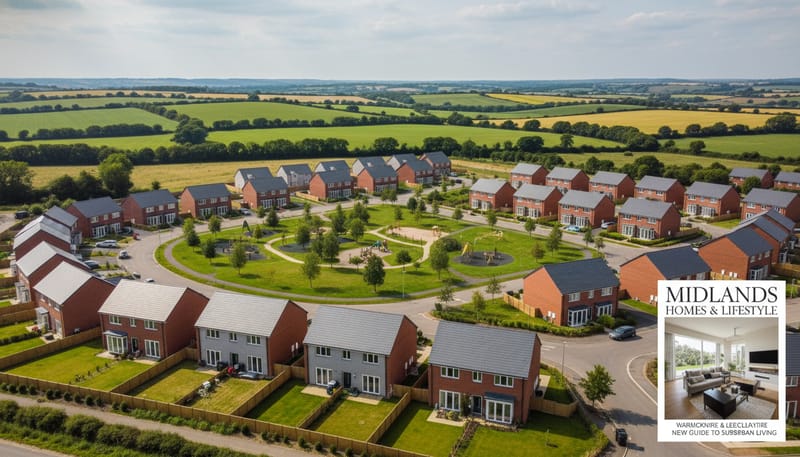
Why Choose the Midlands for Your New Build?
The Midlands has long been the engine room of British industry, and while manufacturing remains important, the region has diversified dramatically into technology, automotive innovation, financial services, logistics, and the creative industries. This economic breadth creates a resilient property market that is less dependent on any single employer or sector — a significant advantage for long-term homeowners and investors.
The region’s central location is its greatest strategic asset. The Midlands motorway network — including the M1, M5, M6, M40, M42, M69, and numerous A-roads — provides connections to virtually every part of England and Wales within a few hours’ drive. Birmingham New Street, the busiest railway station outside London, offers fast services to the capital (currently around 1 hour 20 minutes, dropping to 49 minutes with HS2), as well as connections to Manchester, Leeds, Bristol, Edinburgh, and beyond.
For new build buyers specifically, the Midlands benefits from intense developer activity. The region’s combination of strong demand, relatively affordable land, and supportive local planning policies has attracted every major national housebuilder, alongside a thriving community of regional developers. This competition benefits buyers through better specifications, more incentives, and a wider range of choice than many other regions can offer.
Birmingham: England’s Second City
Birmingham is the undisputed capital of the Midlands and arguably the most exciting property market in England outside London. The city is in the midst of a multi-decade transformation that has already delivered the Bullring and Grand Central shopping centres, the restored canal network, the Library of Birmingham, and the 2022 Commonwealth Games venues. HS2, when it arrives at the rebuilt Curzon Street station, will further accelerate this transformation by putting Birmingham within 49 minutes of central London.
The city’s new build market is remarkably diverse, reflecting the range of neighbourhoods and buyer profiles that Birmingham serves. From sleek city-centre apartments aimed at young professionals to substantial family homes in the leafy suburbs, there is genuinely something for everyone across a wide price spectrum.
Birmingham City Centre
The city centre has seen an explosion of apartment development over the past decade, with towers rising along the canal network, around the Jewellery Quarter, and in the Digbeth creative quarter. One-bedroom apartments in new city-centre developments typically start from around £185,000, with two-bedroom units ranging from £260,000 to £400,000 depending on the developer, specification, and location. Premium schemes with concierge services, gyms, and rooftop terraces command prices at the upper end of these ranges.
The Jewellery Quarter, one of Birmingham’s most characterful neighbourhoods, has become a particular focus for new build development. This historic area, which still houses working jewellery workshops alongside trendy bars and restaurants, combines industrial heritage with contemporary urban living. Developments here often involve the conversion of historic buildings alongside new-build elements, creating distinctive schemes that appeal to design-conscious buyers. Expect to pay £200,000 to £350,000 for a well-specified apartment.
Digbeth, immediately south-east of the city centre, is undergoing one of the most dramatic transformations in Birmingham. This former industrial district, already home to the Custard Factory creative hub and a thriving street art scene, will be directly served by the HS2 Curzon Street station. The combination of HS2 proximity, creative energy, and relatively lower starting prices (one-bedroom apartments from around £170,000) makes Digbeth one of the most closely watched emerging markets in the city. Several major mixed-use schemes are in planning or under construction, promising to deliver thousands of new homes over the coming decade.
Birmingham City Centre
New build price guide
Birmingham Suburbs
New build price guide
Birmingham Suburbs
Edgbaston, to the south-west of the city centre, is one of Birmingham’s most prestigious residential areas. Home to the University of Birmingham, Edgbaston Cricket Ground, and the Botanical Gardens, it offers a leafy, village-like atmosphere just minutes from the city centre. New build developments in Edgbaston range from contemporary apartment schemes to substantial family houses, with prices reflecting the area’s desirability: three-bedroom houses typically start from £380,000, and detached family homes can exceed £700,000.
Harborne, adjacent to Edgbaston, is another sought-after suburban area with a thriving high street, excellent schools, and a strong community feel. New build options here tend to be smaller, infill developments rather than large estates, with three-bedroom houses typically priced between £350,000 and £480,000. The area’s popularity with families and professionals means new builds sell quickly, often off-plan.
Selly Oak and Bournville, south of the city centre, offer a mix of student-influenced areas and the chocolate heritage of Cadbury’s model village. New builds in Selly Oak tend towards student-friendly apartments and smaller houses, with prices starting from around £175,000 for a two-bedroom flat. Bournville, with its distinctive Arts and Crafts architecture (still managed by the Bournville Village Trust), sees very limited new build development but commands a premium when properties do come to market.
Sutton Coldfield, to the north of Birmingham, is often regarded as the city’s premier commuter suburb. This historic Royal Town (one of only four in England) boasts Sutton Park, one of the largest urban parks in Europe, along with excellent schools and a prosperous town centre. New build developments from David Wilson Homes, Bellway, and others offer family housing in the £350,000 to £650,000 range, with executive homes in the most desirable locations exceeding £800,000. The area benefits from excellent rail connections to Birmingham New Street (around 15 minutes) and proximity to the M6 Toll.
Birmingham Smithfield and Major Regeneration
The Birmingham Smithfield project represents one of the most significant urban regeneration schemes in the UK. Located on the 17-hectare site of the former Birmingham Wholesale Markets, adjacent to the Bullring and the Chinese Quarter, this £1.9 billion mixed-use development will create a new city district with up to 3,000 homes, a public market, cultural venues, offices, and extensive public realm.
The Smithfield masterplan envisions a network of streets and public spaces that reconnect the city centre with the historic areas of Digbeth and Highgate to the south. The first residential phases are expected to deliver from the late 2020s, offering buyers the opportunity to be among the first residents in what will become one of Birmingham’s most vibrant new neighbourhoods. While specific prices are not yet available, comparable city-centre schemes suggest apartments will start from around £200,000 for a one-bedroom unit, with family-sized apartments and townhouses at premium prices.
Birmingham Regeneration Timeline
HS2 Impact Analysis
High Speed 2 is the single largest infrastructure project in the Midlands and arguably the most significant investment in the region since the construction of the motorway network in the 1960s. The impact on the property market is already being felt, even though services are not expected to commence until the early 2030s. Understanding where and how HS2 will affect property values is essential for any buyer considering the Midlands.
The primary impact will be felt around two stations: Birmingham Curzon Street in the city centre (adjacent to Digbeth and Eastside) and the HS2 Interchange station near the National Exhibition Centre in Solihull. Both stations will anchor major new development areas, creating demand for thousands of new homes within walking distance of high-speed services to London.
Birmingham Curzon Street is expected to generate approximately 36,000 jobs and support the delivery of 4,000 new homes in its immediate area. The station itself, designed by WSP, features a distinctive arched roof and will sit at the heart of the new Eastside district. Property prices within a 15-minute walk of the station have already seen a measurable premium emerge, with one-bedroom apartments selling for approximately 8–12% more than equivalent properties further from the station.
The HS2 Interchange station in Solihull will sit at the centre of the Arden Cross development, a 346-acre site that aims to create a new economic hub with up to 3,000 homes, 6 million sq ft of commercial space, and 70,000 jobs. For property buyers, the areas around the NEC, Birmingham Airport, and the wider Solihull borough stand to benefit significantly from this development, with improved transport links and employment driving sustained demand for new housing.
It is important to note that HS2’s timescales have been subject to significant revision, and the cancellation of the northern section (Birmingham to Manchester/Leeds) in late 2023 has altered the project’s scope. However, the Birmingham to London section remains committed and under construction, meaning the benefits to the Midlands property market are anticipated to materialise as planned, albeit potentially on a slightly delayed timeline. For buyers, this means that areas benefiting from HS2 represent a medium to long-term value proposition rather than a short-term speculation.
Solihull & Warwick: Premium Midlands Living
Solihull is consistently ranked among the best places to live in the Midlands and regularly features in national quality-of-life surveys. The town combines excellent schools (including several outstanding-rated secondaries), extensive green spaces, a prosperous town centre, and outstanding transport links via the M42, Birmingham Airport, and Birmingham International station. The HS2 Interchange station will further enhance Solihull’s connectivity, potentially making it the best-connected town in the Midlands.
New build prices in Solihull reflect its premium status. A three-bedroom semi-detached house typically costs between £350,000 and £450,000, while four-bedroom detached homes range from £475,000 to £750,000 in the most sought-after areas. The town’s western suburbs, closest to the Knowle and Dorridge villages, tend to command the highest prices. Developers including Bloor Homes, Bellway, and David Wilson Homes have active schemes across the borough.
Warwick and Royal Leamington Spa, approximately 20 miles south-east of Birmingham, offer a different flavour of premium Midlands living. Warwick’s medieval castle, historic town centre, and Warwickshire countryside setting make it one of the region’s most attractive locations. Leamington Spa, adjacent to Warwick, adds Regency architecture, independent shops, and a vibrant food and drink scene. Both towns benefit from fast rail services to Birmingham (approximately 25–35 minutes) and London Marylebone (around 1 hour 20 minutes via Chiltern Railways). New build three-bedroom houses in the Warwick and Leamington area typically cost between £320,000 and £450,000, with executive homes reaching £600,000 or more.
Stratford-upon-Avon, the birthplace of Shakespeare and one of England’s most visited towns, completes the premium triangle. While primarily known as a tourist destination, Stratford is also a prosperous residential town with excellent schools and a quality of life that attracts affluent families. New build developments here are carefully controlled by planning policies that seek to preserve the town’s character, but schemes on the outskirts offer family housing from around £370,000 for a three-bedroom home, rising to well over £700,000 for larger detached properties. The town’s relative remoteness from motorways (the nearest is the M40 at junction 15, about 10 miles away) is both a feature (preserved tranquillity) and a limitation (longer commutes).
Coventry: City of Culture Renaissance
Coventry’s selection as UK City of Culture 2021 catalysed a wave of investment and regeneration that continues to reshape the city. The £450 million city centre regeneration programme has delivered new public spaces, cultural venues (including the revamped Herbert Art Gallery and the new Cathedral Quarter), and improved retail and leisure facilities. For new build buyers, this regeneration has made Coventry one of the most affordable and increasingly attractive cities in the Midlands.
The Friargate development, adjacent to Coventry station, is the city’s flagship commercial scheme, delivering grade-A office space and associated residential development that is transforming the station quarter. This area, combined with the ongoing transformation of the former Ikea site and surrounding land into a mixed-use quarter, is creating a new urban core with new build apartments targeted at young professionals and commuters. One-bedroom apartments in central Coventry start from around £155,000, with two-bedroom units typically ranging from £200,000 to £280,000.
Beyond the city centre, Coventry’s suburbs offer excellent family housing at prices significantly below Birmingham or Solihull. Areas like Earlsdon, Finham, and the Westwood Heath area near the University of Warwick provide pleasant residential environments with good schools and green spaces. New build three-bedroom semi-detached houses in these suburban areas typically cost between £260,000 and £350,000, while four-bedroom detached homes range from £370,000 to £500,000.
Coventry — Strengths
- ● Significantly more affordable than Birmingham and Solihull
- ● Two world-class universities (Warwick and Coventry)
- ● Major automotive sector employers (JLR, TATA)
- ● Fast rail to London Euston (approx. 1 hour)
- ● City of Culture legacy driving ongoing investment
Coventry — Considerations
- ● City centre still undergoing transformation (construction disruption)
- ● Ring road can feel imposing and creates barriers to movement
- ● Retail offering less diverse than Birmingham or Leicester
- ● Some areas have higher deprivation levels
- ● M6 congestion can impact commute times
Leicester: East Midlands Gateway
Leicester is one of England’s most diverse and culturally rich cities, and its property market offers outstanding value for buyers. The city’s successful footballing story (Leicester City’s extraordinary Premier League triumph in 2016), its vibrant Golden Mile of South Asian restaurants and shops, its medieval heritage (including the site where Richard III was buried), and its strong university sector combine to create a distinctive and appealing city with a growing national profile.
The Leicester Waterside regeneration project is transforming the canal corridor through the city centre, creating new residential, commercial, and leisure space on former industrial land. Pioneer Park, adjacent to the National Space Centre, is developing into a technology and innovation hub with associated residential development. These projects, combined with ongoing investment in the city’s cultural quarter around the Curve theatre and Leicester Cathedral, are driving demand for city-centre new builds.
New build prices in Leicester are among the most affordable for any major English city. City-centre apartments start from around £145,000 for a one-bedroom unit, with two-bedroom apartments typically ranging from £190,000 to £275,000. In the suburbs, three-bedroom semi-detached houses from developers like Barratt, Persimmon, and David Wilson Homes start from approximately £230,000, with four-bedroom detached homes available from around £340,000 in areas like Oadby, Wigston, and Blaby. The adjacent market towns of Market Harborough and Melton Mowbray offer more rural new build options at slightly higher prices.
Leicester’s transport links are excellent. The M1 runs to the east of the city, providing connections to London (approximately 2 hours), Sheffield, and Leeds. Rail services from Leicester station reach London St Pancras in around 1 hour 10 minutes via the Midland Main Line, making Leicester a viable (and significantly cheaper) alternative to living in London for those who commute a few days per week. The East Midlands Gateway logistics park, near East Midlands Airport, has attracted major employers including Amazon and UPS, creating thousands of jobs within easy reach of Leicester.
Nottingham & Surrounds
Nottingham is one of England’s most vibrant cities and a major centre for higher education, creative industries, and the life sciences. The city’s two universities (the University of Nottingham, a Russell Group institution, and Nottingham Trent University) together enrol over 60,000 students, creating a young, energetic city with a thriving nightlife, food scene, and cultural offering. For new build buyers, Nottingham offers a compelling combination of urban amenity, affordability, and connectivity.
The city centre has seen significant apartment development in recent years, with schemes along the canal corridor, around the Lace Market creative quarter, and in the Island Quarter — a 36-acre regeneration site near the station that is one of the largest city-centre developments in the East Midlands. One-bedroom city-centre apartments typically start from around £155,000, with two-bedroom units ranging from £215,000 to £310,000.
The wider Nottinghamshire area offers excellent suburban and semi-rural new build options. West Bridgford, across the Trent from the city centre, is one of the most desirable suburbs in the East Midlands, with outstanding schools, independent shops, and proximity to Trent Bridge cricket ground and the City Ground football stadium. New build houses here command a premium, with three-bedroom semi-detached homes typically priced from £310,000 to £400,000. The Trent basin waterside development in the Meadows area has delivered some of the city’s most innovative new homes, including highly sustainable properties with community energy systems.
Further afield, the towns of Beeston, Long Eaton, Arnold, and Carlton offer more affordable alternatives with good bus and tram connections to the city centre. Nottingham’s tram system (NET) is a significant asset, providing reliable, traffic-free transport along two lines serving areas to the south and west. Properties near tram stops tend to command a modest premium, reflecting the value of this convenient commuter link. Three-bedroom new build houses in these outer areas typically range from £220,000 to £320,000.
Derby: Engineering Excellence
Derby holds a unique position in the Midlands economy as the home of Rolls-Royce (the aero-engine manufacturer, not the car brand, which is now BMW-owned and based in Goodwood), Toyota Manufacturing UK, and Bombardier Transportation (now Alstom). These anchor employers, together with the wider advanced manufacturing and engineering cluster they support, create a skilled, well-paid workforce that underpins a stable property market.
Derby’s new build market offers excellent value compared to Nottingham and Leicester, despite the city’s strong employment base. City-centre regeneration, particularly along the river corridor and around the Cathedral Quarter, has delivered new apartment schemes with one-bedroom units from around £135,000 and two-bedroom apartments from £185,000. The wider Derby area, including popular suburbs like Allestree, Mickleover, and Littleover, provides family housing at prices that represent genuine affordability: three-bedroom semi-detached houses from approximately £215,000 and four-bedroom detached homes from £310,000.
The southern outskirts of Derby, towards Melbourne and the villages along the Trent valley, offer more rural settings with new build developments by developers like Bellway, Miller Homes, and Avant Homes. East Midlands Airport, just 15 miles south of Derby, provides international connectivity, while the A38, A50, and M1 offer road access to Birmingham, Nottingham, and the north. Rail services from Derby station reach London St Pancras in approximately 1 hour 30 minutes, with faster services via the proposed Midland Main Line electrification.
Wolverhampton & the Black Country
The Black Country — encompassing Wolverhampton, Dudley, Sandwell, and Walsall — is the historic industrial heartland of the West Midlands and today offers some of the most affordable new build homes in the region. While the area has faced economic challenges as traditional manufacturing has declined, significant investment in regeneration, transport, and education is creating new opportunities and attracting developer interest.
Wolverhampton city centre has benefited from the extension of the West Midlands Metro tram, which now connects the city directly to Birmingham via Wednesbury and West Bromwich. This improved connectivity, combined with the £150 million Wolverhampton Interchange transport hub (incorporating a new railway station entrance, bus station, and Metro stop), is stimulating demand for city-centre and suburban new builds. One-bedroom apartments in Wolverhampton start from around £120,000, with three-bedroom houses in surrounding areas available from approximately £185,000.
For buyers seeking maximum value, the Black Country towns of Dudley, Walsall, and West Bromwich offer some of the lowest new build prices in the West Midlands. Three-bedroom semi-detached houses can be found from as little as £175,000, and four-bedroom detached homes from around £265,000. While these areas lack the prestige of Solihull or Edgbaston, they offer solid, practical housing with improving transport links and genuine community spirit. Developers including Keepmoat, Persimmon, and Lovell are active across the Black Country, delivering family-oriented schemes at accessible price points.
Stoke-on-Trent: The Potteries
Stoke-on-Trent is consistently among the most affordable places to buy property in England, and for budget-conscious new build buyers, it deserves serious consideration. The city, actually a federation of six towns (Hanley, Stoke, Burslem, Tunstall, Longton, and Fenton), retains its ceramic heritage while diversifying into logistics, digital industries, and professional services.
New build three-bedroom houses in Stoke can be found from around £165,000, with four-bedroom detached homes from approximately £240,000 — prices that would be unthinkable in most of southern England. The city sits on the West Coast Main Line, with services to London Euston in approximately 1 hour 30 minutes, and the M6 and A50 provide road connections to Manchester, Birmingham, and Derby. Keele University and Staffordshire University (with campuses in Stoke) provide an academic presence, though the city’s economic base remains more industrial than knowledge-based compared to Nottingham or Leicester.
For investors, Stoke’s low entry prices and reasonable rental demand (partly driven by students and young professionals) create conditions for attractive yields, typically in the 5–7% range for well-located new builds. The Smithfield scheme in Hanley city centre and developments at Etruria Valley are bringing new homes and employment to previously underused sites. Developers active in Stoke include Keepmoat, Persimmon, Bellway, and several regional builders.
Telford & Worcester: West Midlands Outskirts
Telford, one of England’s designated New Towns (founded in 1968), offers a distinctly different property experience from the Midlands’ historic cities. The town was purpose-built with generous road widths, extensive green spaces, and a clear separation between residential, commercial, and industrial areas. For new build buyers, this means well-planned developments with good infrastructure from day one.
Telford’s new build market is among the most affordable in the Midlands. Three-bedroom houses typically start from around £195,000, with four-bedroom detached homes available from approximately £280,000. The town’s major employers include Capgemini, Epson, and the Ministry of Defence, alongside a growing logistics sector. Rail services to Birmingham take approximately 30 minutes, while the M54 provides direct motorway access to the M6 and the wider network.
Worcester, sitting on the River Severn at the southern edge of the West Midlands, combines cathedral-city grandeur with practical affordability. The city’s new build market has grown significantly in recent years, with developments on the south side (including the St Peter’s Garden Village area) and to the north (around the Worcester Six business park) delivering hundreds of new homes. Three-bedroom new build houses in Worcester typically cost between £270,000 and £370,000, with executive homes in the surrounding Worcestershire countryside reaching £500,000 or more. The city benefits from rail services to Birmingham (approximately 50 minutes) and London Paddington (approximately 2 hours 10 minutes).
Major Employers and the Midlands Economy
Understanding the Midlands’ employment landscape is essential for property buyers, as local employment directly drives housing demand. The region benefits from remarkable economic diversity, with major employers spanning automotive, aerospace, financial services, technology, healthcare, logistics, and higher education.
The relocation of HSBC UK’s headquarters from London to Birmingham in 2018 was a watershed moment for the Midlands, demonstrating that the region could compete with the capital for major corporate headquarters. Other financial and professional services firms have followed, with several establishing regional headquarters in Birmingham’s growing office district around Colmore Row and the Snowhill development. This trend has directly stimulated demand for new build homes, particularly in Birmingham and the nearby commuter belt.
The university sector is another crucial driver of the property market. The Midlands is home to more than 20 universities and higher education institutions, with a combined student population exceeding 250,000. This creates sustained demand for both purpose-built student accommodation and general residential property, particularly in areas near university campuses. For new build investors, areas like Selly Oak (near the University of Birmingham), Earlsdon (near the University of Warwick), and Lenton/Dunkirk (near the University of Nottingham) offer strong rental demand and relatively stable values.
Transport Links: Motorways, Rail & Beyond
The Midlands’ transport network is a defining feature of the region and a major factor in property decisions. Understanding the road and rail connections available from your chosen location is essential for both daily commuting and access to the wider country.
Motorway Network
M1: London to Leeds via Leicester, Nottingham, Derby. The East Midlands’ primary north-south artery.
M6: The backbone of the West Midlands, connecting Birmingham to Manchester and the North West via Wolverhampton and Stoke.
M40: Birmingham to London via Warwick, providing an alternative to the M1 for southern connections.
M42: The eastern Birmingham orbital, connecting Solihull, the NEC, and East Midlands Airport to the M1 and M6.
Rail Network
West Coast Main Line: Birmingham New Street to London Euston (1hr 20min), also serving Coventry, Wolverhampton, and Stoke.
Midland Main Line: Nottingham/Derby to London St Pancras (1hr 30min–1hr 45min), also serving Leicester.
Chiltern Railways: Birmingham Moor Street to London Marylebone (approx. 2hrs), scenic route via Warwick and the Chilterns.
CrossCountry: Birmingham to Manchester, Leeds, Edinburgh, Bristol, and Exeter — the Midlands’ key inter-city operator.
The West Midlands Metro tram system is expanding and currently serves a route from Birmingham city centre through Wolverhampton to Wednesbury, with extensions to Dudley and Brierley Hill under construction. This expanding network is particularly relevant for property buyers in the Black Country, as tram connectivity brings a measurable price premium and improved access to Birmingham’s employment centre. Nottingham’s NET tram system provides similar benefits in the East Midlands, serving key residential areas and the city’s two university campuses.
Birmingham Airport, East Midlands Airport, and Coventry Airport (for cargo) provide air connections. Birmingham Airport is the Midlands’ primary passenger airport, serving over 100 destinations and acting as a significant employer for the surrounding area. For frequent flyers, proximity to the airport can be a major factor in property choice, with areas like Marston Green and Sheldon offering affordable housing within minutes of the terminal. For more on how transport influences property decisions, see our guide to the best commuter locations near major cities.
Key Developers Active in the Midlands
The Midlands is one of the most competitive regions for housebuilding in the UK, with virtually every major national developer maintaining a strong presence alongside well-regarded regional builders. This competition benefits buyers through better quality, more choice, and stronger incentive packages.
In addition to these major names, the Midlands has a thriving community of regional developers who often deliver excellent quality and value in specific niches. Cameron Homes, Spitfire Bespoke Homes, Hayfield (focused on premium, sustainable homes), and Peveril Homes all have strong reputations in their respective areas. For more advice on evaluating developers, see our guide to what to expect from major UK developers.
Comprehensive Midlands Price Comparison
The following table provides a complete overview of typical new build prices across the Midlands, covering every major area discussed in this guide. Use this as a benchmark to compare your budget against available options and identify the areas that best match your needs.
These prices represent typical averages and actual prices will vary based on the specific development, specification level, and precise location. Premium developments from builders like David Wilson Homes and Miller Homes tend to sit at the upper end of these ranges, while more affordable options from Keepmoat and Persimmon typically sit at the lower end. For a broader national comparison, see our guide to new build prices across the UK.
University Towns and Their Impact
The Midlands is one of the most densely concentrated university regions in Europe, and the presence of higher education institutions has a profound impact on local property markets. Understanding this impact is crucial whether you are buying to live in or as an investment.
The University of Birmingham (Russell Group), the University of Warwick (consistently ranked in the UK top 10), the University of Nottingham (Russell Group), and Loughborough University (renowned for sports science and engineering) are among the institutions that shape their local property markets. Their research parks, spin-out companies, and graduate retention programmes create high-skilled employment that sustains demand for quality housing in surrounding areas.
For investors considering new build properties near universities, the key is to distinguish between areas dominated by Houses in Multiple Occupation (HMOs) and those where young professionals and academic staff are the primary rental market. The latter typically offers more stable, longer-term tenancies, better property condition, and less management burden, even if headline yields may be slightly lower than student HMOs.
Investment Hotspots and Emerging Areas
For buyers looking at new builds as investments as well as homes, several Midlands areas stand out for their growth potential. While past performance is never a guarantee, understanding the drivers of price growth can inform smarter purchasing decisions.
Digbeth, Birmingham
HS2 Curzon Street station proximity, creative quarter status, and lower starting prices create conditions for significant capital appreciation. The area’s transformation from industrial to cultural hub is accelerating.
Coventry Station Quarter
Friargate development, City of Culture legacy investment, and direct London rail services at a fraction of Birmingham prices. Significant headroom for price growth as regeneration delivers.
Leicester Waterside
Canal corridor regeneration, technology hub development, and strong university demand create conditions for steady appreciation. Prices remain well below comparable East Midlands locations.
Solihull / Arden Cross
HS2 Interchange, 70,000 new jobs planned, existing premium status, and excellent schools. Already commanding higher prices, but the HS2 catalyst could drive further significant appreciation.
Practical Tips for Midlands Buyers
If you have decided that the Midlands is the right region for your new build purchase, the following practical guidance will help you make the most informed and successful buying decision possible.
First, test your commute at realistic times. The Midlands motorway network, while extensive, can be severely congested during peak hours. The M6 around Birmingham, the M1 around Leicester and Nottingham, and the M42 near the NEC are notorious bottlenecks. If you plan to drive to work, try the journey during rush hour before committing to a purchase. For rail commuters, check both journey times and service reliability — and remember that rail fares on longer-distance routes can add significantly to your monthly costs.
Second, research the development pipeline for your chosen area. Many Midlands locations have substantial new build programmes underway, which is generally positive for local infrastructure and amenities but can also mean living near construction sites for extended periods. Check the local council’s development plan to understand what is planned for the area over the next five to ten years.
Third, consider the impact of HS2 construction. While HS2 will ultimately benefit the Midlands enormously, the construction phase (which will continue for several years) creates disruption in certain areas, particularly along the route corridor through Warwickshire and into Birmingham. Areas near HS2 construction sites may experience noise, traffic disruption, and visual impact during the build phase, which could affect your quality of life in the short term even as it enhances your property value in the medium to long term.
- ✓ Test your commute during peak hours (both road and rail)
- ✓ Research HS2 impact on your chosen location (positive and negative)
- ✓ Check the local authority’s development plan for future building activity
- ✓ Compare specifications across multiple developers at similar price points
- ✓ Investigate school catchment areas if you have or plan to have children
- ✓ Review the developer’s NHBC or similar warranty and customer reviews
- ✓ Check flood risk maps, especially near the Trent, Severn, and Avon rivers
- ✓ Negotiate hard — the Midlands’ competitive developer market gives buyers leverage
Finally, do not overlook the smaller market towns and villages that dot the Midlands countryside. Places like Market Harborough, Ashby-de-la-Zouch, Kenilworth, Lichfield, and Shrewsbury offer charming high streets, strong community spirit, and excellent schools, often at prices that represent significant value compared to the main cities. Many of these towns have seen new build development from both national and regional builders, providing modern, energy-efficient homes in traditional settings.