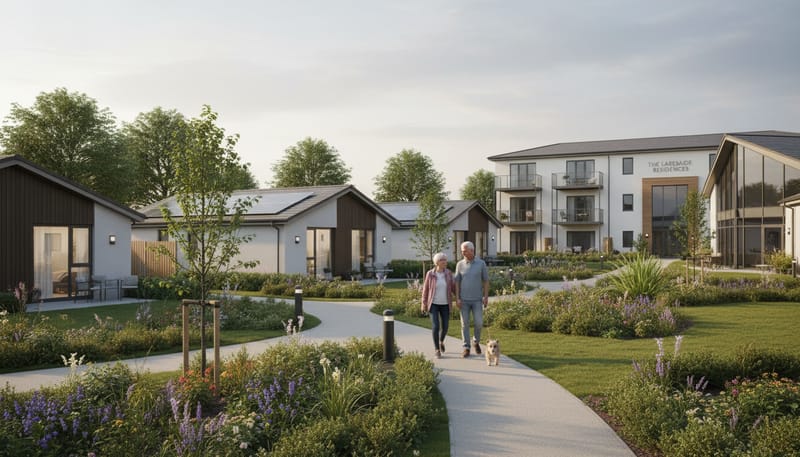
Investing in New Build Retirement Properties
Published by New-Builds Team · 2025
The retirement living sector in the United Kingdom represents one of the most compelling demographic investment opportunities of the coming decades. With the population aged 65 and over projected to reach 16.4 million by 2040 — up from approximately 12.5 million today according to the Office for National Statistics (ONS) — the demand for purpose-built retirement housing is set to grow substantially. Yet the UK currently has one of the lowest provision rates of specialist senior housing in the developed world, with only around 725,000 units of retirement housing serving a population of over 12 million older adults. For comparison, countries like the United States, Australia, and New Zealand provide two to three times more specialist retirement housing per capita. This structural undersupply, combined with powerful demographic tailwinds, creates a long-term investment opportunity that is difficult to ignore.
New build retirement properties — whether age-restricted apartments, assisted living schemes, or retirement villages — offer a distinct investment profile that differs significantly from mainstream buy-to-let. The tenant base is stable and low-maintenance, void periods tend to be minimal once let, and the properties are purpose-designed for their market with features like level-access showers, wider doorways, emergency call systems, and communal facilities. However, the sector also presents unique challenges including complex leasehold structures, significant service charges, event fee mechanisms, and a resale market that historically has been less liquid than mainstream residential property. This guide provides an honest and thorough assessment of investing in new build retirement properties, exploring the opportunities and the risks in equal measure, so you can decide whether this niche fits within your broader investment strategy. For context on portfolio construction, see our portfolio building guide.
The UK Retirement Housing Market: Key Demographics
Understanding the demographic forces driving demand for retirement housing is fundamental to evaluating this investment opportunity. The numbers paint a compelling picture:
At the current build rate of approximately 8,000 new retirement housing units per year, the UK is falling further behind demand. The Associated Retirement Community Operators (ARCO) estimates that 30,000 new units per year are needed to adequately serve the ageing population. This supply-demand imbalance is unlikely to be resolved quickly, providing structural support for property values and rental demand in the sector.
The Wealth Factor: Today's retirees are, on average, wealthier than any previous generation. Many own their homes outright (78% of over-65s are homeowners according to ONS), have defined benefit pensions, and have accumulated substantial savings. This wealth means they can afford quality retirement accommodation, whether purchasing or renting, and are willing to pay for the security, community, and convenience that purpose-built retirement living offers.
Types of Retirement Property
The retirement housing sector encompasses a spectrum of property types, each serving different needs and offering different investment profiles:
| Type | Description | Typical Age | Services Included | Price Range |
|---|---|---|---|---|
| Sheltered Housing | Independent living with on-site warden/manager and emergency call system | 55+ | Warden, communal lounge, alarm system | £120,000-250,000 |
| Retirement Apartments | Purpose-built 1-2 bed apartments with communal facilities and house manager | 60+ | Manager, lounge, garden, guest suite | £175,000-400,000 |
| Assisted Living | Apartments with optional care packages. Staff available 24/7 | 70+ | 24hr staff, restaurant, care, activities | £250,000-600,000 |
| Retirement Villages | Large communities with houses and apartments, extensive amenities | 55+ | Pool, gym, restaurant, activities, care | £200,000-800,000+ |
| Extra Care Housing | Self-contained with flexible care packages. Alternative to residential care | 70+ | 24hr care, meals, personal care, social | £200,000-500,000 |
Major Retirement Property Developers
The UK retirement property market is dominated by a handful of specialist developers. Understanding their products, pricing, and terms is essential for any investor considering this sector:
McCarthy Stone
The UK's largest retirement housebuilder with over 500 developments nationwide. Offers three brands: Retirement Living (independent), Retirement Living PLUS (assisted living), and Ortus Homes (houses). Purchase prices range from £180,000 to £600,000+. Service charges £3,000-6,000/year. Event fee (typically 1-2.5% per year of ownership, capped at 10-30%) payable on resale.
Churchill Retirement Living
The UK's second-largest specialist developer, focusing on one and two-bedroom apartments. Strong presence across Southern England and the Midlands. Known for high-specification finishes and lodge manager service. Service charges £3,500-5,500/year. Deferred management charge of typically 10% on resale.
Audley Group
Premium retirement village operator with luxury developments across England. Large-scale villages with extensive amenities including restaurants, pools, and spas. Purchase prices £350,000-1,000,000+. Higher service charges but comprehensive facilities. Estate management fee on resale.
Inspired Villages (Legal & General)
Backed by Legal & General, developing large-scale retirement communities. Focus on integrated retirement communities (IRCs) with wellness centres, restaurants, and care provision. Part-buy and rental options available. Growing pipeline of developments across England.
Service Charges: The Critical Cost Factor
Service charges are the single most important cost consideration for retirement property investors. They cover the running costs of the development including the house/estate manager, communal area maintenance and heating, building insurance, lift maintenance, grounds upkeep, and emergency call systems. These charges are significantly higher than typical residential service charges:
| Development Type | Annual Service Charge (Typical) | Monthly Equivalent | Key Inclusions |
|---|---|---|---|
| Sheltered Housing | £2,000-3,500 | £167-292 | Warden, alarm, communal maintenance |
| McCarthy Stone (Standard) | £3,500-5,500 | £292-458 | House manager, grounds, lounge, guest suite |
| Churchill Retirement | £3,500-5,500 | £292-458 | Lodge manager, maintenance, communal areas |
| Assisted Living | £5,000-8,000 | £417-667 | 24hr staff, restaurant, activities, wellbeing |
| Premium Village (Audley) | £6,000-12,000 | £500-1,000 | Full village amenities, pool, spa, restaurant |
Service Charge Warning: Service charges in retirement developments have historically risen faster than inflation — often by 5-8% per year. Over a 10-year hold period, a service charge starting at £4,000/year could reach £6,500-7,500/year. These escalating charges directly erode your rental yield and can also impact resale values, as prospective buyers factor them into affordability calculations. Always request at least 5 years of historical service charge data before purchasing.
Event Fees and Transfer Fees: Understanding the Hidden Costs
One of the most contentious aspects of retirement property investment is the event fee (also called a transfer fee, exit fee, or deferred management charge). This is a payment due to the developer or management company when the property is resold. The fee structure varies between developers but typically works as follows:
Percentage of Sale Price
Typically 1-2.5% of the sale price per year of ownership, capped at a maximum (often 10-30% of sale price). For example: 1% per year, capped at 10% after 10 years. On a £250,000 resale after 8 years ownership = £20,000 event fee.
Fixed Percentage (Deferred Management)
Some developers charge a flat percentage regardless of ownership length. Churchill's deferred management charge is typically 10% of the sale price. On a £250,000 resale = £25,000 fee. This is payable by the seller in addition to estate agent fees.
Impact on Investment Returns: Event fees significantly impact overall returns. A £250,000 property that appreciates to £280,000 over 8 years, with a 10% event fee (£28,000) and standard selling costs (£4,000 legal, £4,200 agent), leaves you with net proceeds of £243,800 — a loss of £6,200 on the original purchase price, despite the property gaining £30,000 in value. This underlines why income (rental yield) rather than capital growth must be the primary investment driver in this sector.
Rental Yields in Retirement Properties
The rental market for retirement properties is growing as an increasing number of older adults choose to rent rather than buy their retirement accommodation. This is driven by a desire for flexibility, reluctance to tie up capital in property, and the attractiveness of purpose-built retirement living without the commitment of ownership.
| Property Type | Purchase Price | Monthly Rent | Gross Yield | Net Yield (after service charge) |
|---|---|---|---|---|
| 1-bed sheltered flat (North) | £120,000 | £650 | 6.5% | 4.1% |
| 1-bed retirement apt (Midlands) | £185,000 | £875 | 5.7% | 3.3% |
| 2-bed retirement apt (South) | £300,000 | £1,250 | 5.0% | 2.8% |
| 2-bed assisted living (National avg) | £350,000 | £1,600 | 5.5% | 3.0% |
Net yields in retirement property are compressed by the significant service charge burden. A property generating 5.5% gross yield but with a £5,000/year service charge loses approximately 2.0-2.5 percentage points to that charge alone. This makes retirement property less attractive on a pure yield basis compared to mainstream BTL or HMO investment, but the compensating factors are longer tenancies, lower void periods, and more stable tenants.
The Resale Challenge
One of the most significant risks with retirement property investment is the resale market. Retirement properties have historically been harder to sell than mainstream residential properties, and often at a discount to the original purchase price. Understanding why this is the case is essential:
Investor Strategy: Given the resale challenges, the most successful approach to retirement property investment is to buy at a significant discount to the developer's new build price — either through negotiation, purchasing resale units from existing owners, or buying ex-demonstration units. A purchase at 20-30% below the equivalent new build price provides a buffer against the event fee and potential value erosion, while maintaining attractive rental yields due to the lower acquisition cost.
Leasehold Considerations
Almost all retirement properties are sold as leasehold, with the developer (or a management company) retaining the freehold. Key leasehold issues to investigate before purchasing include:
- Lease length: Minimum 125 years for a comfortable investment. Below 80 years, the cost of extending the lease increases significantly due to the "marriage value" component. Check the unexpired term carefully on older developments.
- Ground rent: The Leasehold Reform (Ground Rent) Act 2022 requires ground rents on new leases to be set at a peppercorn (effectively zero). For older retirement properties, check for ground rent escalation clauses. Some historic leases have doubling ground rents that can become very expensive.
- Assignment clauses: The lease may require the freeholder's consent for letting the property. Some developers restrict or prohibit sub-letting. Always check the lease terms thoroughly — if letting is prohibited, the property is unsuitable for rental investment.
- Age restrictions: The lease will specify the minimum age for occupiers. Typically 55+, 60+, or 70+ depending on the development type. This restriction applies to tenants as well as owner-occupiers.
- Alterations: The lease may restrict alterations, including the types of flooring, decoration, and fixtures you can change. This limits your ability to improve the property to increase rental value.
Financing Retirement Property Investment
Financing retirement property purchases can be more challenging than standard buy-to-let for several reasons:
Lender Restrictions
Many mainstream BTL lenders will not lend on age-restricted properties. The limited buyer pool for resale creates higher perceived risk for the lender. Specialist lenders and building societies are more likely to consider these applications.
Valuation Issues
RICS valuers may apply a "market uncertainty" factor to retirement property valuations, resulting in a lower valuation than the purchase price. This can affect LTV ratios and the amount you can borrow. Instructing a valuer experienced in retirement property is advisable.
Many retirement property investors choose to purchase with cash, particularly for lower-value sheltered and retirement apartments. This eliminates the financing complexity and ensures the full rental income flows directly to the investor without mortgage deductions. Where mortgage finance is required, a specialist broker with experience in retirement property lending is essential.
Tenant Profile and Management
The tenant profile in retirement property is markedly different from mainstream buy-to-let and offers several advantages for the landlord:
Retirement tenants are typically very settled. They choose retirement accommodation for the long term, value the community and security it provides, and have reliable income from pensions and savings. Rent is paid consistently, properties are well-maintained, and complaints are rare. The average tenancy in retirement property is 3-7 years, compared to 18-24 months for mainstream private rental — significantly reducing your re-letting costs and void periods.
Management of retirement property tenancies is generally straightforward. The on-site house manager handles day-to-day building management, communal areas, and coordination of maintenance. Your responsibilities as landlord are limited to the internal maintenance of the apartment and routine landlord compliance (gas safety, electrical safety, deposit protection, etc.).
The Growing Rental Market for Retirement Properties
The rental market for retirement accommodation is expanding rapidly, driven by several converging trends:
- Flexibility preference: An increasing number of retirees prefer to rent rather than purchase. They value the flexibility to move closer to family, try retirement living before committing, or preserve their capital for other purposes.
- Institutional interest: Major institutional investors (Legal & General, Anchor Hanover, Housing 21) are building retirement rental communities specifically for the rental market, validating the model and increasing awareness.
- Affordability: Not all retirees can afford to purchase a retirement property outright, particularly in the South of England. Renting provides access to purpose-built retirement living at a lower upfront cost.
- Equity release reluctance: Some older adults are reluctant to sell the family home but want to move to more suitable accommodation. Renting allows them to retain ownership of their existing property (perhaps renting it out) while living in retirement accommodation.
Frequently Asked Questions
Conclusion: A Niche Worth Considering
Retirement property investment is not for everyone. It requires patience, a long-term outlook, tolerance for lower yields compared to HMOs or student properties, and a thorough understanding of the complex leasehold and fee structures that characterise the sector. It is not a get-rich-quick strategy — it is a steady, income-focused investment backed by one of the most powerful demographic trends of our time.
For the right investor — someone with capital to deploy, a preference for stable income over aggressive growth, and an interest in a sector with genuine social value — new build retirement property can form a valuable component of a diversified property portfolio. The tenants are reliable, the demand is structurally underpinned, and the management burden is lighter than almost any other property type.
The key success factors are buying at the right price (ideally a resale unit at 20-30% below developer new build pricing), understanding and budgeting for the full cost base (service charges, event fees, ground rent), and selecting well-located developments with strong demand from both buyers and renters. For further reading on complementary investment strategies, explore our guides on portfolio building, HMO investment, and holiday let investment to understand the full range of opportunities available to new build property investors.