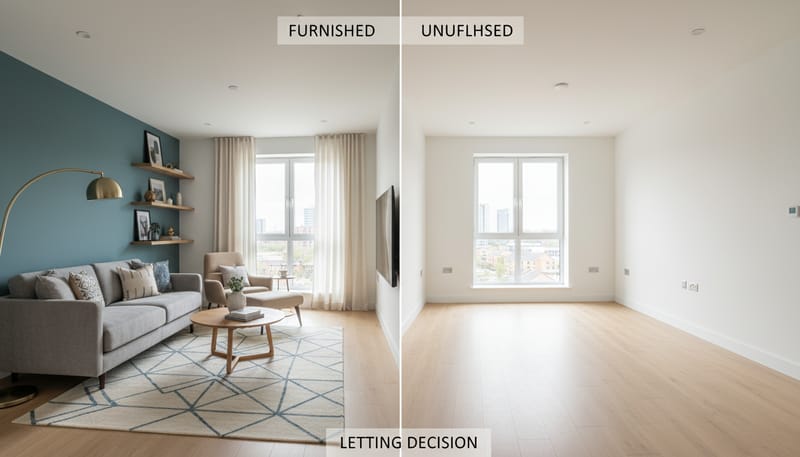
One of the most consequential decisions facing new build investment property owners is whether to let their property furnished or unfurnished. This choice affects virtually every aspect of the investment — from the achievable rent and the type of tenant you attract to the ongoing maintenance burden, insurance requirements, tax treatment, and eventual resale value. Yet it is a decision many landlords make instinctively or based on anecdotal advice rather than rigorous analysis. According to data from the English Housing Survey, approximately 23% of privately rented homes in England are let fully furnished, 18% are part-furnished, and 59% are let unfurnished. However, within specific market segments — particularly city centre apartments and properties targeting young professionals — furnished lettings represent a significantly larger share, sometimes exceeding 50%.
For new build investment properties, the furnished versus unfurnished question carries particular nuances. New builds are delivered with fitted kitchens, bathrooms, built-in wardrobes, and floor coverings as standard, meaning the baseline specification is already higher than many older unfurnished properties. The question therefore becomes not whether to provide basic fixtures (these come with the property) but whether to additionally supply moveable furniture — beds, sofas, dining tables, desks, and potentially white goods and soft furnishings. The answer depends on your target market, local rental dynamics, your financial capacity, and your appetite for ongoing management. This comprehensive guide analyses every dimension of the decision, providing the data and frameworks you need to make the right choice for your specific investment. For broader investment context, see our new build buy-to-let guide for UK investors.
The Rental Premium: How Much More Can You Charge?
The core financial argument for furnished letting is the rental premium — the additional rent tenants will pay for a property that comes with furniture and household items. This premium varies significantly by location, property type, and target market, but market data provides useful benchmarks.
Analysis of rental listing data from Rightmove, Zoopla, and HomeLet suggests the following average furnished premiums across different UK market segments in 2025:
| Market Segment | Unfurnished Rent (avg) | Furnished Rent (avg) | Premium |
|---|---|---|---|
| London 1-bed apartment | £1,650/month | £1,850/month | 12.1% |
| Manchester city centre 2-bed | £1,100/month | £1,250/month | 13.6% |
| Birmingham 2-bed apartment | £950/month | £1,075/month | 13.2% |
| Leeds city centre 1-bed | £850/month | £950/month | 11.8% |
| Suburban 3-bed house (family market) | £1,200/month | £1,275/month | 6.3% |
| University town studio/1-bed | £700/month | £825/month | 17.9% |
Several clear patterns emerge from this data. Furnished premiums are highest in city centre locations targeting young professionals and in university towns, where tenants are more transient and less likely to own furniture. They are lowest in suburban family markets, where tenants typically have their own furniture and prefer the flexibility to furnish to their own taste. The premium is generally higher for smaller properties (studios and one-beds) than for larger homes.
Tenant Preferences by Market Segment
Understanding tenant preferences is essential for making the right furnished/unfurnished decision. Different tenant demographics have distinctly different needs and expectations, and mismatching your offering to your target market can result in longer void periods and missed rental income.
Young Professionals (25-35)
Young professionals, particularly those relocating for work, strongly prefer furnished properties. They value convenience, mobility, and the ability to move in quickly without the cost and hassle of purchasing furniture. City centre new build apartments are ideally suited to this market segment. Key items expected: bed, sofa, dining table, desk (for working from home), wardrobe, and all white goods.
Corporate Relocators
Employees relocating with corporate housing packages almost always require fully furnished properties. Companies typically pay the rent, and the employee needs to move in immediately with nothing more than personal belongings. This is a premium market segment with higher achievable rents and typically excellent tenant quality. Requirements include high-quality furniture, full kitchen equipment, bedding, and towels.
Families (30-50)
Families typically own their own furniture and prefer unfurnished properties where they can create their own home environment. They tend to be longer-term tenants (average tenancy of 3-4 years versus 12-18 months for young professionals), which reduces void periods and turnover costs. For family-oriented new build houses, unfurnished letting is almost always the right choice.
Students
Students almost universally require furnished accommodation. They are typically moving out of the family home or university halls and do not own furniture. The furnished premium in student markets is among the highest, but so is the wear and tear. Purpose-built student accommodation (PBSA) new builds are designed for this market.
Downsizers and Retirees
Older tenants who are downsizing from larger homes typically bring their own furniture and have strong preferences about their living environment. They are among the most reliable tenant demographics, with long tenancy durations and excellent property care. Unfurnished letting is strongly preferred.
The Cost of Furnishing a New Build
If you decide to let your new build furnished, you need to understand the upfront cost of purchasing furniture and the ongoing cost of replacing items as they wear out. The quality of furnishing should be proportionate to the rental level and target market — budget furniture for a mid-market let, and higher-specification items for a premium property commanding top rents.
Here are indicative furnishing costs for different property types and quality levels in 2025:
Budget Furnished (1-Bed Apartment)
IKEA / Argos level. Functional but basic. Suitable for student or entry-level professional markets.
Mid-Range Furnished (2-Bed Apartment)
Made.com / John Lewis level. Good quality, attractive. Professional market.
Premium Furnished (2-Bed Apartment)
West Elm / Heal's level. Designer quality. Corporate/executive market.
Wear and Tear: The Hidden Cost of Furnished Letting
Wear and tear on furnished items is one of the most significant ongoing costs that landlords underestimate. Even with the best tenants, furniture and soft furnishings deteriorate through normal use. Sofas sag, mattresses lose support, dining chairs wobble, and curtains fade. These items need periodic replacement to maintain the property's rental appeal and achieve top rents.
Based on industry data and landlord experience, the following table shows the typical replacement cycle for common furnished items in a rental property:
| Item | Expected Lifespan | Replacement Cost | Annual Depreciation |
|---|---|---|---|
| Sofa | 5-7 years | £400-£900 | £80-£130/yr |
| Mattress | 5-8 years | £200-£500 | £40-£63/yr |
| Bed Frame | 8-12 years | £200-£500 | £25-£42/yr |
| Dining Table + Chairs | 7-10 years | £200-£500 | £29-£50/yr |
| Curtains / Blinds | 5-7 years | £200-£600 | £40-£86/yr |
| Washing Machine | 6-10 years | £250-£500 | £42-£50/yr |
| Fridge-Freezer | 8-12 years | £300-£600 | £38-£50/yr |
| Carpets (where landlord-provided) | 5-8 years | £500-£1,500 | £100-£188/yr |
| Total Annual Depreciation (2-bed) | — | — | £600-£1,000/yr |
This annual depreciation cost of £600 to £1,000 must be weighed against the furnished rental premium. For a two-bedroom city centre apartment with a furnished premium of £150 per month (£1,800 per year), the net benefit after depreciation is approximately £800 to £1,200 per year — still positive, but significantly less than the headline premium suggests.
Between Tenancies: The Turnover Cost
Furnished properties typically incur higher turnover costs between tenancies. When a furnished tenant leaves, every item needs to be checked against the inventory, cleaning is more extensive (including upholstery and mattress cleaning), and items may need to be repaired or replaced before the next tenant moves in. Budget an additional £200-£500 per turnover for a furnished property compared to an unfurnished one. With furnished tenancies tending to be shorter (averaging 12-18 months), this cost recurs more frequently.
The Part-Furnished Compromise
Many landlords find that a 'part-furnished' approach offers the best balance between rental premium and management complexity. Part-furnished typically means providing white goods (washing machine, fridge-freezer, cooker/hob, and possibly a dishwasher) but not beds, sofas, or other moveable furniture. Some landlords also include blinds or curtains and may provide a dining table and chairs.
The part-furnished approach is particularly well-suited to new build properties, many of which are delivered with integrated appliances (hob, oven, and extractor as minimum) already included in the build specification. Adding a fridge-freezer, washing machine, and dishwasher to this base costs approximately £800 to £1,500 and allows you to market the property as 'part-furnished with white goods' — a highly attractive proposition for a wide range of tenants.
Part-Furnished: The Best of Both Worlds?
| Factor | Unfurnished | Part-Furnished | Fully Furnished |
|---|---|---|---|
| Upfront Cost | £0 | £800-£1,500 | £3,000-£15,000 |
| Rental Premium | Baseline | +3-5% | +8-15% |
| Annual Depreciation | Minimal | £150-£300 | £600-£1,000 |
| Tenant Pool | Broad | Very Broad | Narrower |
| Management Burden | Low | Low-Medium | Higher |
| Avg Tenancy Length | 2-4 years | 1.5-3 years | 1-2 years |
Tax Implications: Furnished vs Unfurnished
The tax treatment of furnished and unfurnished lets has changed significantly in recent years, and understanding the current rules is essential for accurate financial planning.
Historically, landlords of furnished rental properties could claim the 'wear and tear allowance' — a flat-rate deduction of 10% of net rent to cover the cost of replacing furnishings. This was a generous allowance that often exceeded actual replacement costs. However, the wear and tear allowance was abolished from April 2016 and replaced with the 'replacement of domestic items relief.'
Current Tax Rules: Replacement of Domestic Items Relief
Under the replacement of domestic items relief, landlords of both furnished and unfurnished properties can deduct the cost of replacing domestic items from their rental income. Crucially, the key features are:
- Replacement Only: The relief covers the cost of replacing an existing item with a new one of equivalent quality and function. It does not cover the initial purchase cost of furnishing a property for the first time.
- Like-for-Like: If you replace an item with a substantially better one (e.g., replacing a basic washing machine with a premium integrated one), only the cost of an equivalent replacement is deductible. The 'improvement element' is not deductible.
- Both Furnished and Unfurnished: Unlike the old wear and tear allowance, the replacement relief applies to both furnished and unfurnished lets. An unfurnished landlord who replaces carpets, curtains, or white goods can also claim the relief.
- Disposal Proceeds: If you receive any money for the old item (e.g., selling the old appliance), this must be deducted from the claim.
The practical implication is that the initial cost of furnishing a property is a capital expense that cannot be deducted from rental income (it is sunk cost from a tax perspective for individual landlords). Only when these items are later replaced can the replacement cost be claimed. This makes the initial furnishing investment less tax-efficient than many landlords assume.
For landlords operating through a limited company, the position is slightly different. The company can claim capital allowances on the initial purchase of plant and machinery (which includes furniture and white goods), using the Annual Investment Allowance (AIA) to deduct up to £1 million of qualifying expenditure from profits in the year of purchase. This makes furnished letting more tax-efficient when operating through a company structure. For more on tax strategies, see our guide to tax strategies for new build property investors.
Insurance Considerations
Your choice of furnished or unfurnished letting directly affects your insurance requirements and costs. Furnished properties need landlord contents insurance to cover the furniture and appliances you provide, in addition to the standard buildings and liability cover. For a detailed guide on insurance requirements, see our article on insurance and protection for new build investment properties.
Landlord contents insurance for a furnished property typically costs £80 to £200 per year, depending on the value of the contents and the level of cover selected. This is an additional cost that unfurnished landlords do not face (or face to a much lesser extent — even unfurnished landlords may wish to insure white goods if provided).
Unfurnished Insurance
Buildings + liability only
Part-Furnished Insurance
Buildings + liability + white goods contents
Fully Furnished Insurance
Buildings + liability + full contents cover
Inventory Management: Protecting Your Investment
If you let your new build furnished, a professional inventory is essential for protecting your investment and managing deposit deductions fairly. The inventory is a detailed record of every item in the property, its condition, and ideally its value, created at the start of the tenancy and checked at the end. In the event of a deposit dispute, the inventory is the primary evidence used by the deposit protection scheme's adjudication service to determine whether deductions are justified.
Professional inventory services typically charge between £100 and £200 for an initial inventory (depending on property size), £60 to £100 for a check-out inspection, and £40 to £60 for interim inspections. While these costs are an additional expense of furnished letting, they are significantly cheaper than the alternative — losing a deposit dispute because your evidence is inadequate.
Pro Tip: Inventory Best Practices
- Use a professional inventory clerk rather than doing it yourself — their reports carry more weight in dispute resolution
- Include detailed photographs of every room, every item, and any existing marks or wear
- Record the make, model, and serial number of all appliances
- Note the condition of each item using a consistent grading system
- Have the tenant sign and date the inventory at the start of the tenancy to confirm agreement
- Keep receipts for all furniture and appliances to evidence replacement value
The Financial Analysis: A Five-Year Comparison
To bring together all the financial factors, let us model a five-year comparison of furnished versus unfurnished letting for a typical new build two-bedroom city centre apartment:
5-Year Financial Comparison: 2-Bed New Build City Apartment
| Item | Unfurnished | Furnished | Difference |
|---|---|---|---|
| Monthly Rent | £1,100 | £1,250 | +£150/mo |
| 5-Year Gross Rent | £66,000 | £75,000 | +£9,000 |
| Initial Furnishing Cost | £0 | -£6,000 | -£6,000 |
| 5-Year Replacement Costs | £500 | -£3,500 | -£3,000 |
| Additional Insurance (5 years) | £0 | -£600 | -£600 |
| Inventory Costs (3 turnovers) | £300 | -£600 | -£300 |
| Extra Turnover Costs (cleaning, repairs) | £0 | -£900 | -£900 |
| 5-Year Net Benefit | Baseline | — | -£1,800 |
In this example, the furnished option generates £9,000 more in gross rent over five years but incurs approximately £10,800 in additional costs, resulting in a net position that is slightly worse than unfurnished. However, if the furnished premium is higher (e.g., 15% rather than 13.6%), or the furnishing quality is more budget-oriented, the furnished option can become net positive.
Practical Furnishing Tips for New Build Landlords
If you decide to let furnished, the quality and selection of furniture can significantly impact both your achievable rent and your ongoing costs. Here are practical tips for furnishing a new build investment property effectively:
Choose Durable, Easy-Clean Materials
Opt for wipeable surfaces, stain-resistant fabrics, and robust construction. Leather or faux-leather sofas are easier to clean than fabric. Laminate or engineered wood tables resist staining better than solid wood with delicate finishes. Metal bed frames outlast wooden ones in rental environments. The goal is to select items that look good but withstand repeated use by different occupants.
Keep the Style Neutral
Neutral colours (greys, whites, navy, beige) and simple, modern designs appeal to the widest range of tenants. Avoid bold patterns, bright colours, or distinctive design choices that might suit one tenant but put off others. New build properties already have a clean, contemporary aesthetic — complement it rather than fighting it.
Invest in Quality Where It Matters Most
Spend more on items that are used daily and affect tenant satisfaction: mattresses, sofas, and appliances. A good mattress (£300-£500) will last longer and generate fewer complaints than a £150 budget option. A reliable washing machine saves on callout costs. Economise on items where quality differences are less noticeable: shelving, dining chairs, curtains.
Consider Furniture Packages
Several companies specialise in furnishing packages for rental properties, offering complete room or whole-property packages at discounted prices compared to buying items individually. Companies like Furnishd, SFL Interiors, and Urban Living offer packages starting from approximately £3,000 for a one-bed and £5,000 for a two-bed, including delivery and assembly.
Do Not Forget the Working from Home Setup
Post-pandemic, a desk and decent office chair are now expected by many tenants, particularly young professionals. A compact desk and ergonomic chair (total cost: £150-£300) can make your property significantly more attractive to this key demographic. If space is limited, a fold-down desk or a console table that doubles as a workspace can be an effective solution.
Impact on Void Periods and Letting Speed
The choice between furnished and unfurnished affects how quickly you can let your property and the duration of void periods between tenancies. The impact varies by market segment:
In city centre markets targeting young professionals, furnished properties typically let 1-2 weeks faster than unfurnished equivalents. This is because the target tenants want to move in quickly and do not want the hassle of arranging furniture delivery to an apartment. In these markets, the furnished option can reduce void periods by two to four weeks per year, which at £1,250 per month rent represents £625 to £1,250 in additional income — a significant factor in the financial analysis.
In family markets, the difference is negligible or even reversed — families moving between rental properties have existing furniture and may take longer to move into a furnished property (because they need to store or sell their own items) than an unfurnished one.
Impact on Exit Value
Your furnished/unfurnished decision also affects the eventual sale of the property. When selling to another investor (with tenants in situ), a furnished property with a higher rent can command a better price because the yield is higher. When selling with vacant possession to an owner-occupier, the furniture is irrelevant to the property's value (and may need to be removed). For a comprehensive guide to exit planning, see our article on exit strategies for new build investment properties.
Frequently Asked Questions
Can I switch from furnished to unfurnished between tenancies?
Yes, you can change the furnished status of your property between tenancies. This gives you flexibility to respond to market conditions. If you find that the furnished premium in your area does not justify the cost, you can remove the furniture (store it or sell it) and re-market as unfurnished. Some landlords offer tenants the choice at the start of the tenancy — 'this property is available furnished at £X per month or unfurnished at £Y per month.'
Am I responsible for repairing furniture that breaks during the tenancy?
Yes, as the landlord, you are responsible for maintaining all items you provide in a usable condition. If a washing machine breaks down through normal use, you must repair or replace it within a reasonable timeframe. If the tenant caused the damage through misuse or negligence, you can deduct the cost from their deposit or claim on your landlord insurance. The tenancy agreement should clearly state the tenant's obligations regarding the care of furnished items.
Should I provide a television in a furnished let?
This is a matter of preference and market positioning. In the standard rental market, a TV is not typically expected — most tenants have their own or use laptops/tablets. In the corporate or short-let market, a smart TV is expected and adds to the premium. If you do provide a TV, be aware that it does not mean you need to provide a TV licence — that is the tenant's responsibility. However, it is good practice to remind them of this obligation.
Can a tenant remove my furniture from the property?
The tenancy agreement should specify that all items listed in the inventory must remain in the property throughout the tenancy. If a tenant wants to use their own furniture for certain items, you can agree to store your items (at the tenant's cost if necessary) provided this is documented in writing. The inventory check-out will verify that all items are present and accounted for at the end of the tenancy.
Conclusion: Making the Right Choice for Your Investment
The furnished versus unfurnished decision is not a one-size-fits-all choice — it depends on your specific property, location, target market, and personal preferences as an investor. However, the analysis in this guide provides a clear framework for making an informed decision.
Choose furnished if: Your property is a city centre apartment targeting young professionals or corporate relocators; you are in a market where furnished premiums exceed 12-15%; you are prepared to manage the additional inventory, maintenance, and turnover requirements; and you want to maximise gross rent and reduce void periods.
Choose unfurnished if: Your property is a house targeting families; the local furnished premium is below 8%; you prefer lower management complexity; you want longer tenancy durations; or you are building a larger portfolio where simplicity of management is paramount.
Choose part-furnished if: You want a middle-ground approach; your property is in a mixed market; you want to appeal to the widest possible tenant pool; or the full furnished premium does not justify the cost and complexity in your specific market.
Whichever approach you choose, ensure it is an active, informed decision based on data and analysis rather than assumption. Monitor your local market, track competing listings, and be prepared to adapt your strategy if conditions change. The flexibility to switch between furnished and unfurnished between tenancies is one of the advantages of property investment — use it to optimise your returns over the lifetime of the investment. For more on how yields vary across different UK markets, see our analysis of new build investment yields across Northern and Southern England.