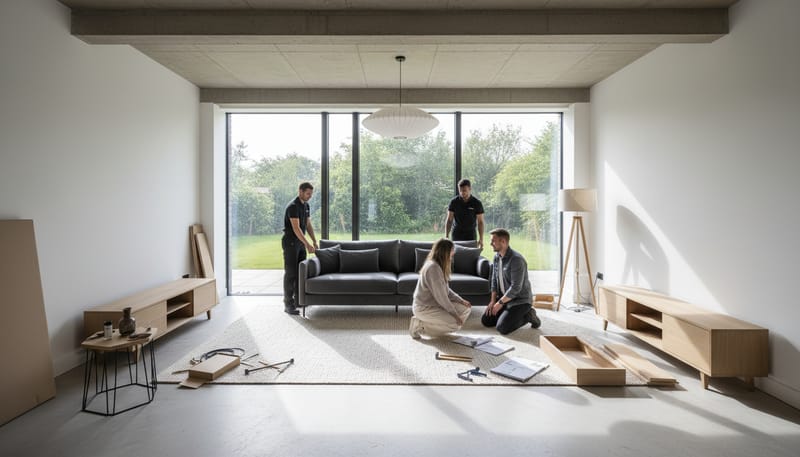
One of the most exciting — and potentially most expensive — aspects of moving into a brand-new home is furnishing it from scratch. Unlike buying a second-hand property where you might inherit curtain poles, carpets, or even the occasional piece of furniture left behind by the previous owner, a new build home is a completely blank canvas. Every room needs everything, from beds and sofas to curtains, light fittings, and kitchen accessories. For first-time buyers who have been living in rented accommodation with landlord-provided furniture, or for upsizers moving from a smaller property to a larger one, the total furnishing bill can come as a genuine shock. Across the UK in 2024 and 2025, furnishing a typical 3-bedroom new build home from empty costs anywhere from £8,000 on a very tight budget to £30,000 or more for mid-to-premium choices, with the realistic average landing around £12,000-£18,000 for a comfortable, well-appointed home.
This guide provides a detailed, room-by-room breakdown of furniture and furnishing costs, covering three tiers — budget, mid-range, and premium — so you can plan your spending according to your priorities and financial situation. We also share practical advice on where to save, where to invest, the best time to buy, and delivery considerations that are particularly relevant for new build estates. If you are still calculating your total moving costs, our moving costs checklist covers everything from removal companies to mail redirection, while our guide to broadband and technology setup covers the digital side of settling in.
Total Furnishing Cost Overview
Before we dive into the room-by-room details, here is the big picture. The total cost of furnishing a new build home depends on four main variables: the size of your home (number of bedrooms and living spaces), the quality tier you choose, whether you are starting from absolute zero or bringing some existing furniture, and how patient you are (buying everything at once versus spreading purchases over months or years).
Living Room
The living room is typically where you spend the most money, as it is the room guests see and where your family spends the majority of its waking hours at home. The sofa alone can account for a huge proportion of your furnishing budget, and it is one of the items where quality genuinely matters — a cheap sofa will sag and deteriorate within 2-3 years, while a well-made one will last a decade or more.
When choosing a sofa, always check the dimensions against your new build's living room measurements and, critically, against the width of doorframes and staircases. New build homes often have narrower hallways than older properties, and many buyers have had the embarrassing experience of a sofa not fitting through the front door. Most quality sofa retailers offer a planning service or will check dimensions before delivery. Consider corner sofas or modular designs that can be separated for easier transport.
A television is another significant living room expense, though not strictly furniture. A 55-inch 4K smart TV currently costs £300-£800 depending on brand and specifications. If you are wall-mounting the TV, you will also need a bracket (£20-£60) and possibly professional installation (£50-£100) unless you are confident drilling into new build walls — always use a stud finder first and check for hidden cables and pipes.
Main Bedroom
Your main bedroom deserves investment, particularly in the mattress. You spend roughly a third of your life in bed, and a good mattress directly affects your sleep quality, which in turn affects your health, productivity, and mood. This is one area where we strongly recommend spending more rather than less.
A double or king-size bed frame costs £150-£300 at budget level (IKEA Malm, Argos), £400-£800 for mid-range (Next, Dreams, Dunelm), and £1,000-£2,500+ for premium options (Warren Evans, Loaf, Hypnos). The mattress is a separate expense: budget spring mattresses start at £150-£250, mid-range pocket sprung or memory foam options run £400-£800 (Emma, Simba, Nectar all offer popular boxed mattresses in this range), and premium mattresses from brands like Hypnos, Vi-Spring, or Savoir start at £1,000 and go up to £5,000 or more. We recommend trying mattresses in store before buying, even if you plan to order online — most mattress-in-a-box brands offer 100-night trial periods.
Beyond the bed itself, you will need bedside tables (£30-£80 budget, £80-£200 mid-range, £200-£500 premium, per pair), a wardrobe or use of built-in storage if your developer includes it (standalone wardrobes: £100-£250 budget, £300-£800 mid-range, £1,000+ premium), a chest of drawers (£60-£150 budget, £200-£500 mid-range, £500-£1,500 premium), bedding including duvet, pillows, sheets, and duvet cover sets (£80-£150 for a complete budget set, £200-£400 mid-range, £400-£1,000+ premium with Egyptian cotton or luxury brands), curtains or blinds (£40-£100 budget, £150-£350 mid-range, £400-£800+ premium for made-to-measure), and a bedside lamp or two (£15-£40 budget, £50-£150 mid-range per lamp).
New build main bedrooms typically include fitted wardrobes as standard, which is a significant cost saving. Check with your developer exactly what storage is included — some provide full floor-to-ceiling fitted wardrobes with internal shelving and hanging rails, while others provide only basic sliding door wardrobes or, in some cases, just a wardrobe recess that you need to fit out yourself.
Second and Third Bedrooms
Secondary bedrooms typically have smaller budgets, especially if they are used as guest rooms or children's rooms. For a child's bedroom, you can expect to spend £300-£600 at budget level, £600-£1,200 at mid-range, and £1,200-£3,000 at premium. This covers a single bed or cabin bed (£100-£250 budget, £300-£700 mid-range), a desk and chair for homework (£50-£120 budget, £150-£400 mid-range), a chest of drawers or small wardrobe (£60-£200 budget), and bedding and curtains. Cabin beds with integrated storage and desks underneath are extremely popular for new build bedrooms, which tend to be compact, as they maximise floor space effectively.
For a guest room or home office, the needs are different. A sofa bed (£300-£600 mid-range) can serve dual duty, or a simple double bed (£200-£400 with mattress at budget level) with a desk (£100-£300) creates a functional spare room/office combination. Consider whether you genuinely need to furnish the third bedroom immediately — many buyers leave the smallest bedroom as a storage room initially and furnish it later when finances allow.
Kitchen and Dining Area
New build kitchens come fitted with cabinets, worktops, sink, oven, hob, and usually an integrated extractor fan. Some developers also include a fridge-freezer, dishwasher, and washing machine, while others leave these as optional upgrades. Check your specification carefully — the items you need to buy separately will significantly affect your furnishing budget.
If you need to buy white goods, here are the typical mid-range costs: fridge-freezer (£350-£600), washing machine (£250-£450), tumble dryer (£200-£400), dishwasher (£250-£450), and microwave (£60-£150). At budget level, you can find basic models for 30-40% less, while premium brands like Bosch, Miele, or Samsung command 30-50% premiums. Many retailers offer bundle deals on white goods — buying all your appliances from one supplier can save £100-£300 compared to buying individually.
A dining table and chairs for a typical new build kitchen-diner costs £150-£300 at budget level (IKEA, Argos), £400-£800 at mid-range (Next, Habitat, Made.com), and £1,000-£3,000+ at premium (solid hardwood from independent furniture makers). Do not forget everyday essentials that a new home needs: a complete set of pans (£50-£150 for a good quality set), a knife set (£30-£100), crockery (£30-£100 for a service for four), cutlery (£20-£80), glasses (£15-£50), a toaster (£20-£80), a kettle (£20-£80), and various utensils, chopping boards, and storage containers (£50-£100 collectively). These small items add up to £200-£500 surprisingly quickly.
Bathroom
New builds come with fitted bathrooms including toilet, basin, bath or shower (or both), tiling, and fixtures. However, you still need to supply all the accessories and soft furnishings. A typical bathroom furnishing list includes: bath towels and hand towels (£30-£80 for a full set), a bath mat (£10-£30), a shower curtain or screen (if not included — £15-£100), a toilet brush and holder (£10-£40), a pedal bin (£10-£30), soap dispensers and accessories (£10-£40), mirrors (sometimes included, otherwise £20-£100), and storage such as a cabinet or shelving unit (£20-£120). Budget £100-£200 per bathroom at the lower end, £200-£400 at mid-range, and £400-£800+ for premium bathroom accessories from brands like The White Company or luxury ranges.
Hallway, Landing, and Utility Areas
Often overlooked in furnishing budgets, these transition spaces still need attention. A hallway typically needs a doormat (£15-£30), coat hooks or a coat stand (£20-£80), a small console table or shoe storage (£40-£200), and a mirror (£20-£100). If your new build has a separate utility room, you may need additional shelving (£20-£60), a laundry basket (£15-£40), and storage for cleaning supplies (£15-£40). An ironing board (£20-£60) and iron (£20-£80) are also essential for most households. Budget £100-£300 for these areas combined.
Curtains and Blinds Throughout
Window dressings are one of the biggest hidden costs of furnishing a new build. Most new builds are handed over with no curtains, blinds, or even curtain poles — just bare windows. For a 3-bedroom home with 8-12 windows of varying sizes, curtains or blinds for the entire house can easily cost £400-£1,200 at budget level, £1,000-£2,500 at mid-range, and £2,500-£6,000+ for made-to-measure premium options.
Ready-made curtains from retailers like Dunelm, IKEA, or Matalan offer the best value, typically £20-£60 per window. Mid-range options from Next, John Lewis, or Laura Ashley run £50-£150 per window. Made-to-measure curtains from specialist companies start at £100 per window and can exceed £500 for large bay windows with premium fabrics and interlined construction. Roller blinds are generally the most affordable option (£15-£40 per window ready-made, £50-£120 made-to-measure), while Roman blinds, plantation shutters, and motorised blinds sit at the premium end.
A practical tip: prioritise window dressings for bedrooms first, as you will need darkness for sleeping. Temporary paper blinds (available from Amazon and DIY stores for £3-£5 each) are an excellent short-term solution that can buy you weeks or even months while you save up for proper curtains or blinds for the rest of the house.
Lighting
New build homes are handed over with basic light fittings — typically pendant bulb holders or simple downlighters. Upgrading to more attractive light fittings throughout the home is a common early purchase. Budget £10-£30 per fitting for basic pendant shades from IKEA or Dunelm, £40-£120 per fitting for mid-range options from John Lewis, Next, or BHS Lighting, and £100-£500+ per fitting for designer or statement pieces. For a 3-bedroom home with 10-15 light fittings (including ceiling lights, wall lights, and table/floor lamps), expect to spend £150-£400 at budget level, £500-£1,200 at mid-range, or £1,500-£4,000+ at premium. LED bulbs cost slightly more upfront (£3-£8 each) but save significantly on energy bills compared to halogen alternatives.
Essential vs Nice-to-Have Items
If budget is a concern (and for most new build buyers it will be after the deposit and fees), it helps to prioritise essentials over nice-to-haves. Here is how we would categorise the main purchases.
Bedding (duvet, pillows, sheets)
Curtains/blinds for bedrooms
Sofa or seating
Fridge-freezer
Washing machine
Basic cookware and crockery
Towels
Cleaning supplies
Light bulbs
Curtains/blinds for living areas
TV and media unit
Chest of drawers
Kitchen essentials (toaster, kettle)
Bathroom accessories
Dishwasher
Vacuum cleaner
Iron and ironing board
Rugs
Decorative lighting
Artwork and mirrors
Cushions and throws
Guest bedroom furniture
Garden furniture
Storage solutions
Tumble dryer
Where to Buy: Retailer Guide
Choosing where to shop can save you thousands. Here is a breakdown of popular UK furniture retailers by price tier and what they are best known for.
Budget retailers: IKEA remains the king of affordable, functional furniture with good design. Their range covers literally everything a home needs, and their flat-pack delivery keeps costs low. Argos offers convenience and quick delivery, particularly for smaller items and appliances. Dunelm is excellent for soft furnishings, curtains, bedding, and accessories. Amazon and Wayfair offer huge ranges but quality can be inconsistent — always check reviews carefully.
Mid-range retailers: Next Home offers stylish, well-made furniture with the convenience of Next-day delivery for smaller items and reasonable lead times for larger pieces. John Lewis is renowned for quality and their \u201cNever Knowingly Undersold\u201d price promise. DFS and SCS dominate the sofa market in this tier with frequent sales and interest-free credit deals. Made.com offers contemporary designer-look furniture at accessible prices. Habitat (now part of Sainsbury's) provides design-led pieces at reasonable prices.
Premium retailers: Loaf specialises in characterful, comfortable sofas and beds with a distinctive style. Heal's offers iconic designer furniture. The White Company is premium for bedding, towels, and home accessories. Sofa.com offers a curated range of high-quality upholstered furniture. For individual statement pieces, consider independent furniture makers and artisan workshops, many of which sell through Etsy or their own websites.
Money-Saving Strategies
Furnishing a whole house is expensive, but there are many ways to reduce the total bill without compromising on quality or style.
Buy during sales events: Black Friday (late November), Boxing Day sales, and the January clearance are the three best times to buy furniture in the UK. Discounts of 20-50% are common, especially on sofas and white goods. Bank holiday sales also offer good savings. If your new build completion is flexible, timing your move to coincide with a major sales period can save you £1,000-£3,000.
Use interest-free credit wisely: Many furniture retailers offer 0% interest credit over 3-4 years. This allows you to spread the cost of major purchases without paying any more than the cash price. However, only use this if you are disciplined about making the monthly payments — missing payments triggers high interest rates. DFS, John Lewis, and IKEA all offer interest-free options on purchases above certain thresholds.
Mix new and second-hand: Charity shops, Facebook Marketplace, eBay, and Gumtree are full of quality second-hand furniture at a fraction of the new price. Solid wood pieces (dining tables, chests of drawers, bookcases) are particularly good second-hand buys as they age well and can be refinished. Upholstered items like mattresses and sofas are generally better bought new for hygiene reasons.
Ask about developer partnerships: Some new build developers have partnerships with furniture companies offering discounts to their buyers. Persimmon, Barratt, and Taylor Wimpey have all run promotions offering furniture packages or gift cards for furnishing retailers as part of their sales incentives. Always ask your sales advisor what is available.
Delivery Timelines and Considerations
One of the biggest frustrations for new build buyers is the gap between moving in and actually having all their furniture delivered. Lead times vary enormously by retailer and product type. Off-the-shelf items from IKEA, Argos, or Amazon can be delivered within 1-7 days. Next Home furniture typically takes 3-10 days for in-stock items. However, sofas from DFS, SCS, or Loaf often have lead times of 8-14 weeks, especially for custom fabric choices. Made-to-measure curtains can take 3-6 weeks. Premium furniture from bespoke makers may take 10-20 weeks.
For new build buyers, this means you need to start ordering large items well before your completion date — ideally as soon as you have a reliable completion window from your developer. Order sofas and large furniture first, then arrange delivery for the week after your move-in date. Many retailers will store items for a set period if you need to delay delivery, though some charge for this service.
Delivery access is another important consideration on new build estates. Large furniture delivery vehicles may struggle to access your property if the estate roads are not yet fully completed, or if there are weight or width restrictions. Check with your developer's site manager about access for delivery vehicles, and communicate any restrictions to the furniture retailers when placing orders. Some companies offer a room-of-choice delivery service where they carry items into your chosen room and remove packaging, while others only deliver to the front door — check this before ordering, especially for items you cannot carry yourself.
Complete Room-by-Room Summary
Phased Furnishing Approach
Very few people can afford to furnish an entire home in one go, and there is absolutely no need to. A phased approach spreads the financial impact over several months and also gives you time to live in the space and understand how you actually use each room before committing to large purchases. Many people find that the furniture layout they initially planned does not work as well as expected once they have lived in the home for a few weeks.
Phase 1 (Move-in week): Beds, mattresses, essential bedding, curtains for bedrooms, fridge-freezer, washing machine, basic kitchenware. Budget: £3,000-£5,000.
Phase 2 (Weeks 2-4): Sofa, TV, dining table and chairs, bathroom accessories, vacuum cleaner. Budget: £2,000-£4,000.
Phase 3 (Months 2-3): Curtains/blinds for remaining windows, lighting upgrades, storage furniture, guest bedroom basics. Budget: £1,500-£3,000.
Phase 4 (Months 3-12): Decorative items, artwork, rugs, cushions, garden furniture, any remaining nice-to-have items. Budget: £500-£2,000+.
Final Thoughts
Furnishing a new build home is a significant financial undertaking, but it is also one of the most enjoyable parts of the homebuying process. Unlike the bureaucratic slog of mortgage applications and conveyancing, choosing furniture allows you to express your personal style and create a space that truly feels like home. The key is to plan your budget realistically, prioritise essentials, take advantage of sales and interest-free credit where appropriate, and resist the temptation to buy everything at once.
For a 3-bedroom new build, budget approximately £8,000-£12,000 for a comfortable mid-range setup, with the understanding that you may spread this spending over 6-12 months. Add more for premium choices in areas that matter most to you (we recommend investing most heavily in your mattress and sofa), and save by being strategic about timing, retailer choice, and mixing new with carefully chosen second-hand pieces.
For more guidance on the other costs involved in setting up your new home, see our articles on moving costs, broadband and technology setup, and landscaping and garden costs.